

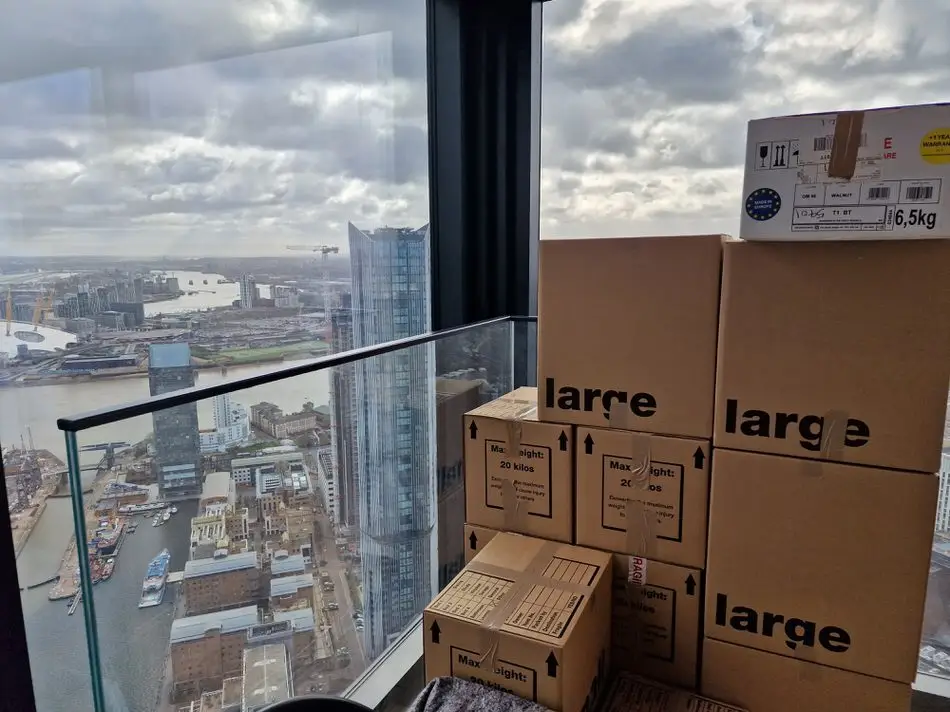
flat move - boxes packing

Expert house removals near me

How to find a reliable house removal company near you in London, and what to check before you book
12 min read
January 26, 2024

Searching for house removals near me returns a long list quickly. The harder part is knowing which company on that list is actually worth calling. In London, that distinction matters more than most people realise. A removal firm can be geographically close and still have no practical knowledge of the borough it's operating in, no system for surveying a job before pricing it, and no understanding of the access issues that make London moves different from moves anywhere else.

This guide explains what local expertise actually looks like in removals, what questions set a professional company apart from a problematic one, and how to read the signals that tell you whether a firm is worth booking before you commit.

Why local matters for a London house removal

Local knowledge in removals isn't about being around the corner. It's about understanding the specific conditions that affect a move in a given borough, building type, or street. That knowledge either shows up in how a company approaches a job or it doesn't.

London is divided into 32 boroughs, each with its own parking rules, permit application processes, and loading restrictions. A company that moves regularly in Westminster understands that red routes and controlled parking zones are the norm, not the exception, and that a van suspension needs to be applied for weeks in advance. A company that hasn't worked in an area regularly may treat those details as something to figure out on the day. By then, the client is the one absorbing the delay.

Building types also vary significantly across the capital. A Victorian terrace in Islington has different access challenges from a mansion block in Chelsea, a modern new-build in Nine Elms, or a converted flat in Hackney. Tight stairwells, goods lift booking windows, concierge-controlled entry, long internal carries, and restricted arrival times are all common and each one affects how a job needs to be planned. A company with genuine local experience will ask about these things upfront. A company without it often won't know to ask until the crew is standing outside.

The other reason local matters is accountability. A company operating continuously in an area has a reputation to maintain there. That creates a different standard of care than a company taking one-off jobs from wherever the next booking comes from.
House Removals
Best London Removals technician dismantling furniture during a move

What accreditation tells you about a local removal company

Once you have a shortlist of house removals near me, accreditation is the first practical filter to apply, and it’s more useful than a quick look at the website.

Professional membership bodies in the removals industry, including BAR, the National Guild of Removers & Storers (NGRS) and the Removals Industry Ombudsman, set standards around conduct, insurance, complaints handling, and training. A company that holds current membership has agreed to operate in accordance with those standards and can be held to them. That gives a client somewhere to go if something needs to be challenged or resolved. An unaccredited operator offers no equivalent route.

Accreditation should also show up in behaviour, not just in a badge on the homepage. A properly run company should be able to explain in plain terms:

  • What its insurance covers: goods-in-transit protection and public liability should be described clearly, including any conditions or exclusions.
  • How complaints are handled: there should be a defined process, not a vague assurance.
  • What its membership requires of it: if a company can’t explain what its accreditation actually demands, the membership may exist on paper more than in practice.
  • How staff are trained and supervised: standards should be consistent across crews, not dependent on who turns up.

The practical rule is this: ask the company what its accreditation requires of it. A well-run firm will answer without hesitation. A company that responds vaguely is telling you something important.

The survey: the clearest sign of a company that plans properly

Of all the signals that separate a professional local removal company from an unreliable one, the survey is the most reliable. A company that surveys the job before pricing it is planning the move. A company that quotes without seeing the job is guessing.

In London, guessing is especially risky. Properties that look manageable from a brief phone call can have narrow stair turns, no goods lift access, long internal corridors, restricted loading zones, or concierge requirements that only become apparent when someone actually looks. A quote that doesn't account for those realities isn't a fixed price. It's an opening figure that will shift once the crew arrives and finds the job differs from what was assumed.

A proper survey, whether conducted in person or by video, should assess:

  • Volume and item types: standard furniture, oversized pieces, fragile items, and anything needing dismantling.
  • Access at both properties: floor levels, lift availability, stairwell dimensions, entry restrictions, and distance from door to van.
  • Parking conditions: whether a suspension is needed, how long the loading window is, and what the street restrictions are.
  • Service requirements: packing, storage, dismantling, reassembly, or phased delivery.
  • Timing constraints: completion times, key collection, tenancy end dates, and any building management rules.

A video survey works well for most jobs when it's followed by a written quotation that records exactly what was discussed. That document is what protects both sides if anything is disputed later.

If a company resists the survey, gives a firm price without asking about access, or provides different answers each time access or scope is raised, those are warning signs worth taking seriously.

How to read reviews for house removals near me

Reviews are among the most useful tools for evaluating local removal companies, but they work best when read carefully rather than quickly.

A high overall rating matters, but it isn't the whole picture. What tells you more is the pattern underneath it. Look for consistent praise or consistent criticism across a significant number of reviews over time. A company with 500 reviews averaging 4.9 is a different proposition from a company with 12 reviews averaging the same score. Volume and recency both matter.

The most revealing reviews are those that describe operational details. Generic praise ("brilliant team, would recommend") is less informative than a review that says the crew managed a difficult goods lift booking in Canary Wharf without any delay, or arrived on time despite a complicated parking situation in Camden. Those specifics confirm that the company performs under the exact conditions that make London moves demanding.

Negative reviews deserve attention, too, but the right kind of attention. Look for patterns rather than individual complaints. One review describing a delay during a particularly busy period is different from ten reviews describing surprise charges added on moving day, or multiple accounts of crews refusing to take items that weren't listed on an initial phone call. Repeated patterns in negative reviews usually reflect how a company operates, not how it behaves on a bad day.

A few specific patterns worth searching for:

  • On-the-day add-on charges: reviews mentioning unexpected fixed extras once the crew has arrived are a significant warning sign, particularly for hourly-rate bookings.
  • Communication before the move: consistent praise for clear contact, written confirmation, and pre-move information usually reflects a well-organised company.
  • How problems were handled: some moves encounter unexpected issues. Reviews that describe how a company responded to a complication are often more revealing than reviews of jobs that went smoothly.
  • Staff consistency: if multiple reviews mention the same quality of service across different teams and different dates, that points to a training standard rather than a lucky booking.

The right questions to ask any local London removal company

Once you’ve filtered your shortlist of house removals near me by accreditation and review patterns, the conversation with each company tells you the rest. The quality of a company’s answers to practical questions usually reflects the quality of its planning and execution.

On parking and access: Ask how the company handles parking suspensions and whether it has experience applying for them in your borough. A company with genuine local knowledge will be able to describe the process clearly, including typical lead times and costs. One that treats parking as something to sort out on the day is signalling a gap in its planning. For a full breakdown of how parking suspensions work for London house moves, the parking suspension guide covers the process borough by borough.

On pricing: Ask directly whether the quote is fixed or hourly, and what each covers. A fixed, itemised quote that follows a survey is the clearest way to know what you’ll pay before moving day. An hourly rate can work well for straightforward, well-prepared jobs, such as a small flat move where everything is already packed, and access is simple. For more complex moves involving multiple floors, dismantling, specialist items, or restricted access, a fixed price is usually the safer structure. The guide to removal companies in London covers both pricing models in detail, so you can understand when each one fits.

On insurance: Ask the company to explain its goods-in-transit and public liability cover in plain terms. “Fully insured” is not an answer. You need to know what the cover applies to, whether owner-packed boxes are treated differently, and how a damage claim would be handled. A company that struggles to explain its own insurance cover clearly is one where a dispute could become complicated.

On building access: If the property involves a managed block, ask whether the company has experience coordinating with building management, booking goods lifts, and working within arrival windows. Many blocks in central and inner London require written confirmation of insurance, named contacts, and pre-booked loading slots. A company that hasn’t dealt with this regularly will often underestimate the time and preparation involved.

On the survey: If you haven’t already been offered one, ask for it. A company confident in its service will welcome the survey as an opportunity to price the job accurately. A company that resists it is usually avoiding the visibility that would make its quote harder to change later.

Comparing quotes: what the numbers don't show

When comparing quotes from local removal companies, the headline figure is the least useful point of comparison. Two quotes for the same job can look similar at a glance but represent very different levels of risk when the details are carefully reviewed.

The most important differences are usually in scope. Check whether each quote covers the same work: the same access conditions, the same items, the same services. A quote that looks cheaper may simply have left out certain costs, such as parking, packing materials, an extra van journey, or a waiting charge for a delayed key release. Those omissions don't save money. They shift the cost to the day of the move, when the client has no real alternative.

Written confirmation is also worth comparing. A quote that arrives as a total figure in an email is a different document from an itemised quote that records the survey findings, the agreed scope, the access conditions, and the known charges. The second version protects both parties. The first leaves most of the detail open to interpretation.

A useful final check before committing is to ask each company directly: what would change the price after the quote is agreed? A professional company will give a specific and limited answer. A company that gives a vague or broad answer is telling you that the quote carries more flexibility than the figure suggests.

Red flags worth knowing before you book

Some warning signs appear before moving day. Others only become visible once the van arrives. Knowing both helps.


Before booking:

  • No survey offered or resisted: if a company gives a firm price without seeing the job, it is either pricing loosely or planning to recover uncertainty later.
  • Vague scope in the quote: a total figure without itemised detail leaves too much open to dispute.
  • Unclear insurance: any company that can’t explain its own cover in straightforward terms is one where a claim would be difficult.
  • No written confirmation of key details: if parking, access, timing, and scope aren’t confirmed in writing, the move is being planned informally.
  • Pressure to book quickly: legitimate companies with full order books don’t need to push.

On moving day:

  • Refusal to take minor additional items on a half-empty van: a professional hourly-rate team handles small additions, an extra box, a lamp, a second bicycle, as part of the time already being paid for. Demands for large fixed charges on top of an agreed rate for minor items are not standard practice.
  • Charges for tasks included in the hourly rate: walking up stairs, dismantling a bed, or packing a box or two are part of the job during booked time. They are not extras.
  • A sharp change in communication once the booking is confirmed: if a company’s responsiveness or clarity drops significantly after the deposit is paid, that is worth noting before moving day arrives.

Your house removals questions answered

It matters for practical reasons rather than sentimental ones. A company based close to your area is more likely to have direct experience of the local streets, parking rules, and building types. It also reduces dead mileage at the start and end of the job, which can affect timing and occasionally cost. That said, a company based slightly further away with strong experience in your borough will usually serve you better than a nearby company with no local track record.

For central and inner London, six to eight weeks ahead is a sensible lead time during peak periods, particularly around summer, school holidays, and month-end dates. Some boroughs require parking suspension applications to be submitted ten to twenty-one days in advance, which means the removals booking and the parking application need to happen in parallel. Leaving either to the last fortnight in a busy period creates unnecessary risk.

Not always. For a straightforward man-and-van job where contents are already packed, access is simple, and nothing requires dismantling, an hourly rate with a professional team is often the right fit. The team will typically advise a realistic time estimate for the job so the client has a working figure to plan around. For larger or more complex moves involving multiple floors, restricted access, specialist items, or London logistics like parking suspensions, a fixed price agreed after a proper survey gives both sides clarity and removes the risk of the bill rising on the day.

Professional packing can be arranged as full packing, covering every room the day before the move, partial packing for specific rooms or fragile items, or fragile-only packing using specialist materials for glassware, crockery, artwork, and mirrors. Details on all three options are covered on the professional packing service page.

Goods-in-transit insurance protects items while they’re being transported. Public liability insurance covers broader liability during the job. Both should be explained clearly before booking, including any conditions that apply to owner-packed boxes and how a damage claim would be handled. A vague “fully insured” assurance is not sufficient. Ask for the specifics in writing.

Ask it directly. A company with real local knowledge will be able to describe how it handles parking suspensions in your borough, what building access protocols it’s familiar with, and what the common access challenges are in your area. It will raise these points without being prompted. A company without that knowledge will often give general answers and wait until moving day to find out the specifics.

Best London Removals Ltd carries out home, flat, and office removals across all London boroughs, with surveys, fixed-price quotations, and access planning included as standard. Smaller jobs are available as man and van hourly bookings, where the team advises a realistic time estimate based on the scope of the work.

Table of Contents

Latest from the blog