
A sofa can look manageable until it reaches a Westminster-controlled parking zone, a narrow Victorian hallway in Fulham, or a mansion block in St John's Wood with a lift that is smaller than expected. In London, those details decide whether a delivery runs cleanly or turns into a rebook.
That is why furniture delivery here works best as a planning exercise first and a carrying job second. The recurring causes of failed deliveries are usually straightforward: access was assumed, measurements were incomplete, or nobody checked the parking restrictions outside the property. These are standard problems with standard fixes, and this guide covers them all.
An introduction to London furniture delivery
A delivery team can arrive with the right item, the right tools, and enough hands, and still be stopped by a Camden CPZ, a Chelsea basement flat with six steps down from pavement level, or a mansion block porter who needs the lift booked an hour in advance. In London, furniture delivery is usually arranged before anyone starts carrying it.
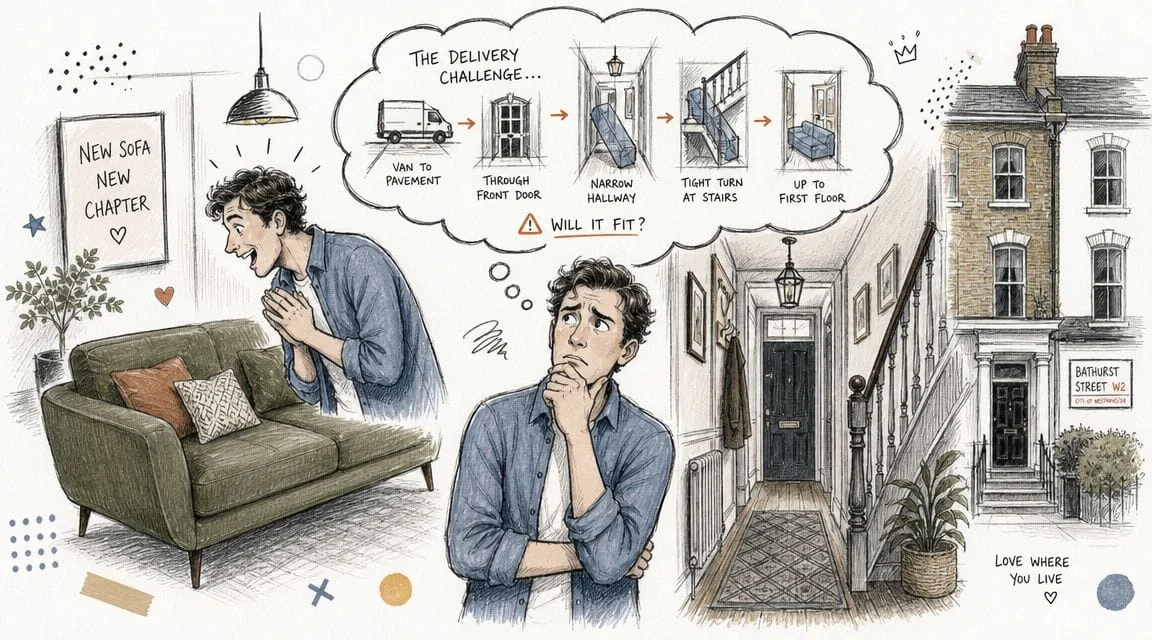
The city's housing stock is the reason. Victorian terraces often give you a narrow front door, a sharp turn at the stair base, and a handrail that steals the last few centimetres you needed. Mansion blocks may offer a lift, but many are too shallow for a boxed wardrobe or too low to keep a tall headboard upright. Converted flats can be trickier still, because the outside looks generous while the internal route includes fire doors, split landings, and communal corners that tighten the carry.
A three-seater that measures fine on paper may still catch at the first-floor turn because the customer measured wall to wall but not past the newel post, radiator, and door swing. That is not a rare disaster. It is a standard access problem, and it has standard fixes when it is identified early.
Why deliveries fail when the furniture itself is fine
The usual issue is not the item in isolation. The issue is the route as a whole. A proper plan covers where the van can stop, how far the crew must carry from the vehicle, whether floor protection is needed in common parts, and whether the item can stay wrapped through the tightest point without losing too much clearance.
Parking and loading access are often the first London-specific hurdles, especially on narrow streets, permit bays, red routes, and managed developments. A postcode with permit bays only, short loading windows, or red route restrictions can add more risk to a delivery than the stairs inside the property. If the retailer or carrier has offered only a basic drop-off, it is worth checking the handling level early and, if needed, booking a man and van service for London furniture access jobs where timing, parking, and upper-floor carrying need more coordination.
Lead times also create a practical opportunity. If your furniture is made to order or coming through a retailer with a long delivery window, use that gap to sort out access details, management permissions, and parking arrangements instead of leaving them until the day before the call.
What usually works
Awkward London deliveries tend to go well when the checks are specific and early.
Measure the whole route. Front gate, entrance door, hall width, stair turns, lift interior, and the final room. Every point matters, not just the widest.
Report building restrictions clearly. CPZ rules, concierge procedures, timed lift bookings, and no-drill or no-mark conditions in communal areas should all be on the booking notes before the date is fixed.
Plan protection before arrival. Floors, corners, bannisters, glazing, and newly painted walls need to be guarded during the carry. A crew that turns up without materials is already working against you.
Use the right fix for the obstacle. Door removal, partial disassembly, unboxing at the right stage, or a different carry angle usually solves the problem better than extra force.
Good furniture delivery in London is careful logistics applied to ordinary domestic spaces. Once the route, parking, and building rules are clear, even a difficult-looking job becomes a manageable one.
Choosing the right delivery service for your needs
Not every furniture delivery includes the same level of handling. Many problems start because the customer expects one service level and the retailer has sold another. Before measuring anything, it helps to check what was booked.
The three service levels most people encounter
The simplest way to think about delivery is the same way people think about food. One option is to get the item to the door. Another brings it inside. The fullest version includes setup and clearing away.
Kerbside delivers the item to the outside of the property or the nearest practical point. It does not include carrying upstairs, room placement, assembly, or packaging removal.
Room of choice means the crew carries the item into the property and places it in an agreed-upon room. It typically does not include detailed assembly, packaging, disposal, or problem-solving beyond standard access.
White-glove covers in-home delivery with careful placement and often includes assembly and packaging removal. It may still exclude complex access work unless that was agreed in advance.
What to check before delivery day
A short confirmation call or email with the retailer or carrier can save a lot of trouble.
Ask where the service ends. "Front door" and "room of choice" are very different jobs. Confirm whether assembly is included, since flat-pack wardrobes, dining tables, and beds often need separate confirmation. Check whether packaging removal is included, as some crews will leave every carton and protective panel behind unless the booking says otherwise. Mention access constraints early: a narrow staircase in Islington, a goods lift booking in Canary Wharf, or restricted unloading in Kensington needs to be on the order notes before the day.
A delivery team can only prepare for the restrictions they have been told about.
When a small move needs more than retail delivery
How to measure your home for a successful delivery
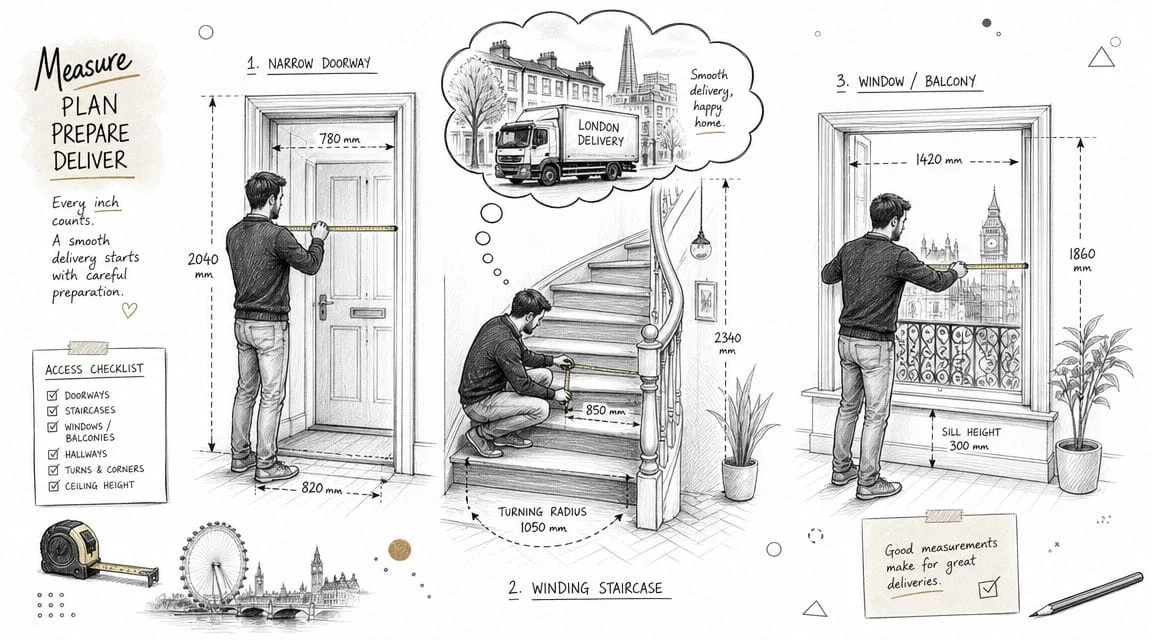
The most useful measurement is not the size of the room. It is the size of the tightest point between the street and the final position. Comparing the item's packed dimensions against the narrowest usable opening matters even more in London homes where corridors are tighter and stair turns are sharper than in many newer properties.
Start with the item, packed and built
Retailers often list more than one set of dimensions. One may describe the assembled item. Another may describe the packaged carton. Both matter.
If the piece will be carried in a box and assembled inside, the packed dimensions matter most. If it arrives built or partly built, the transport dimensions become the deciding factor.
Measure the full route, not one doorway
The route begins at the kerb and ends where the furniture will sit. Every step in between counts.
Street to entrance. Check gates, side passages, front steps, railings, bin stores, and any change in level from pavement to doorway.
Front door and internal doors. Measure clear width and clear height, not the overall frame. Open the door fully and measure the actual usable space within the trim.
Hallways and corners. Narrow halls often fail at the turn, not the width. Radiators, console tables, light fittings, and newel posts reduce real carrying space.
Stairs and landings. Measure stair width, ceiling height above the stairs, bannister position, and the turning area on each landing.
Lifts. In older mansion blocks, the lift may be the biggest constraint. Measure the lift car internally, then measure the door opening separately.
What catches people out in London homes?
Certain layouts appear again and again across the capital.
Victorian terraces bring tight entrance halls, steep staircases, and first-floor turns with little swing room.
Mansion blocks often have lift doors smaller than the lift interior suggests, plus building rules governing when deliveries may use common parts.
Converted flats frequently have secondary internal doors, boxed-in pipework, and narrow corridor pinch points.
Ex-local authority properties may offer larger room sizes in many cases, but strict lift bookings and long internal walks from the vehicle to the flat add time and effort.
If any point along the route is narrower than the item's smallest safe transport dimension, the item does not fit under normal handling.
A practical measuring checklist
What to send the delivery team
Once the measuring is done, the next useful step is visual evidence. A few mobile photos often make a bigger difference than a verbal description.
Send the outside approach from the street, the front door open, the staircase from below and above, the landing turn, the lift interior and lift door, and the destination room. That gives the crew a realistic picture of the route and helps them decide whether they need tools for door removal, protective materials, disassembly time, or, in rare cases, an external hoist route through a balcony or window.
Preparing your London property and parking
Inside the property, preparation is usually simple. Outside the property, in London, it often decides whether the delivery runs smoothly at all.
Get the inside ready the day before
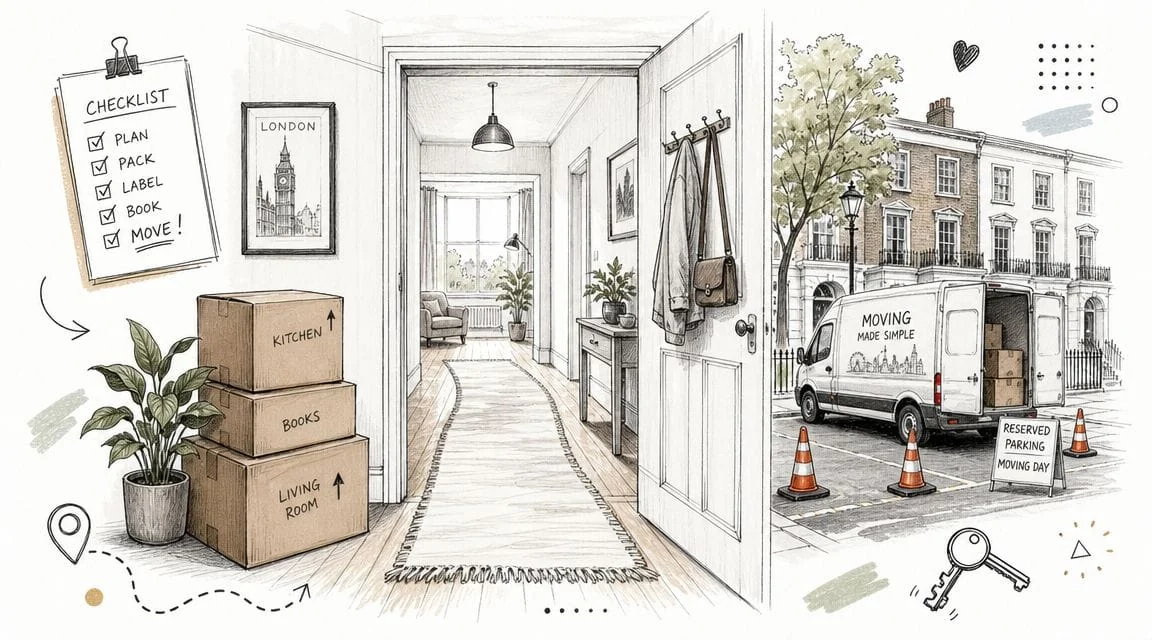
A prepared route makes carrying safer and faster. It also reduces the chance of damage to your property.
Clear the access line by moving plants, shoe racks, side tables, and children's items off the route from the entrance to the room. Protect fragile surfaces by lifting delicate lamps, framed pictures, and ceramics out of hallways and landings. Secure pets and small children, as delivery teams need clear movement and full concentration on stairs and corners. Make space in the destination room and decide in advance what is staying and what is being moved.
Parking and access outside the property
Residential CPZs in boroughs such as Camden or Haringey limit legal parking during controlled hours. Check whether a suspension or visitor arrangement is needed before the booking date.
Central roads in Westminster or Kensington and Chelsea may have bays that are restricted or heavily used. Apply for a suspension early if one is required.
Red route frontage comes with tightly controlled stopping and loading rules. Confirm which legal loading options are available before fixing the date.
Private developments in E14 or EC2 often have managed loading areas and timed access to lifts. Speak to building management and reserve the relevant slots in advance.
Building management matters more than people think
In modern blocks and many larger developments, the delivery company may need more than an address. They may need a loading bay code, a concierge contact, a service lift booking, proof of the booking time, and instructions on protective padding in common areas.
The most avoidable failed deliveries in London usually start outside the front door, not inside the living room. If the property is in Canary Wharf, the Barbican, Nine Elms, or a managed riverside block, contact building management well in advance. Ask what vehicle size is permitted, whether there is a loading bay, whether a goods lift must be reserved, and whether weekend or evening access is restricted.
Tell the delivery team what they need to know
A concise message is usually enough. Include the postcode, floor level, whether there is a lift, any booking window, parking restrictions, and anything unusual about the route.
Good examples: "W2, second-floor flat, no lift, narrow first landing." Or: "E14 tower, service lift booked 10am to 12pm, loading bay via concierge." Or: "SW1 red route nearby, unloading only from side street." That level of detail lets the crew arrive with a plan rather than improvise under pressure.
Red routes and restricted streets can affect where a van is allowed to stop. If your property is on one of these roads, mention it when booking so the delivery team can plan the safest legal access.
If you are unsure what information matters, send the delivery team:
- a photo of the street outside the property
- a photo of the entrance or main door
- details of any parking or loading restrictions you know about
- the floor level and whether there is a working lift- any building rules, concierge instructions, or delivery time windows
You do not need to solve every access issue yourself. The aim is simply to give the team enough information to plan the delivery properly.
What to expect on the day of delivery
A well-run delivery day feels orderly. The team arrives within the agreed window, checks the route, confirms where the item is going, and starts protecting the path before carrying anything substantial indoors.
Before the item comes off the van
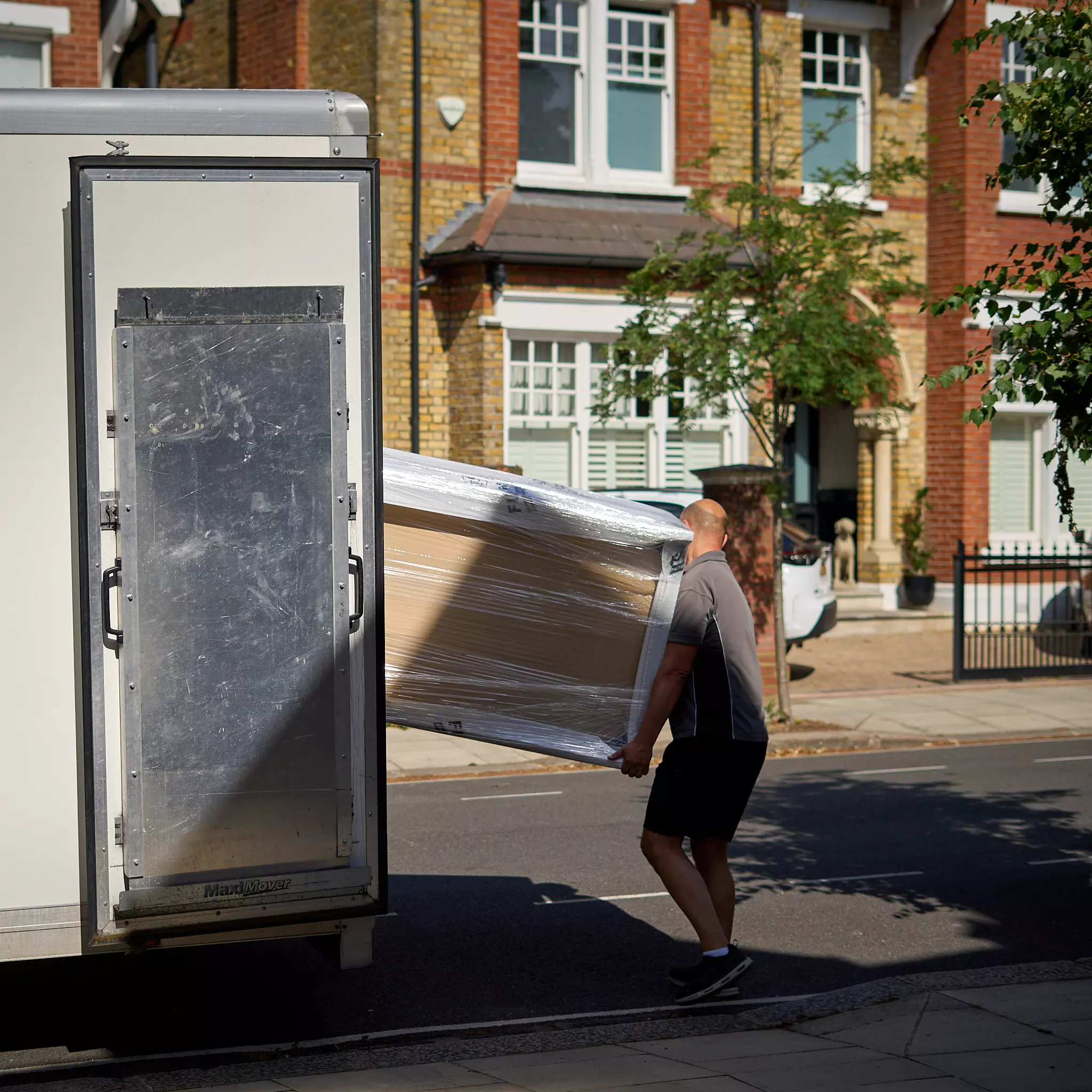
The first few minutes usually set the tone. Professional crews confirm the destination room, inspect the staircase or lift, identify any new obstacles, and decide the carrying order. Furniture should travel protected, not loose in the vehicle. A careful handling standard includes blanket wrapping, removal straps to secure items in the van, stretch wrap over upholstered pieces, and bubble wrap with cardboard corner guards for glass or mirrored surfaces.
How the property is protected
Customers often focus on the furniture itself, but the property matters just as much. A careful team will protect the route before moving bulky items through it.
Common protective steps include floor runners or protective layers on vulnerable flooring, wrapping furniture edges to reduce marks on walls and door frames, controlled lifts with one person guiding and one person carrying on stairs and at corners, and removing doors where appropriate. Sometimes, a door coming off its hinges creates the few extra millimetres needed for a safe pass.
Placement, assembly, and final checks
Once inside, the item is placed where agreed. If the booking includes assembly, the team will build the piece, level it if needed, and remove basic transit protection. If the item had to be partially dismantled for access, it should be reassembled before the job is considered complete.
Check the item before signing off, especially corners, legs, upholstery, mirrored panels, and the surrounding walls and woodwork.
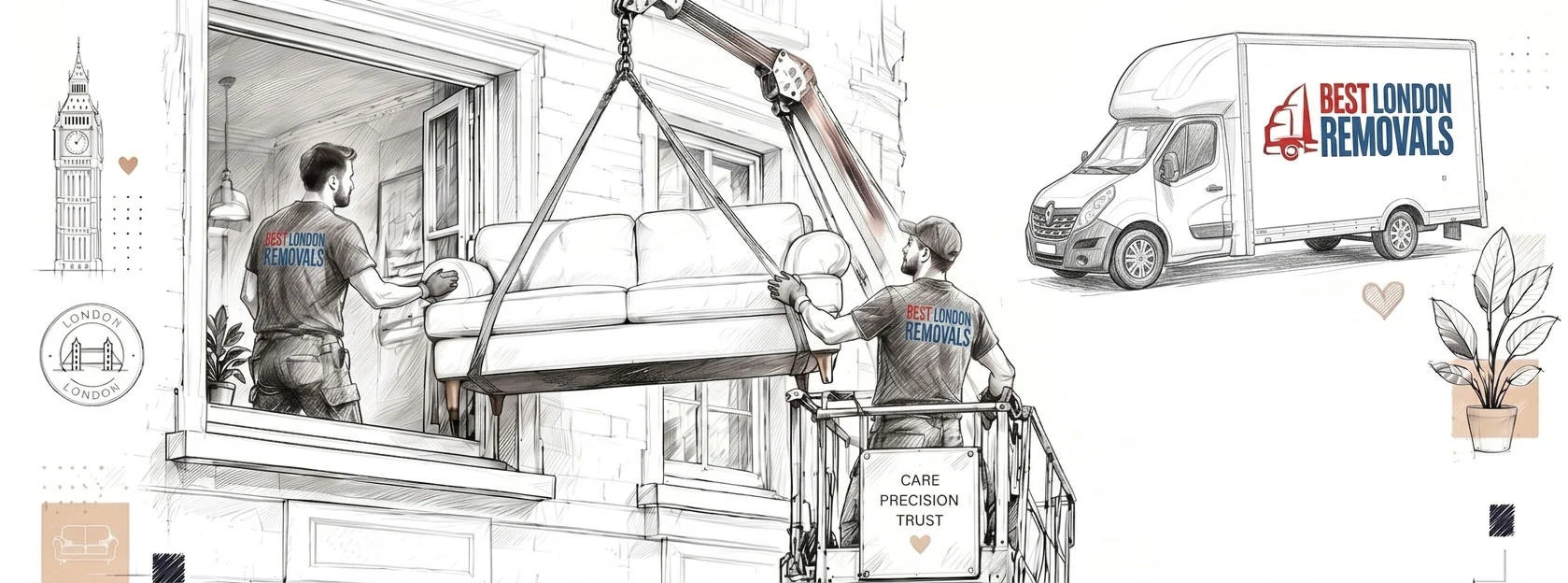
If a planned internal route is not workable, the team may try another safe route, remove a door, or assess whether controlled dismantling is possible. In some upper-floor situations, external lifting through a window or balcony may be the only clean solution, but it should be properly assessed rather than attempted casually.
The customer's role on the day is mostly to be available, keep the route clear, and answer placement questions. Trying to help carry large items usually makes things slower and less safe.