

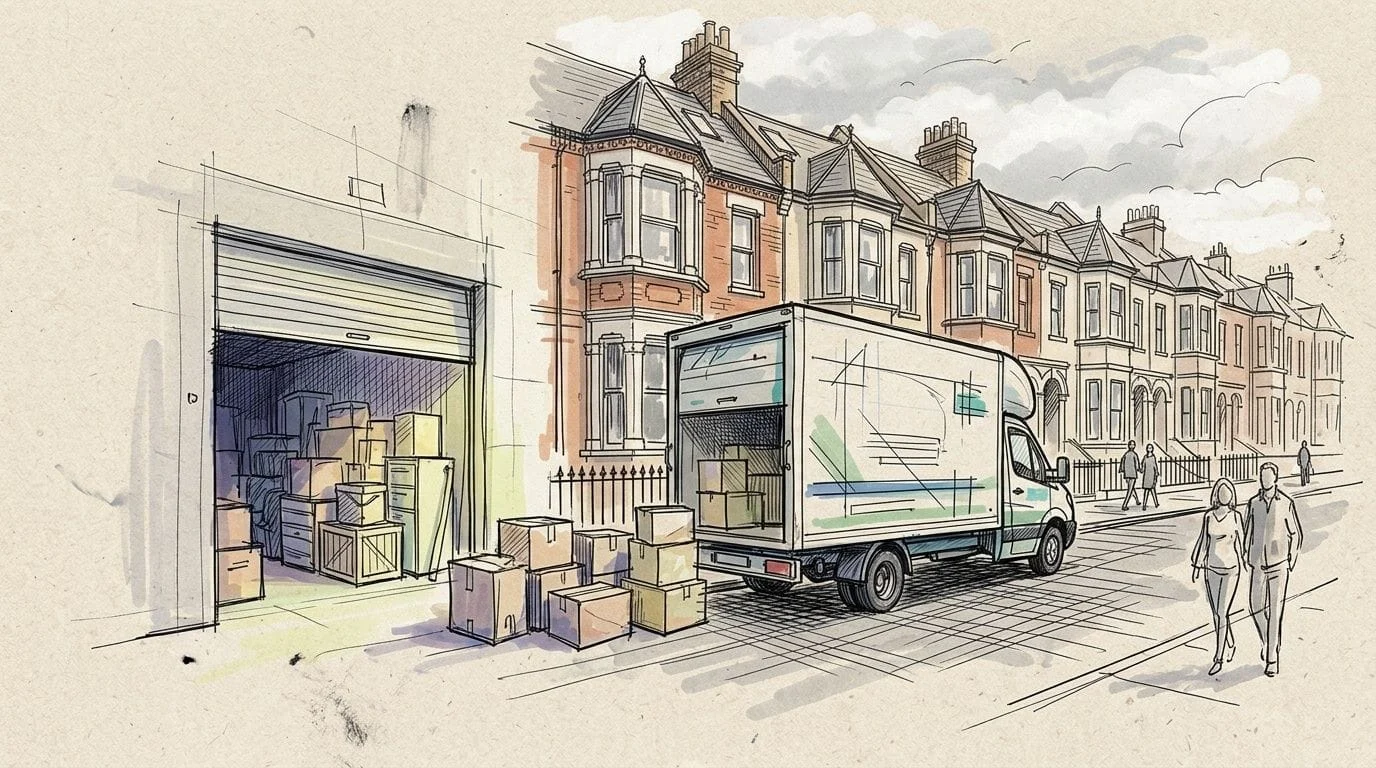
Storage usually comes up when a move has stopped being neat and predictable. Completion dates slip, renovation dust gets everywhere, or a buyer's chain gives way at the worst possible moment. In West London, where timing, parking, and access are rarely straightforward, storage often becomes the practical buffer that keeps the rest of the move under control.
This guide covers how to choose the right unit size, what storage actually costs in West London in 2026, how to weigh up location against price, and what to check before booking, whether with a large national provider or a smaller local one.
When you might need storage during a West London move
Most people don't plan a move expecting to need storage. They end up needing it because London property moves often run on two different clocks, the one on paper and the one in real life.
A chain collapse is the classic example. One West London client kept belongings in storage for eight months after a purchase fell through twice. Rather than moving a full household into temporary accommodation, the contents were stored while the client stayed with family and waited for the next purchase to complete. In cases like that, flexibility matters more than headline price.
Another common pattern is the renovation gap. A family moves out of a house in Ealing, Acton, or Chiswick, but the new place isn't ready for full occupation because floors are being replaced, walls are being rewired, or a kitchen is being fitted. Keeping furniture and packed boxes off the property speeds up the work and reduces the risk of damage to upholstery, mattresses, and soft furnishings.
The most common situations where storage becomes part of a West London move:
Storage unit sizes: a practical guide for West London moves
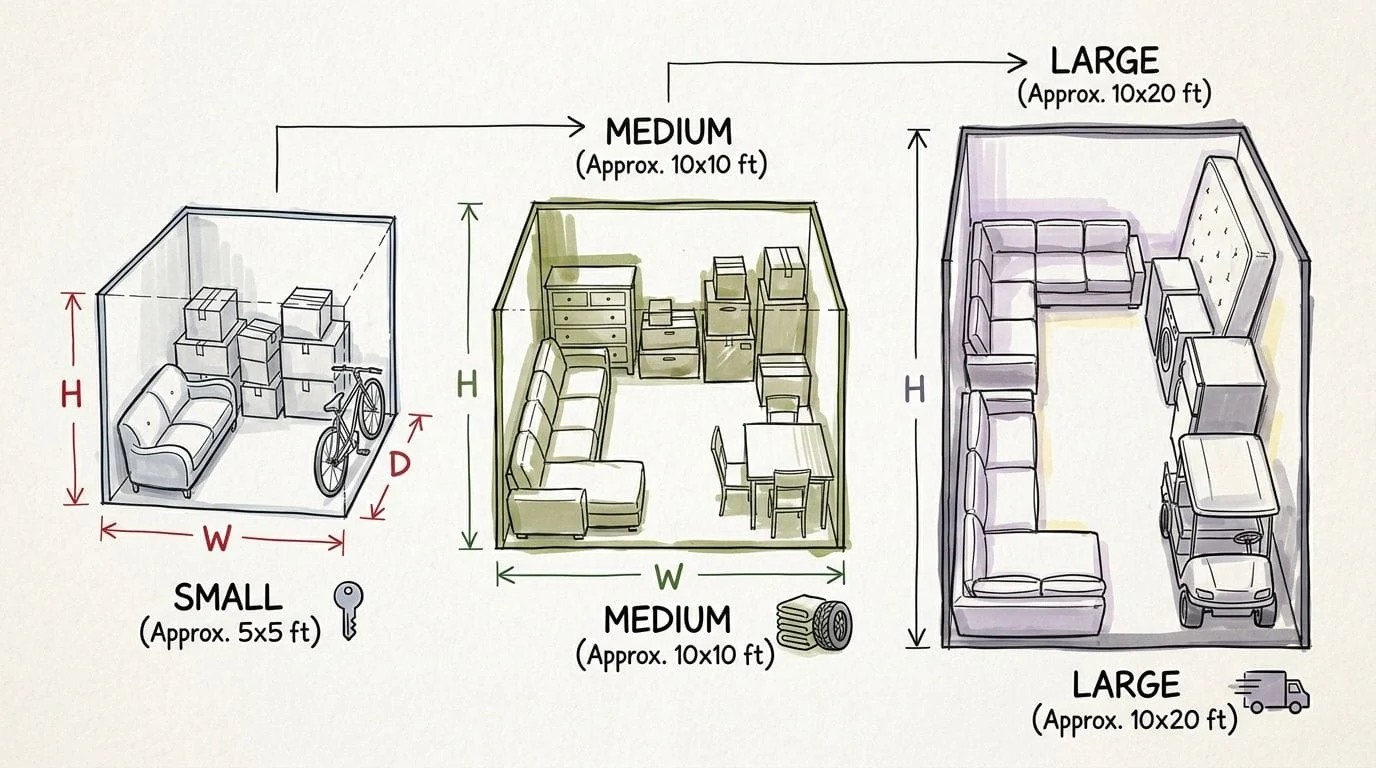
Storage unit size guide by property type
Studio or a room — a unit of around 15 to 25 sq ft is usually enough, covering roughly 10 to 15 boxes plus basic furniture. Typical weekly cost in West London is around £10 to £20.
One-bedroom flat — expect to need 35 to 50 sq ft for 15 to 25 boxes plus furniture. Budget around £15 to £35 per week.
Two-bedroom flat — a 50 to 75 sq ft unit handles 25 to 40 boxes plus furniture. Typical weekly costs run from £30 to £60.
Three-bedroom house — 75 to 100 sq ft covers 40 to 60 boxes plus furniture, with weekly costs generally between £50 and £90.
Four-bedroom house — you are likely to need 100 to 150 sq ft for 60 to 80 or more boxes plus furniture. Budget from £80 to £130 per week.
These are starting estimates. A one-bedroom move that includes a corner sofa, two wardrobes, a Peloton, balcony planters, and fifty mixed boxes needs more space than the table suggests. Always work from an inventory, not a bedroom count.
The advertised square footage is only part of the answer. Usable space depends on the unit's layout and how the contents will be handled on the day.
Check these points before booking:
Ceiling height: a good height provides more stacking room and can keep you in a smaller unit if contents are packed properly.Unit shape: square units are usually easier to load than long, narrow rooms.
Internal obstructions: pillars, boxed services, low sections, and awkward corners reduce what you can fit.
Door width and turning space: sofas, mattresses, and wardrobes may fit the unit, but still be difficult to get through the entrance.
Access method: a ground-floor drive-up unit loads very differently from an upper-floor unit reached by lift and corridor.
A practical rule: if the plan only works when every item is stacked perfectly to the ceiling, the unit is too small.
What to check before trusting the size recommendation
Booking a unit that's too small can cost more than paying for a slightly larger unit from the start. If a unit is undersized, the usual consequences are a second trip, an upgrade after move-in, or paying movers to reload the space more carefully than should have been necessary.
In West London, where time slots, parking, and loading access already need managing, those extra touches are not small admin problems. They turn into labour costs and wasted time. London pricing also rises quickly between unit sizes, so the better question is whether the next size up reduces handling, protects the contents, and avoids paying twice for transport or labour.
That is why an experienced removals team can often save money by assessing whether dismantling a frame, standing sofas correctly, or repacking loose bags into stackable cartons will keep the load within one sensible unit. For a fuller overview of the options and booking process, the guide to storage units in London for house moves covers this in practical terms.
How much does storage cost in West London in 2026?
West London storage prices vary significantly depending on the size of the unit, the location within West London, and the provider. The figures below are based on current market rates across the area.
West London storage prices 2026
Small units (15 to 35 sq ft) — in inner West London areas such as Chiswick, Hammersmith, and Fulham, expect to pay £20 to £45 per week. In outer West London, covering Hayes, Southall, and Uxbridge, prices typically run from £10 to £25 per week.
Medium units (50 to 75 sq ft) — inner West London ranges from £45 to £85 per week, while outer West London comes in at £25 to £55 per week.
Large units (100 sq ft) — inner West London prices run from £85 to £130 per week, compared to £55 to £90 per week further out.
Extra-large units (150 sq ft and above) — expect £120 to £180 per week in inner West London, and £80 to £130 per week in outer West London.
Outer West locations typically cost £35 to £55 per month less than equivalent inner West units. Over a six-month stay, that difference can reach £330 or more. Whether that saving is worth it depends on how often access to the unit is needed.
What affects the price beyond location
Introductory offers: most major providers, including Shurgard and Big Yellow, offer heavily discounted first months (sometimes as low as £1 for the first month). These revert to full rate afterwards, so the total expected stay should always be costed at the standard rate.
Insurance: most facilities require contents insurance. Some insist on their own policy; others accept existing home contents cover if it extends to off-site storage. This can add £5 to £20 per week, depending on declared value.
Access hours: 24-hour access typically costs more than standard business-hours access.
Minimum rental periods: some providers require minimum stays of 2 to 4 weeks, which affects short-term cost calculations.
Why location affects more than the weekly rent
A flat in Holland Park completes on Friday. The new place isn't ready until Monday, and the first storage quote looks fine until the practical costs start stacking up. The unit price is only one part of the decision. In West London, postcode, road access, parking rules, and how often access to the unit is needed all affect the actual cost of storage.
A client storing near Kensington, Chiswick, or Hammersmith is buying convenience as much as floor space. A client willing to store in Hayes, Southall, or Uxbridge usually pays a lower weekly rent but also faces a longer return journey every time access is needed. Neither option is automatically right. The better choice depends on whether the contents are going in once for a few weeks or need regular access during the storage stay.
Inner West versus outer West
Inner West London sites usually charge more because the land costs more and the site has to serve denser, more time-pressed neighbourhoods. That premium can be worth paying if the unit needs visiting often, quick access after work is important, or keeping the storage leg short on moving day matters.
For one-load, low-access storage, the outer West often gives better value.
The point many comparison guides miss is that they list the cheapest weekly rate without accounting for the extra van mileage, driver hours, or client travel time needed to use that cheaper site. Clients sometimes save on rent and then give the savings straight back in repeat trips, parking fees, and half a day off work.
Calculating the real cost, not just the weekly rate
The practical test is to ask how the storage will actually be used:
What to check before you book any storage unit
Most storage problems start before the first box goes in. The quote looks fine, the unit size sounds right, and only later does the client discover the access is awkward, the insurance is limited, or the building layout turns a simple unload into a long carry.
The booking checks that matter in practice
Before booking, confirm these points directly with the branch:
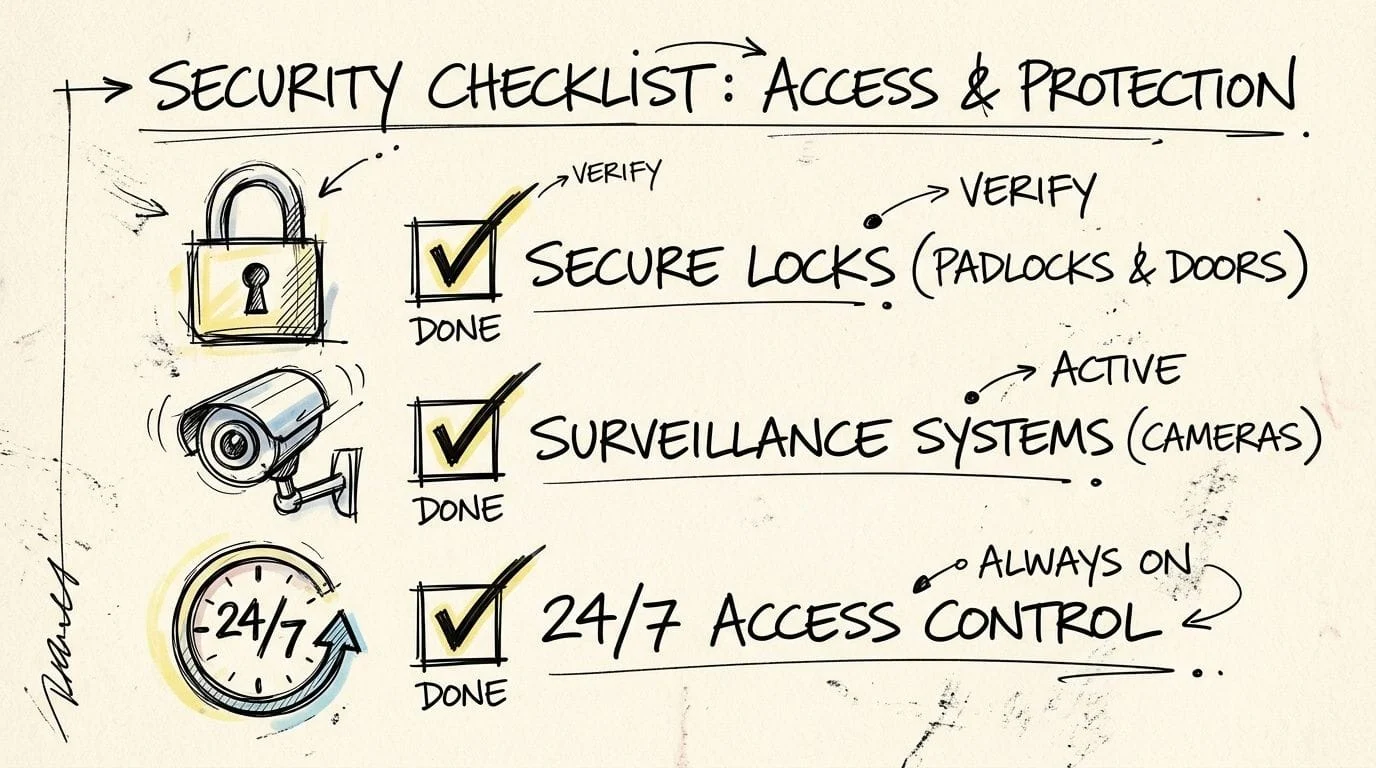
Security arrangements: ask about monitored CCTV, entry controls, staff presence, and whether individual units are alarmed.
Insurance position: check what cover is required, whether the provider insists on its own policy, and whether existing home contents cover extends to stored goods.
Access hours: Sunday evening access may matter more than weekday office hours if the move timetable shifts.
Parking and unloading: a branch can be well located and still awkward for a loaded removals van if bays are tight or loading routes are long. This is particularly relevant in West London.
Lift and corridor layout: upper-floor units aren't necessarily a problem, but they need practical goods-lift access.
The exact unit: ask whether the offered room has a clean rectangular shape, usable height, and no internal obstructions.
Short-term storage: a different calculation
For short moves between tenancies, standard self-storage isn't always the most cost-effective answer. Some West London providers offer collection-led storage from around £10 per week, which can look compelling for brief periods. The meaningful comparison is the total cost of storage and transport, set against a self-storage unit plus van hire, fuel, parking, and loading time, especially for stays of 1 to 8 weeks.
That is often where a removals company earns its keep. An experienced team can work out whether collecting everything once into a managed storage arrangement is cheaper overall than loading directly into a self-storage unit the client accesses personally.