


A London move rarely goes in a straight line. A buyer completes on a Friday but needs a week to repaint before the furniture goes in. A family moving from a four-bedroom house needs a new kitchen fitted and a bathroom renovated before they can move in. A chain delay by two days, and suddenly there's a van full of belongings with nowhere to go.
In each of those situations, moving and storage services stop being an optional extra and become the practical solution. Storage, used properly, isn't a backup plan. It's part of how a well-organised London move works, especially when the new property needs time before it's ready to receive everything.
This guide explains when storage is worth planning for, how long different situations typically require, and what to look for when combining a removal with a storage arrangement.

When storage becomes part of a London move
Short-term storage: one day to one week
The most straightforward case for short-term storage is a property that's been bought but needs preparation work before belongings can go in. This happens more often than most buyers expect.
A newly purchased flat may have been tenanted for years and needs a thorough deep clean before it's practical to move furniture in. A freshly plastered or painted room needs time to dry properly before sofas, beds, and shelving are placed against the walls. A property where carpets are being replaced or where the previous owner left it in poor condition may need two or three days of cleaning before anything is moved in.
In each of these situations, the removal still happens on the agreed date. Everything is moved out of the old property, stored, and delivered to the new address once the preparation is complete. That takes one day to a week, depending on what needs doing.
The alternative is either to delay the removal, which creates its own complications with van bookings, parking, and building access, or to move belongings in around an ongoing clean or decoration, which means carrying things in and out, protecting furniture from paint or dust, and generally making a straightforward job considerably harder.
Short-term storage removes that problem entirely. The old property is handed back clean and empty on time. The new property gets its preparation window. The furniture arrives when everything is ready.
Medium-term storage: two to six months
When the new property requires significant refurbishment before it's properly liveable, medium-term storage is often the only sensible approach.
A new kitchen installation typically takes one to three weeks to complete, but the surrounding work, the removal of the old units, the plumbing and electrical, the tiling, and the finishing, extends the practical disruption considerably. A bathroom renovation adds a further window. An extension or loft conversion is usually a project of 2 to 4 months, sometimes longer, depending on planning, structural work, and the number of trades involved.
Moving belongings into storage for the duration of refurbishment does two things. It protects furniture, textiles, and personal items from dust, moisture, and vibration generated by building work. And it gives contractors proper working access to the rooms they need without furniture constantly needing to be moved around, covered, or worked around.
This approach is particularly common among buyers of period properties in areas such as Islington, Fulham, Hackney, or Battersea, where the purchase price reflects the location and the condition reflects years of deferred maintenance. A refurbishment window of two to four months, with belongings safely stored, means the work can be done properly, and the property is genuinely ready when the contents are delivered.
The practical planning point is this: if refurbishment is planned before or shortly after completion, storage should be built into the moving plan from the start, not added when the builders start asking where the sofa is.
For guidance on storage options alongside a move, storage units in London for home moves cover how storage is typically arranged and what to consider when choosing between options.
Other situations where storage helps
Beyond property preparation, storage also adds flexibility in several other common London scenarios:
What full-service removals with storage actually include
Not every move needs the same service, and not every storage arrangement works the same way. The mismatch between the service booked and the job at hand is one of the most common sources of problems on moving day.
Full-service removals
Full-service removals are usually the right fit for complete household or office moves, particularly where access is complex, the schedule is tight, or specialist items are involved. This typically means a planned loading sequence, the correct vehicle size and crew for the volume, furniture protection during transit, and dismantling and reassembly where needed.
That level of organisation matters in London buildings where timing is fixed. In a mansion block, the goods lift may need pre-booking, and the move window may be limited to weekday mornings. In a newer development in Nine Elms or Canary Wharf, there may be concierge sign-in requirements, insurance confirmation, and communal floor protection rules before a trolley comes out of the van.
When storage is part of the plan, the full-service approach also handles inventory, labelling, and loading sequence, ensuring items going into storage are clearly identified and, where possible, loaded for easy later retrieval.
Man and van for smaller jobs
Man and van bookings suit lighter jobs: single rooms, student moves, a few large items, or a small flat where everything is already packed and access is straightforward. For these jobs, an hourly booking with a professional team and a realistic, agreed-upon time estimate works well.
Man and van is not a substitute for a structured removals service when a complete household is involved, access is complex, or the move includes specialist furniture, multiple floors, or building management requirements.
Comparing service types
The best choice comes down to the actual job, not the most optimistic version of it. If dates are uncertain, access is awkward, or items can't easily be replaced, a more structured service nearly always avoids trouble later.
How combined removals and storage pricing works
A London quote can vary significantly based on details that never appear on a map. Two addresses three miles apart can price very differently if one needs a Controlled Parking Zone suspension in Westminster and the other has a bookable loading bay and lift in a newer development near Battersea.
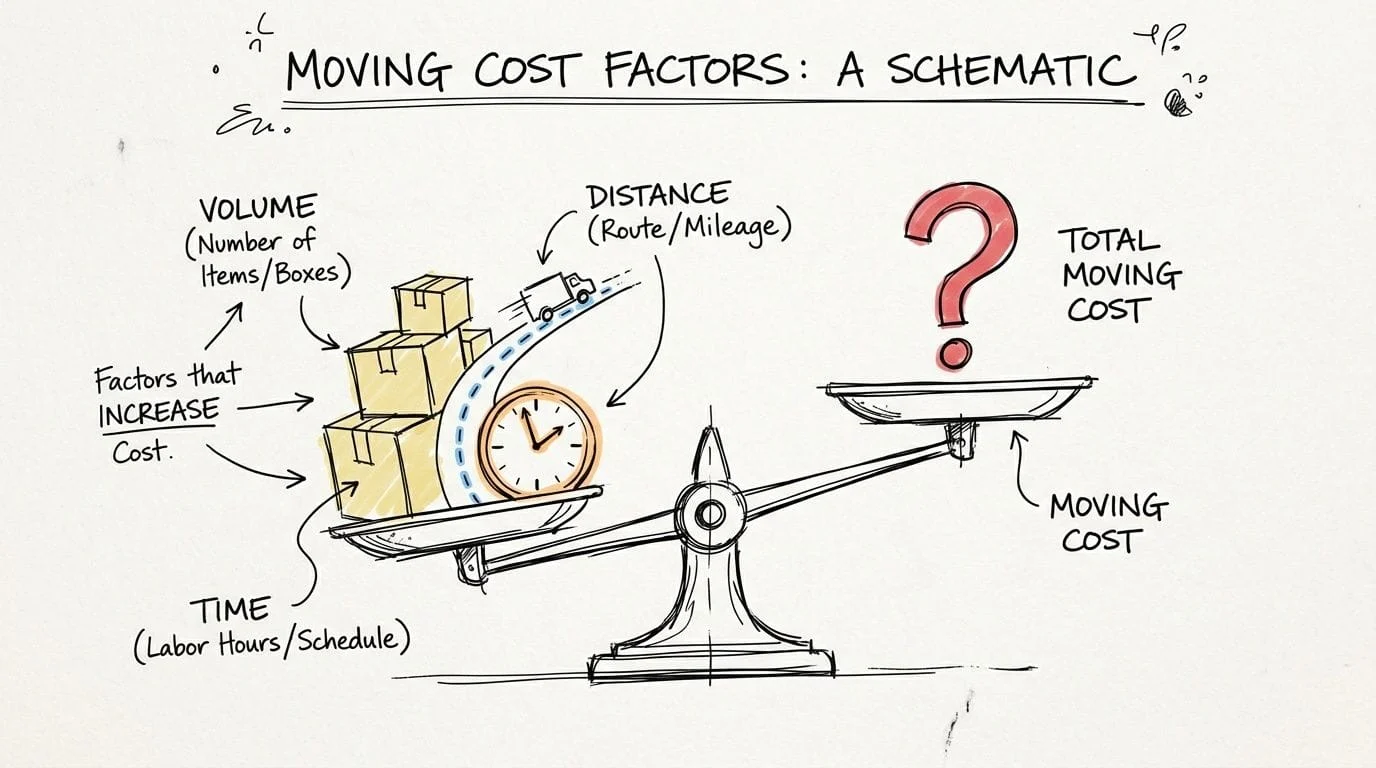
The main factors behind the quote
Why quote structure matters
Insurance: what to check before you move and store
Insurance sounds straightforward until something needs to be claimed. The confusion usually comes from assuming that one policy covers everything, when different types of cover address different risks.

Goods-in-transit insurance covers belongings while they are being moved. Public liability insurance covers third-party property damage or injury during the job, such as accidental damage to a communal area. Both matter, and both should be explained clearly before booking, not just confirmed as existing.
When storage is involved, the question becomes more layered. Items in storage need separate confirmation of what is covered, what conditions apply, and whether cover continues for the full duration of the storage period. Soft furnishings, artwork, and archived paperwork in a six-month storage arrangement need different reassurance than a van load being held overnight.
For specialist or high-value items, the conversation should happen during the survey. Pianos, antiques, artwork, and designer furniture should be declared clearly rather than listed as general contents. That allows the right handling plan and the right cover level to be agreed upon before the move starts.
A practical checklist before booking:
A practical checklist for a London move with storage
Eight weeks before the move
Decide early whether storage is likely to be part of the plan. If the new property needs preparation work, a refurbishment, or if completion dates are still uncertain, build storage into the plan now rather than treating it as an emergency option later.Then deal with the practical foundations:
Four weeks before the move
Confirm the storage duration. If the property needs a deep clean or a coat of paint, one week of storage is usually enough. If a kitchen or bathroom is being replaced, allow four to six weeks. If a full refurbishment or extension is planned, two to four months is a realistic minimum.
Handle the administrative tasks that people consistently leave too late:
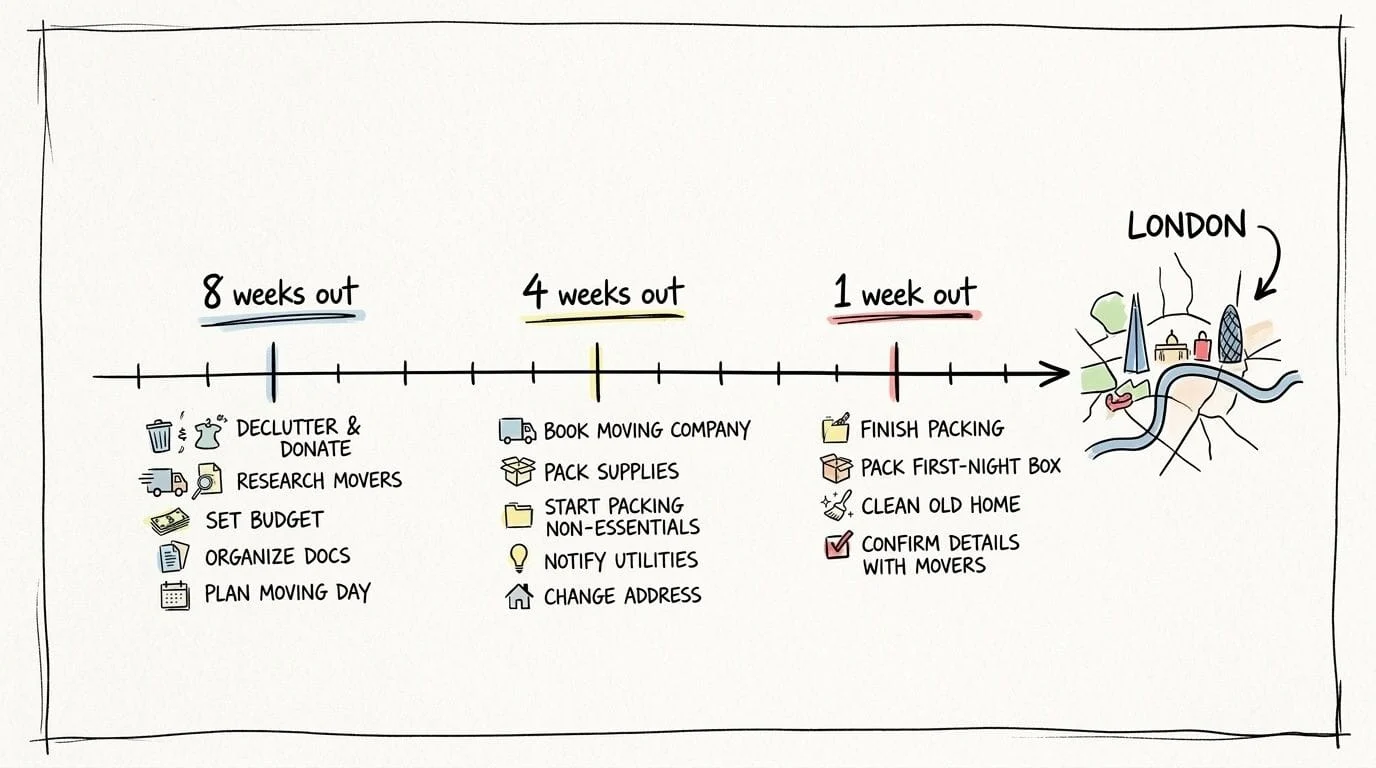
One week before the move
Packing should be controlled rather than frantic. Every box needs a clear room label and a brief content note. If items are being stored, label them as "storage" with an inventory reference. That makes redelivery faster and reduces the risk of belongings being delivered to the wrong room or mislaid during retrieval.
Prepare the essentials box: chargers, kettle, tea and coffee, medication, toilet roll, pet items, basic tools, cleaning cloths, and bedding for the first night. If the new property isn't ready immediately, this box keeps the first evening manageable.
Also before moving day:
Moving day and delivery
Before the van leaves, conduct a final walk-through of the entire property to ensure nothing has been left behind. Check every room, but pay particular attention to the places that get missed: cupboards, under-stairs storage, the loft or attic, the shed, the garage, balconies, and any outbuildings. These are consistently where forgotten items turn up once the van is already gone.
If belongings are going into storage rather than directly into the new property, confirm the inventory before the van leaves. A clear record of what has gone in makes redelivery straightforward and prevents disagreements later.
When the new property is ready, confirm the delivery date with sufficient notice for the company to properly schedule the vehicle and crew.