The boxes aren't packed yet, the paperwork is spread across the kitchen table, and the move still feels bigger than it ought to. That's a very London problem. A house move in the capital rarely fails because of one dramatic issue. It usually gets harder because of a handful of small things, access times, parking permissions, lift bookings, keys arriving late, or a quote that looked clear until the van turned up.
That pressure is easier to manage once the move is treated as a process rather than a single day. London sees constant housing churn, and in 2025 it recorded the lowest net migration of any UK region, based on analysis of more than 726,000 home-moving quotes that year. A house move london is common, but it only feels smooth when the planning is specific.
Planning your London move without the panic
A common mistake is thinking the hard part starts on moving day. In London, the hard part starts earlier, when dates are still uncertain and nobody has yet asked the awkward questions. Is there a booked lift in the new block? Can the van stop outside the house in Walthamstow? Will the porter in Canary Wharf release access before keys are confirmed? Those details decide whether the day runs calmly or turns into a scramble.
A practical move begins by separating the job into three tracks. One track is paperwork and dates. Another is access and logistics. The third is contents, meaning what is being moved, packed, dismantled, stored, or left behind. Once those are treated separately, the move stops feeling like one giant problem.
Practical rule: if a task affects van access, building access, or key timing, deal with it earlier than feels necessary.
That matters even more in a city where moves happen constantly. London's high churn means removals teams regularly deal with chain delays in family homes, short-notice flat departures in places like Stratford and Hammersmith, and same-day key collections across several postcodes. The move may feel personal, but the practical issues are familiar and solvable.
A useful starting point is a simple written brief. It doesn't need to be formal. It just needs to answer the questions a removals manager would ask straight away:
The calmer moves are rarely the simplest. They're the ones where the awkward details are known early, then planned around properly.
Your 8-week countdown: a house move timeline
A typical London house move involves a significant number of tasks, and in peak season, booking a reputable removal firm six to eight weeks in advance is advisable. Availability tightens quickly once summer dates, school holidays, and month-end bookings fill up.
The timeline below works because it maintains a realistic order. People often try to pack too early and organise access too late. That's the wrong way round.
Eight to six weeks before
This stage is about locking in the foundations.
Five to four weeks before
The preparations for the move within the home are now becoming apparent. Non-essential rooms should begin to change shape. Spare rooms, bookcases, archived paperwork, seasonal clothes, and decorative items can be packed without affecting day-to-day life too much.
A sensible approach is to pack by function, not just by room. All formal documents should remain together, regardless of where they are stored. Chargers, routers, remote controls, and instruction manuals should be grouped with the items they belong to. Kitchens should be packed in layers, rarely used items first, daily basics last.
A move runs better when every packed box answers two questions clearly: what's inside, and where it needs to go.
Tasks to handle in this window:
Three to two weeks before
By now, the move should look organised rather than hopeful. This is the moment to test assumptions. If a family believes everything fits into one vehicle, the inventory should support that. If a renter expects quick kerbside loading in Camden or Hackney, parking permission should already be in motion.
This is also the right time to create a final access sheet. One page is enough. It should include contact names, mobile numbers, postcodes, entry instructions, floor numbers, lift rules, parking details, and any time restrictions. That document saves a lot of back-and-forth on the day.
Use this period to tighten the plan:
Final week and moving day
The final week should feel lighter, not busier. If it feels chaotic, the earlier stages probably haven't been completed properly.
The night before, keep kettle items, toiletries, chargers, basic tools, and bedding accessible. On the day itself, one person should act as the point of contact. That avoids confusion when keys arrive, the estate agent calls, or building staff ask questions at the entrance.
A simple moving-day checklist helps:
How to get an accurate fixed-price removal quote
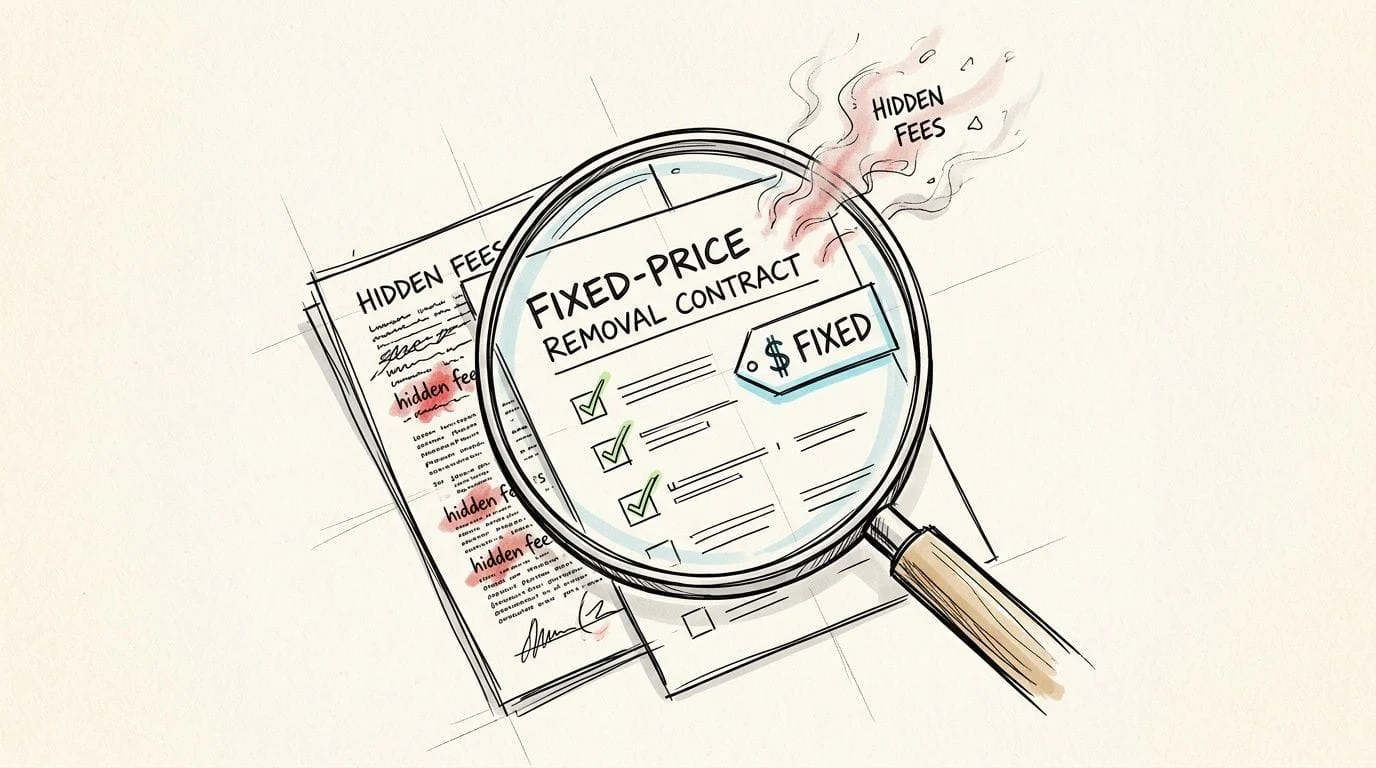
The biggest difference between a calm move and an expensive one is often the quality of the quote. A vague estimate sounds convenient, but it leaves too much room for disagreement once the job starts. A proper fixed-price quote should match the actual work, the actual contents, and the actual access conditions.
What a proper quote needs
The best quotes are based on a video survey or an in-person assessment. That allows the removal surveyor to see what online forms usually miss, packed lofts, side entrances, restricted parking, oversized sofas, glass tables, steep stair turns, or a flat that looks small on paper but contains far more than expected.
A fixed-price quote should make these points clear in writing:
What to check before saying yes
Insurance language often gets waved through too quickly. Customers should check that the company explains goods-in-transit and public liability cover in plain terms, not just as a vague "fully insured" statement. One protects items during transport. The other relates to wider liability during the job. If the wording is unclear, it's worth asking for clarification before booking.
Accreditations also matter, not because they sound impressive, but because they show the firm operates within recognised standards and accountability frameworks. Professional bodies such as BAR, the National Guild of Removers & Storers, and the Removals Industry Ombudsman provide customers with a clearer route if anything needs to be checked or resolved.
The benchmark for any company is straightforward: can it explain its insurance cover clearly, and can it show what its accreditation actually requires of it? A well-run firm should answer both without hesitation.
If a quote can't explain the price clearly before the move, it usually won't become clearer on the day. A reliable quote should leave very little open to interpretation. If the scope is vague, the risk sits with the customer.
Navigating London's unique logistical challenges
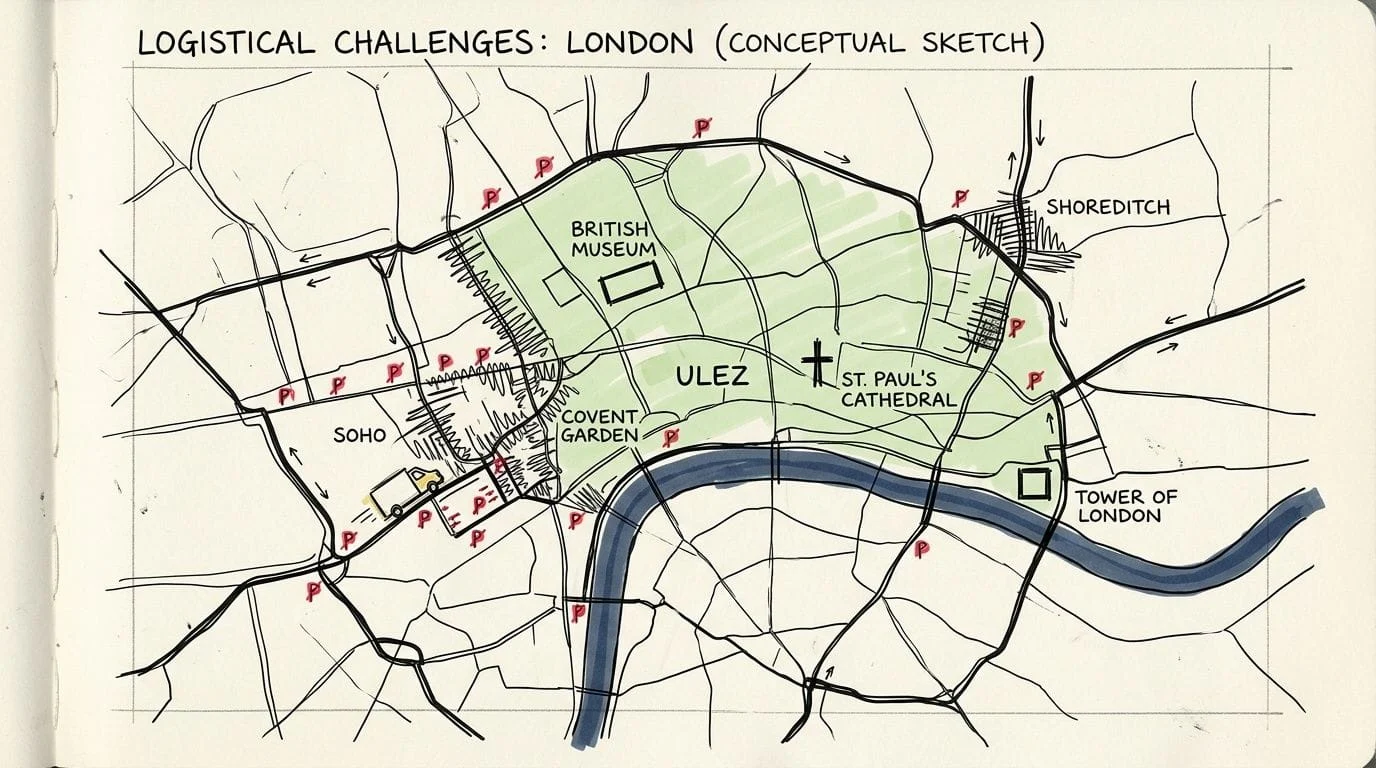
The most underestimated part of a house move london isn't packing. It's access. London punishes assumptions. A route that looks simple on a map can become awkward because the van can't legally wait outside, the porter won't release the lift, or the only loading point is around the corner and down a steep pavement.
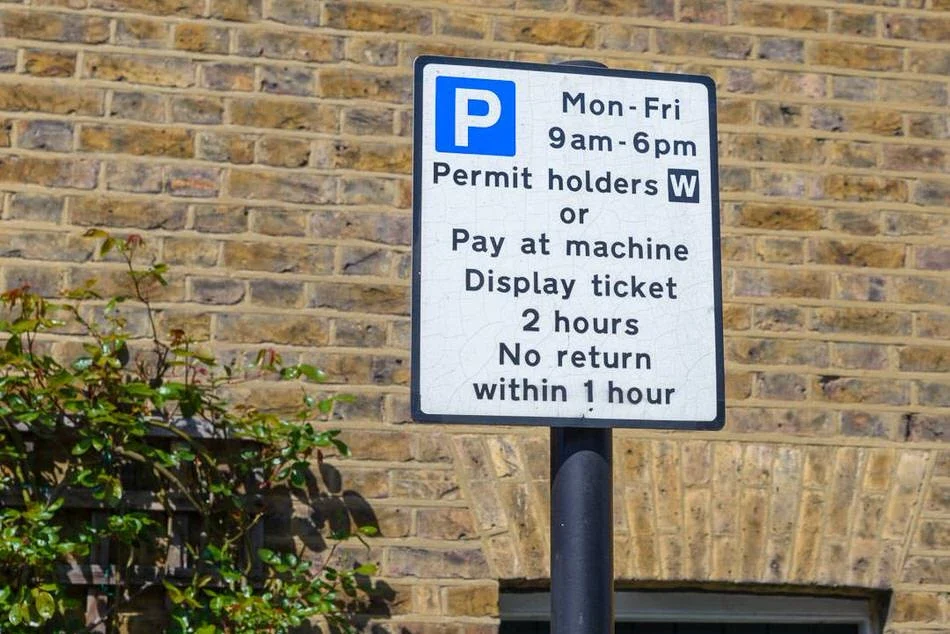
Parking suspensions and CPZ rules
Late parking planning causes delays that have nothing to do with the removals crew and everything to do with street rules.
Buildings, streets and access restrictions
Parking is only one side of London access. Building management can be just as strict. Modern blocks in areas such as Nine Elms, Stratford, Canary Wharf, and parts of Wembley often require pre-booked lifts, loading bay reservations, proof of insurance, and named arrival windows. If those aren't confirmed, the crew may be ready but unable to start.
Older properties create different problems. Victorian terraces in Islington, Fulham, or parts of Brixton may have narrow hallways, split-level entrances, steep stairs, and very limited pavement space. Basement flats can involve long carries and awkward turns. Red Route locations need even more care, because stopping rules can be far tighter than customers expect.
Before the move, these checks make the day far easier:
When a London move goes off track, it usually isn't because the destination is far away. It's because access at one end wasn't properly understood.
A practical system for packing and storage
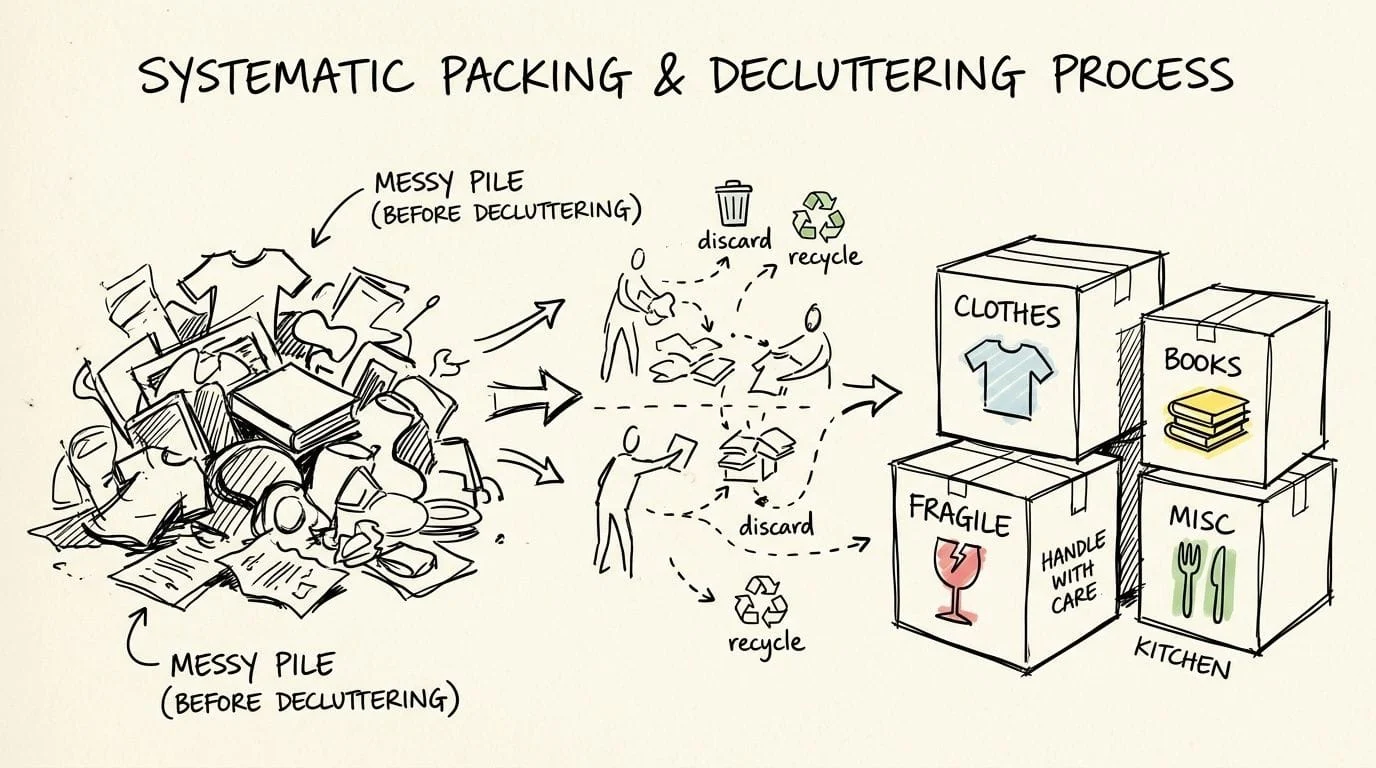
Packing works best when it follows a system. Without one, people start with enthusiasm, mix rooms together, run out of proper materials, and arrive at the new address with boxes that say "misc". That label never helps anyone.
Pack less before packing better
The strongest packing plan starts with subtraction. Before any tape is torn off a roll, each room should be divided into four groups: keep, store, donate, and dispose. That cuts waste and makes the inventory more accurate.
This matters most in lofts, utility areas, spare rooms, and under-bed storage, where volume accrues. Items that haven't been used for a long time often cost more effort than they're worth. Fewer boxes also make access easier at both properties.
A useful room-by-room sequence is:
Use a labelling system that survives moving day
Good labelling is simple and repetitive. Every box should include the destination room, a brief contents summary, and whether it's fragile, heavy, or needs to be delivered early. Top and side labels both help, because stacked boxes don't always leave the top visible.
For fragile items, wrapping is essential, but it only does its job when the box is also packed correctly. Plates should be packed securely so they can't shift. Glassware needs cushioning and sensible weight distribution. Electronics should travel with their cables grouped and identified. Important documents should never get lost in general packing.
A practical packing kit usually includes:
When storage makes the move easier
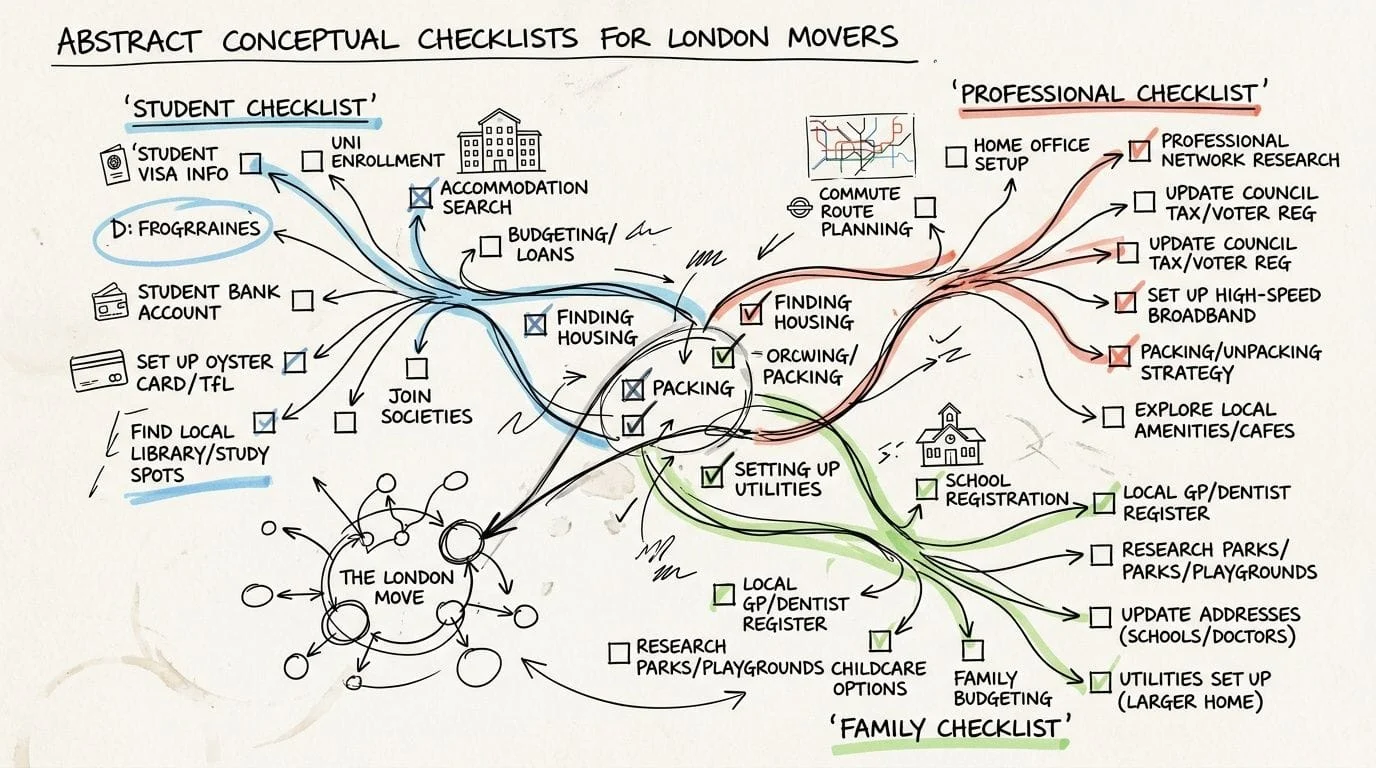
Tailored checklists for your London move
Not every move in London follows the same pattern. A family leaving a house in Harrow has different pressure points from a renter leaving a flat in Bethnal Green, a student clearing halls, or a small office shifting desks and screens across town. The core planning stays the same, but the details change.
Homeowners
Homeowners usually have more administration around the move date itself. Completion times, key release, chain uncertainty, and property condition all matter.
A focused homeowner checklist should include:
Renters
Renters often work to tighter deadlines. No-fault evictions have increased in recent years, and many renters now face short-notice moves with less preparation time than they would have chosen. That makes renter planning more defensive. The move isn't only about getting into the new flat. It's also about protecting the deposit and finishing the old tenancy properly.
Key points for renters:
Students
Students face many of the same timing pressures as renters, but often with less space, fewer boxes, and tighter budgets. Halls, shared houses, and term dates can compress the whole move into a very short window.
The most reliable student checklist is simple:
Short-notice student moves tend to go wrong when the contents are underestimated. A "small move" still needs proper packing and a clear list.
Small businesses
Office and studio moves depend on continuity. Staff need to know what's happening, clients need the right address information, and equipment has to arrive in a usable order.
A small-business checklist should cover:
A business move often benefits from staged packing. Archive first, active workstations last. That keeps disruption down and gives the new space a better chance of being functional quickly.