
A house move is one of the more disruptive things a family goes through. For adults, the logistics are demanding enough. For children, the experience often brings a different kind of difficulty: the loss of a familiar bedroom, a known route to school, and friends who live nearby.
That disruption is manageable with the right preparation. The families who find the transition easiest are usually the ones who brought their children into the process early, kept routines stable where possible, and gave the new home time to become familiar before expecting it to feel normal.
This guide covers the practical strategies that help, written with London moves in mind, where school catchments, borough changes, and new neighbourhoods add layers that families outside the city don't face in the same way.
Communicate early and involve them in the process
Children handle change better when they understand what is happening and feel they have some part in it. The earlier the conversation starts, the more time they have to process the idea before moving day arrives.
Be specific rather than vague. Telling a child the new house has a garden they can use, or that there's a park nearby, gives them something concrete to picture. Showing photos of the new property or the street on Google Maps can make an abstract idea feel real.
Give them small decisions where possible. Which colour for their new room, which toys go into their essentials box, where they want their bed. These choices matter to children because they signal that the new home is theirs too, not just something happening to them.
For younger children, visual aids help. A simple drawing of the new floor plan with their room marked, or a photo of the front door, gives them a reference point for the conversations that follow.
Think ahead about schools and London catchments
This is the London-specific consideration that catches families out more than any other. School admissions in London are tied to catchment areas, and moving borough or even moving within a borough can affect which schools your child is eligible for.
If the move crosses a borough boundary, the admissions process for the new area may be entirely separate from the one you are familiar with. In-year admissions, waiting lists, and appeal processes vary between boroughs and can take longer than families expect.
The practical advice is to start the school conversation well before the move, not after. Contact the admissions team at the destination borough as early as possible, and if the move is timed around a school year, plan for the possibility that the start date at a new school may not align exactly with moving day.
Explore the new neighbourhood together
Familiarity reduces anxiety. If it's possible to visit the new area before moving day, do it with the children rather than as a separate adult errand.
Walk the route from the new home to the nearest park or playground. Find the local library. If the new school is nearby, walk past it. Knowing where things are before the first day in a new area makes the environment feel less unknown.
In London, each neighbourhood has a different character, and children pick up on that. A move from a quiet suburb to a busier area, or from a flat to a house with a garden, brings changes beyond just the address. Acknowledging those differences openly, rather than minimising them, tends to work better than pretending everything is the same.
Keep routines stable during the transition
Children rely on routine for stability, and a move disrupts almost every routine at once. The ones worth protecting most are the ones that happen daily: mealtimes, bedtime, and any regular family activity that doesn't depend on location.
A Friday pizza night, a Saturday morning routine, a bedtime story, all of these can continue in the new home and signal to children that the important things haven't changed. The house is different. The family isn't.
Transitional objects matter too. A favourite blanket, a stuffed animal, or a particular book should travel with the child rather than in a removal box. Having familiar belongings accessible from the first night helps the new bedroom feel less unfamiliar.
Pack an essentials box for each child
The first night in a new home is often the hardest. Boxes are everywhere, nothing is in the right place, and the space still feels nothing like home.
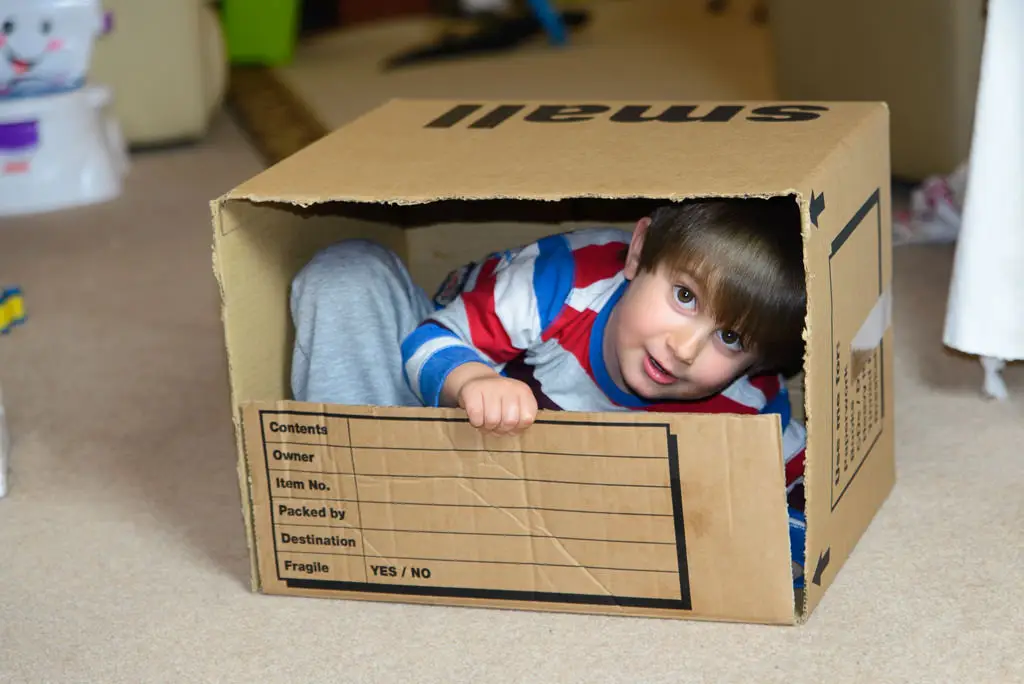
A clearly labelled essentials box for each child, kept separate from the removal van if possible, makes that first evening much easier. Include comfort items, a change of clothes, pyjamas, toiletries, any medication, and something for quiet time if the unpacking runs late. Our guide to the first night box covers what to include in more detail.
Set up their rooms first
When the van arrives at the new property, make the children's rooms the first priority. Getting their familiar belongings unpacked and in place gives them a space that feels like theirs before the rest of the house is sorted.
Let them have a say in where things go. Even small choices, like where the bed faces or where a particular poster goes, give children ownership of their new space. A room that reflects them settles faster than one that was arranged without their input.
Give the adjustment time
Children adjust at different rates. Some take to a new home and neighbourhood quickly. Others take weeks or months before it feels normal. Both are reasonable responses to a significant change.
Common signs of adjustment difficulty include reluctance to talk positively about the new area, frequent requests to visit the old neighbourhood, or withdrawal from activities they previously enjoyed. None of these is a cause for alarm in the short term, but they are worth noticing.
What helps most is consistency. Keeping the routines stable, acknowledging that it's reasonable to miss the old home, and not expecting enthusiasm before the child is ready. The new area becomes familiar through repeated experience, not through being told it should feel like home.
Arranging contact with friends from the old neighbourhood also helps. A move doesn't have to mean those friendships end, and children who know they can still see familiar people tend to find the transition easier.
Before you leave the old home
Allow children to say a proper goodbye to the old property. This can feel like an unnecessary step when there is so much else to manage on moving day, but it matters more to children than it usually does to adults.
A walk through each room, a last look at the garden, or even a few photos taken by the child of their favourite spots, all help to give the departure a sense of completion rather than something that just happened around them.