

Decluttering before a move is one of the most effective ways a household can reduce costs, simplify packing, and make the whole process easier to manage. It is also one of the most consistently skipped steps, usually because it feels like extra work at an already busy time.
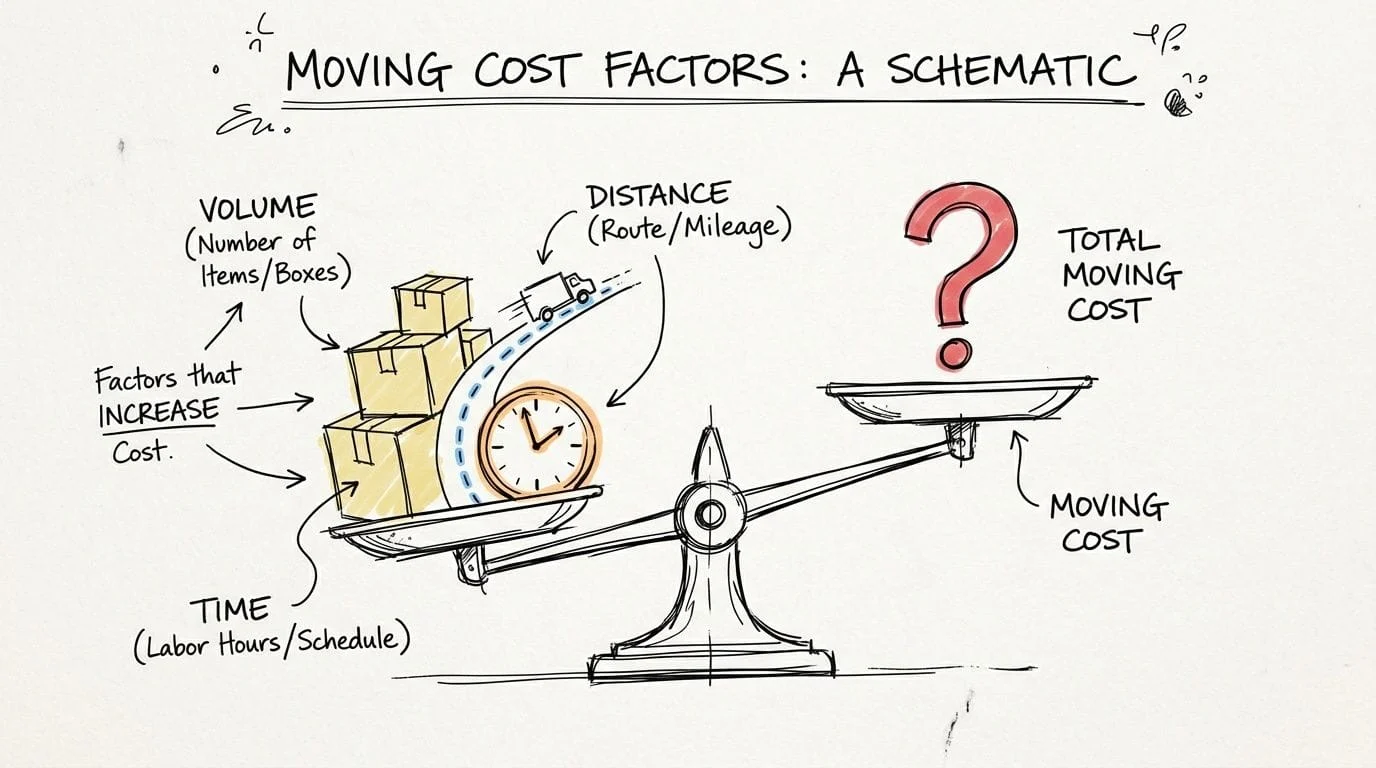
The logic is straightforward. Removal quotes are based on volume. Less volume means a smaller van, fewer hours of labour, and a lower final bill. It also means fewer boxes to pack, fewer boxes to carry, and fewer boxes to unpack at the other end. The time spent sorting belongs before packing begins, not alongside it.
This guide takes a room-by-room approach because different rooms carry different sorting challenges, and working through the property systematically is more effective than trying to do everything at once.
Why decluttering before a quote matters
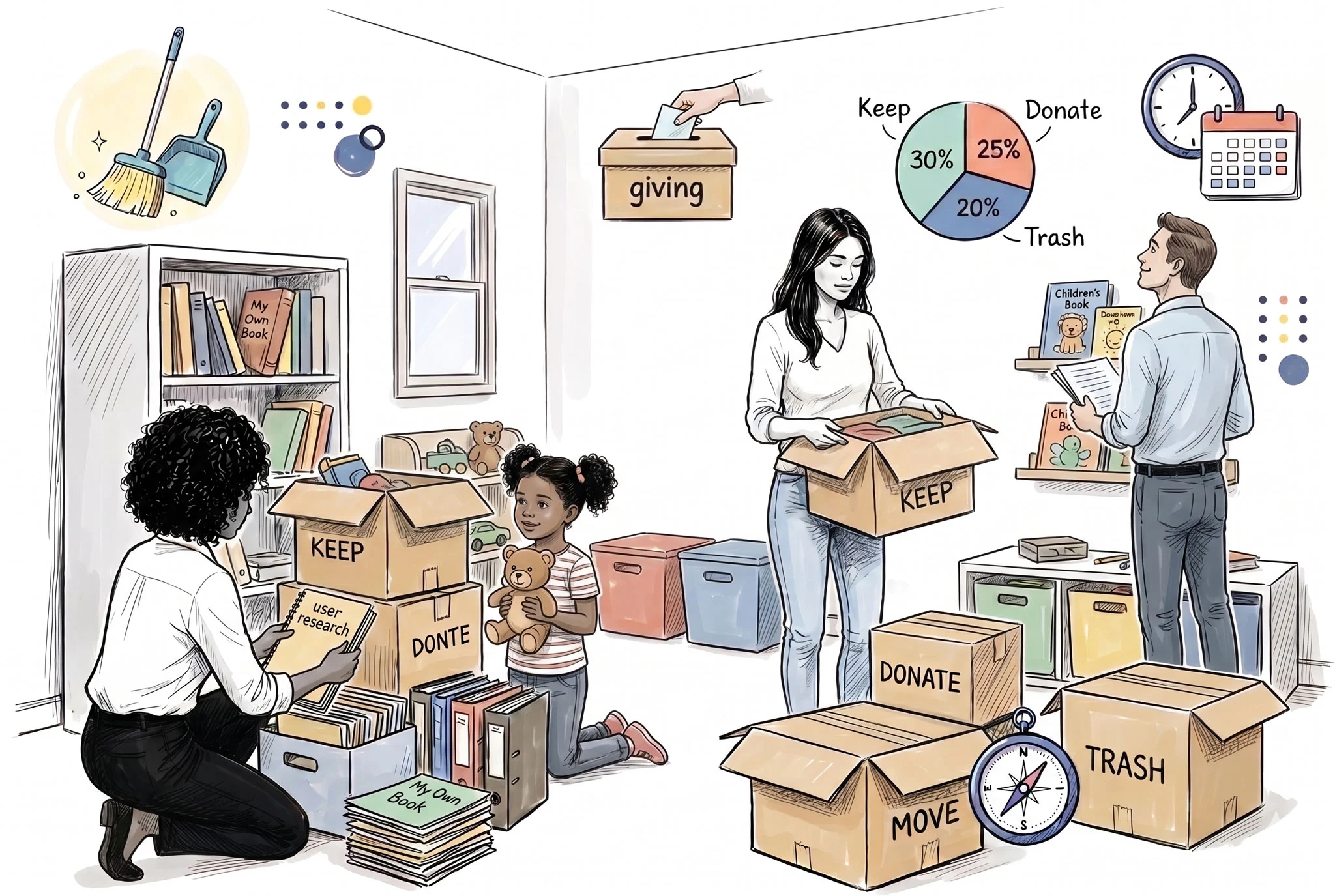
The four sorting categories
Room by room
Kitchen
Kitchens tend to accumulate more unused items than any other room, often because duplicates are easy to miss and drawers rarely get fully emptied.
Work through every cupboard, drawer, and shelf. Common items to sort include duplicate utensils and gadgets, appliances not used in over a year, crockery and glassware beyond what the household actually uses, out-of-date food, and worn or mismatched storage containers. Good-quality items in sets are often worth selling. Individual or worn pieces are better donated or disposed of.
Living room
Living rooms typically hold furniture, books, media, and decorative items. Bookshelves are worth going through, honestly, as books are heavy, and a full box of books adds meaningful weight and volume to a move.
Furniture is the bigger decision. Pieces that will not suit the new property, do not fit the new space, or are already worn are often not worth moving. Measuring the new rooms before the sort helps clarify those decisions. Furniture in good condition can often be sold or donated via local groups with minimal effort.
Bedrooms
Wardrobes and storage are the priority in bedrooms. Clothing is often the largest category by volume and the most over-accumulated. A practical approach is to sort everything currently stored into what has been worn in the last twelve months and what has not. Items not worn in that period are unlikely to be worn at the new address.
Bedding, spare pillows, and towels beyond what the household regularly uses can be donated to homeless shelters, animal rescues, or charity shops, most will accept clean, usable textile items.
Children's bedrooms deserve their own session. Outgrown clothing, toys not played with, and old school materials can all be sorted with the child involved, which also helps them feel part of the move rather than unsettled by it.
Home office and paperwork
Paperwork is one of the easiest categories to reduce significantly. Most documents that are more than seven years old can be shredded, unless they relate to property, pension, or legal matters. Current documents should be consolidated into a clearly labelled folder that travels separately from the main load on moving day, not in a box in the van.
Electronics and cables deserve attention too. Old phones, unused chargers, broken accessories, and duplicate cables add weight and bulk for no return. Most councils have electrical item recycling facilities, and some retailers offer take-back schemes.
Garage, loft, and storage areas
These spaces almost always contain the most redundant items in a property and are often left until last, which is the wrong order. Sort these early because they tend to require the most disposal logistics, including tip runs, bulky waste collections, and collection arrangements for larger items.
Garden and DIY tools that are rarely used, old paint and materials, sports equipment no longer in use, and stored items kept "just in case" for years are all worth reassessing. Items kept on the basis that they might be useful one day often cost more to move than they are worth.
The "just in case" problem
One of the most common reasons a declutter does not go as far as it should is the habit of keeping things out of fear of future use. A spare set of plates, a second duvet, an old printer, tools for a project never started, each individually seems reasonable to keep. Together, they add significant volume and cost to a move.
A useful test is to ask whether the item would be bought again if it were not already owned. If the answer is no, the default position should be to let it go rather than move it.
If it has not sold a week before the move, give it away
This is a practical point that catches many households out. A sofa, wardrobe, or dining table listed for sale with good intentions can still be sitting in the property a week before moving day. At that point, the options narrow quickly.
If a bulky item has not sold and is not coming to the new address, the default should be to relist it as free collection immediately rather than waiting any longer. Free items on Facebook Marketplace, Freecycle, or Freegle tend to go within hours. Paid listings that have not moved in two or three weeks are unlikely to sell in the final days before a move.
The alternative, leaving bulky unsold items to deal with on or after moving day, almost always costs more. Council bulky waste collections need advance booking and may not be available at short notice. A last-minute clearance or disposal run adds time, effort, and often direct cost to an already busy day. In some cases, it also delays handing over the keys.
Timing and how to approach the sort
Where to sell, donate, and dispose in London
A well-decluttered home produces a more accurate quote, a faster pack, a more efficient load, and a cleaner start at the new address. The sorting done before the survey earns its time back several times over on moving day.
Best London Removals Ltd carries out home, flat, and office removals across Greater London, with surveys, fixed-price quotations, and access planning included as standard. Smaller jobs are available as man and van hourly bookings, where the team advises a realistic time estimate based on the scope of the work.