

Recent research by the Office for National Statistics shows that more people are moving out of London than in. And with it, more people are moving to the countryside, and in particular young families.
Whether these movers are looking for more space, greener areas or a more peaceful way of life, the largest city in the UK is slowly shrinking
Why a first night box makes such a difference
Moving day is long. By the time the van is unloaded, the furniture is in roughly the right rooms, and the team has left, the last thing most people want to do is open twenty boxes looking for a toothbrush.
A first night box, sometimes called an essentials bag or overnight box, is simply a dedicated box or bag packed with everything you need for your first evening and morning in the new home. It travels with you or goes on the van last so it comes off first, and it means you can have a cup of tea, find your phone charger, and get the beds made without touching anything else.
It sounds simple because it is. But in many years of carrying out home moves across London, we see the same thing regularly: people who packed a first night box are settled and comfortable within an hour of the van leaving. People who did not are still looking for their kettle at 10pm.
This guide covers exactly what to include, how to pack it, and a few things people consistently forget.
When to pack your first night box
Pack it the day before you move, not on moving day itself. Moving day is chaotic enough without trying to set aside essentials while everything else is being loaded. Once it is packed, label it clearly “OPEN FIRST” in large letters on every side, and keep it somewhere obvious so it does not accidentally get stacked at the back of the van.
If you have children or pets, prepare their essentials box at the same time. Having their things immediately accessible makes the first few hours considerably calmer for everyone.
What to pack, room by room
The kitchen essentials
The kitchen is the room most people want functional first, and the one that takes the longest to unpack properly. You do not need everything, just enough to get through the first evening and morning without ordering a takeaway or hunting through boxes.
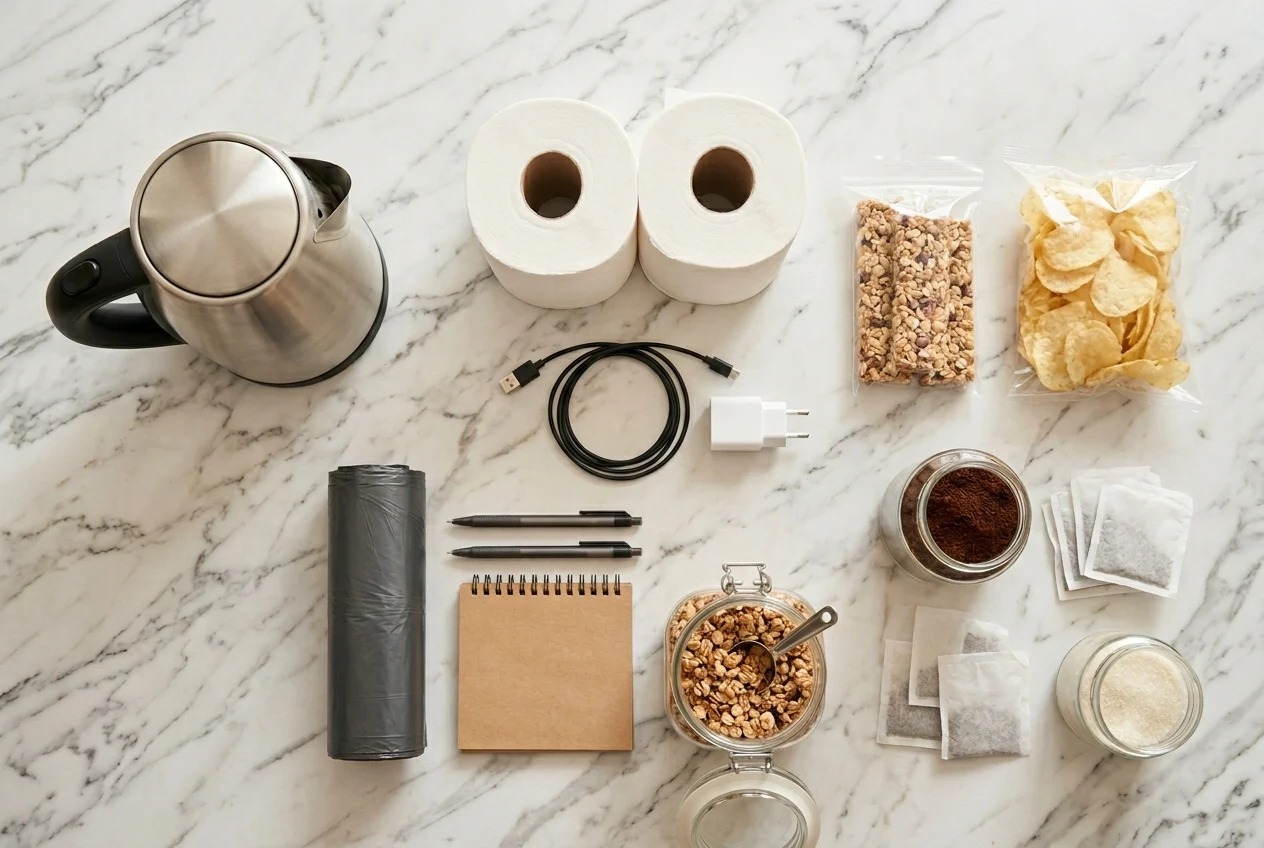
Pack a kettle, mugs, teabags or coffee, milk (in a cool bag if needed), sugar, a couple of plates and sets of cutlery, a saucepan if you plan to cook, washing-up liquid, a sponge, and a tea towel. A roll of kitchen paper and a small bottle of surface cleaner are also worth including, new kitchens often need a quick wipe down before you want to use them.
If you have children, pack their snacks, a bottle or two of water, and anything they need for breakfast the next morning. Do not rely on being near a supermarket on moving day, it is one more thing to organise when you already have enough to think about.
The bathroom essentials
You will want a shower or bath at the end of moving day, and you will want your toothbrush before bed. Pack toiletries for everyone, toothbrushes, toothpaste, soap or shower gel, shampoo, deodorant, and skincare if relevant. Add a towel for each person, toilet paper (at least two rolls, this is one of the most commonly forgotten items), and any daily medications or supplements.
If you wear glasses or contact lenses, keep them with you rather than in the first night box — the risk of them getting packed away with everything else is not worth it.
The bedroom essentials
The beds may or may not be assembled on moving day depending on how the schedule runs. Either way, pack bedding for everyone, a duvet, pillows, and bed linen for each bed. If the beds are not going to be reassembled until the following day, a sleeping bag or camping mat is a practical backup, particularly for children.
Pack pyjamas or comfortable clothes for the evening and a change of clothes for the next morning. This sounds obvious but it is consistently the thing people forget to separate from the rest of their clothes, which are usually in boxes labelled “bedroom” somewhere in a pile.
Tools and practical items
A few basic tools are worth having immediately accessible. A Phillips and flat-head screwdriver, a small hammer, and a box cutter or scissors will be needed within the first hour, for assembling flat-pack furniture, opening boxes, or dealing with anything the movers could not fully assemble before leaving. A torch or headtorch is useful if you move in late in the day and the lighting is not yet set up.
Pack phone chargers and any other essential device chargers. Laptop chargers if you are working the following day. A portable power bank if you have one, useful if the sockets are not yet accessible while furniture is being arranged.
Documents and keys
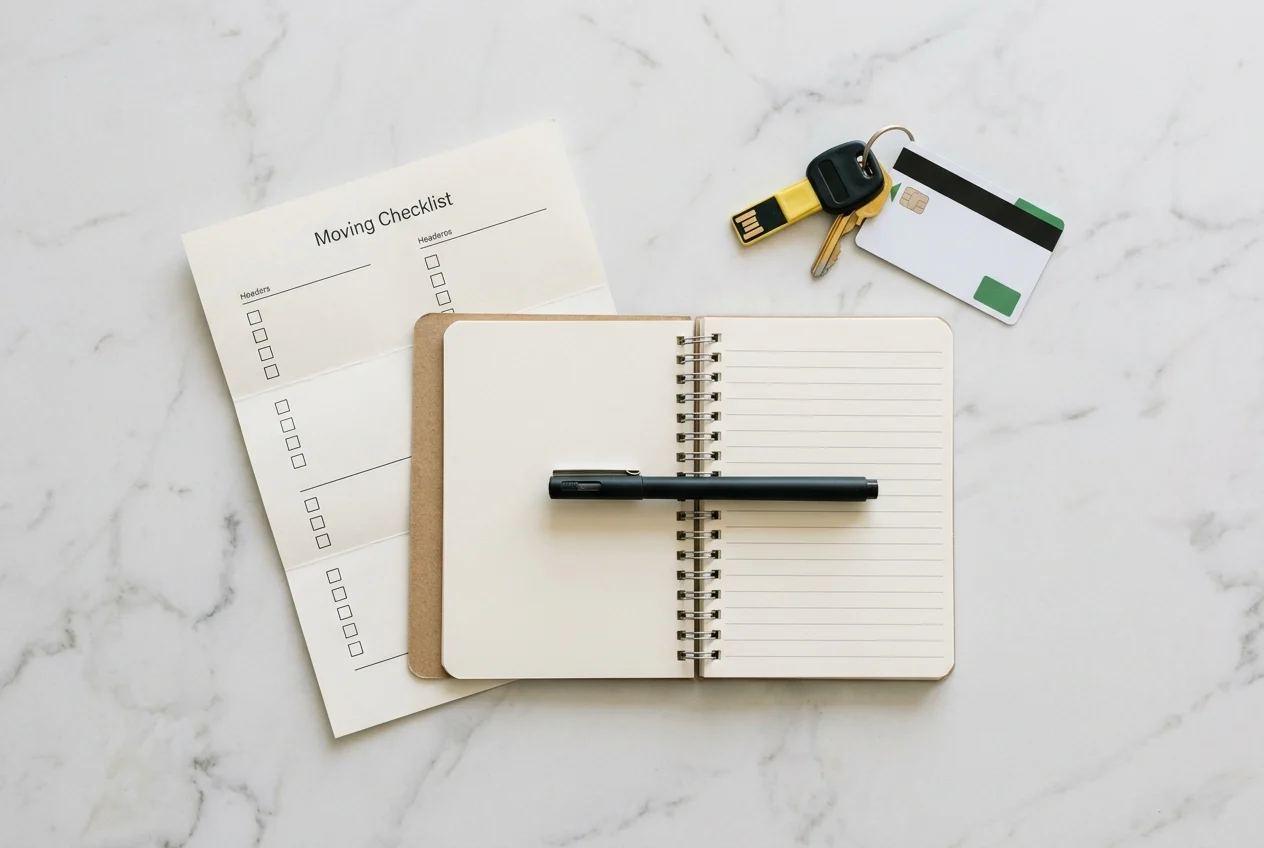
Keep important documents with you rather than in the van. This means your identification, tenancy agreement or completion paperwork, home insurance documents, any utility account references, and the keys to the new property including any spares. Put all of this in a folder or envelope inside your personal bag, not in the first night box itself — you want these on your person throughout the day.
Write down or screenshot the emergency contact numbers for your utility providers, broadband company, and building management if applicable. If something goes wrong on your first evening, a boiler that is not working, a question about the electricity meter, having these numbers immediately to hand saves a lot of time.
Children and pets
If you are moving with children, their first night box needs its own preparation. Pack their favourite comfort items, a few familiar toys or books, their bedding, a change of clothes, and anything they need for school or nursery the following morning. Having something familiar and easily accessible makes a significant difference to how settled children feel in a new environment on the first night. More about moving with kids
For pets, pack food, water bowls, their bed or blanket, a lead if it is a dog, a litter tray if it is a cat, and any medications. Keep pets in a quiet room while the move is happening and make sure they have access to their familiar items as soon as you arrive. The first night box principle applies equally here — have everything they need immediately accessible rather than buried in a box. Read more about moving with cats
A few things people consistently forget
Moving day reveals the same oversights again and again. Here are the items most commonly missing from first night boxes:
Toilet paper. Always forgotten, always needed immediately. Pack at least two rolls.
Phone chargers. Packed in a box labelled “office” or “bedroom” and not found until the following day.
The kettle. Packed because it seemed logical to pack the kitchen together. The tea stays hot for four minutes while everyone searches for it.
Bin bags. You will generate a significant amount of packing waste on moving day and the following morning. Pack a roll in the first night box.
A pen. Needed for signing paperwork, labelling anything that gets moved around on the day, and writing notes. Pack two.
Snacks for the afternoon. Moving is physical work and lunch gets skipped more often than you would expect. A few easy snacks keep everyone going through the afternoon.
The meter readings notebook. Take gas, electricity, and water meter readings on arrival and note the date. Keep this with your documents. You will need it for your first utility bills.
How to pack and label the box
Use a sturdy box rather than a bag if you are including heavy or fragile items like the kettle. A medium-sized double-walled box works well, large enough to hold everything, small enough that it does not get buried under larger boxes.
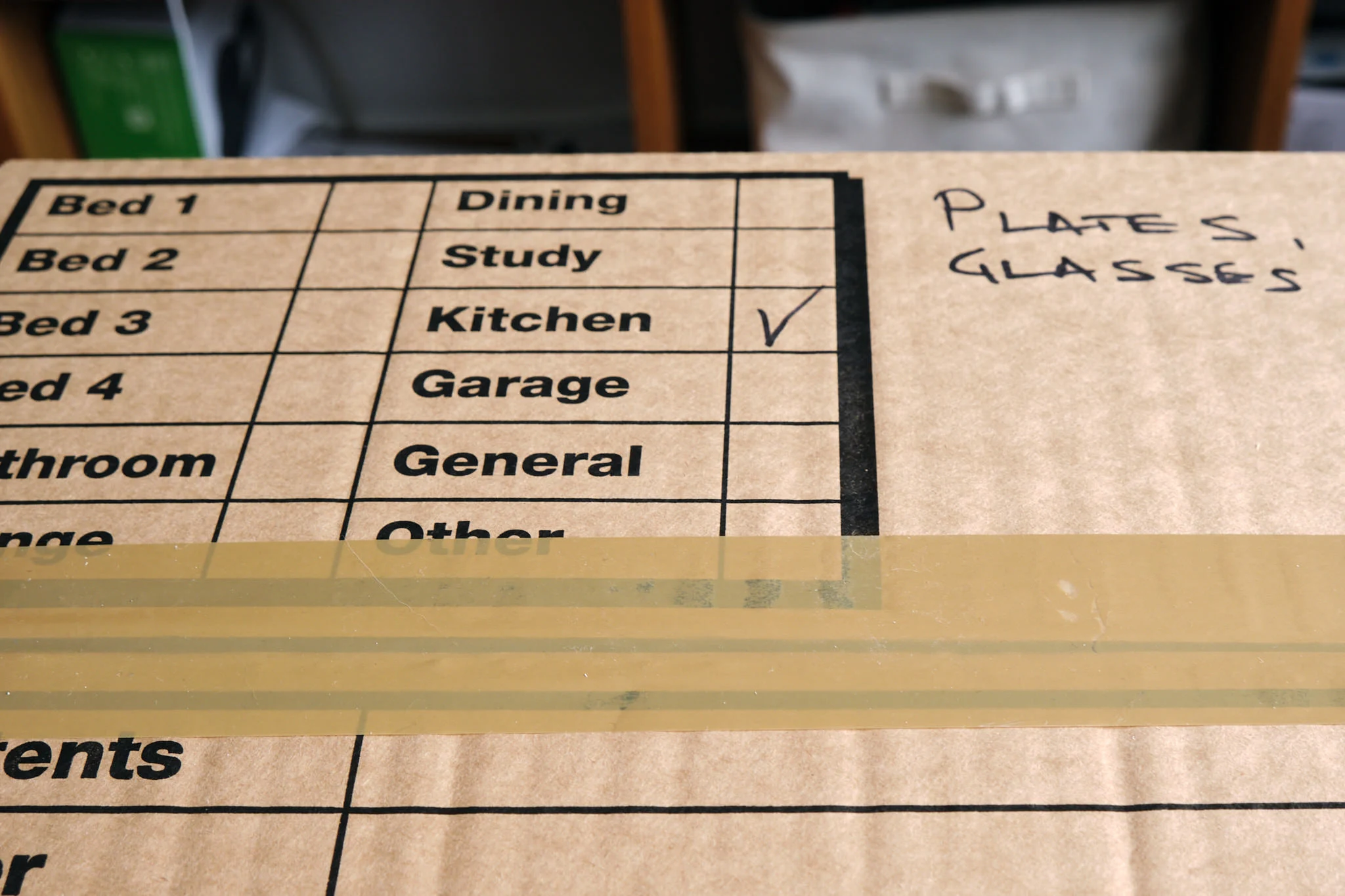
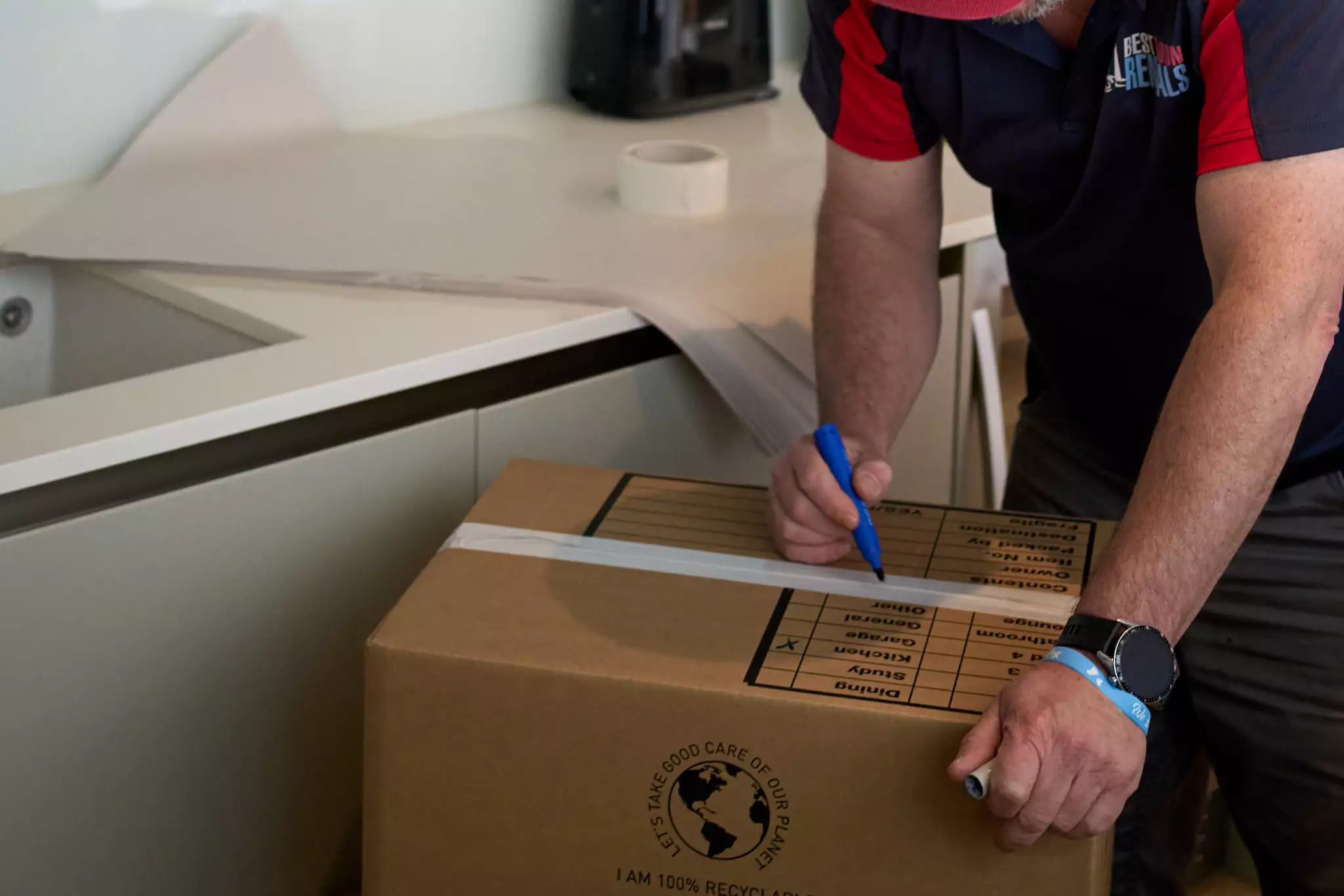
Label all four sides and the top clearly: “OPEN FIRST, ESSENTIALS.” Use a brightly coloured marker or tape so it stands out visually among the other boxes. Tell your removal team it is the last box to go on the van and the first to come off — any professional team will understand immediately and accommodate this without any fuss.
If you have children, their essentials box should be labelled the same way and kept with the first night box.
The morning after
The first morning in a new home is a lot easier if a small amount of thought goes into it the night before. Before you go to sleep, make sure the following are accessible without needing to open any boxes:
A kettle and the means to make a hot drink. Breakfast basics. Towels and toiletries for everyone. Clothes for the day, including anything needed for school or work. Phone charged. Keys on a hook by the door.
Everything else can wait. The unpacking will take days, probably longer than you think, and that is completely normal. The first night box buys you the time and comfort to start the following morning calmly, which makes the rest of the process feel considerably more manageable.
If you are planning a home move in London and want it handled properly from start to finish, request a free quote from Best London Removals or call us on 0800 080 7476. We cover Greater London from our base in Ruislip. For more moving advice, see our professional packing service, packing materials guide, and home removals service.