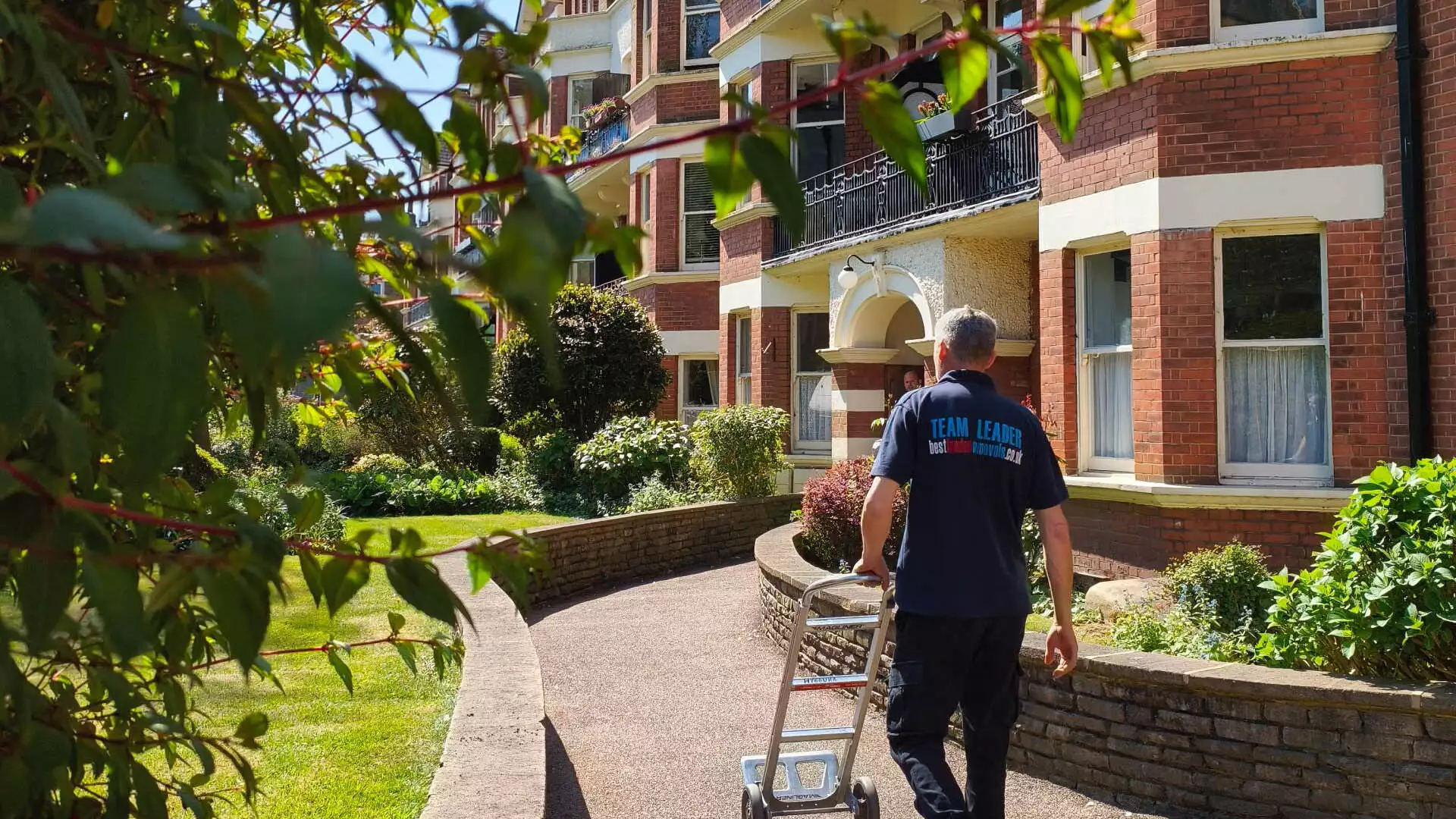


The terms “office move” and “office relocation” get used interchangeably, and in most practical contexts they mean the same thing: a business is vacating one set of premises and setting up in another. The distinction some sources draw, that a move is local and a relocation implies a different city, is largely a marketing convention rather than a meaningful operational difference. If you are taking your team, your furniture, and your equipment from one address to another, it is an office move regardless of distance.
What does vary is scale, and that is where the planning decisions actually matter.
What scale of office move do we handle?
Best London Removals handles office moves for businesses with teams of 40-50 people. That typically means a floor or two of workstations, meeting room furniture, server and networking equipment, reception areas, and storage. For most businesses in this bracket, the physical move itself, loading, transporting, and delivering, is achievable in a single working day, though the preparation before it and the reconnection after it take considerably longer.
We have handled office moves for clients including Ubisoft, Earnix, and Barr Gazetas, and have carried out collections and deliveries for the Attorney General's Office.
Starting the planning process
Office moves need more lead time than most business owners expect. If you are aiming to move on a specific date, and most businesses are, because lease end dates and new tenancy start dates leave little flexibility, you need to work backwards from that date and allocate time for each stage.
A realistic timeline for a 40 to 50-person office looks something like this. The property search and lease negotiations typically conclude two to three months before the move date, though this is often outside your control. Once you have a confirmed new address, you can begin the practical planning: measuring the new space, deciding on furniture layout, ordering anything new, and arranging IT infrastructure. That phase typically lasts four to six weeks.
The removal company needs to be booked with enough time to survey both premises. For a business move, that survey is not a formality. The person quoting the job needs to understand what is going in the van, whether there are any access constraints at either end, how IT equipment is being handled, and whether packing is required. We conduct a pre-move survey and provide fixed-price quotes based on what is actually there, rather than an estimate over the phone.
Fridays are the most popular moving day for offices and homes, and they book several weeks in advance. Thursday is also in demand for businesses that want to use Thursday as a packing day and move on Friday. If your move date is fixed, do not leave the booking too late.

The survey and quote
For an office move, a video walkthrough is sometimes sufficient for quoting purposes, particularly for smaller jobs with straightforward layouts. For larger or more complex offices, anything with specialist equipment, restricted access, or multiple floors, an in-person survey is more reliable for both sides. It allows us to assess the logistics properly and give you a quote you can rely on rather than one that is subject to revision on the day.
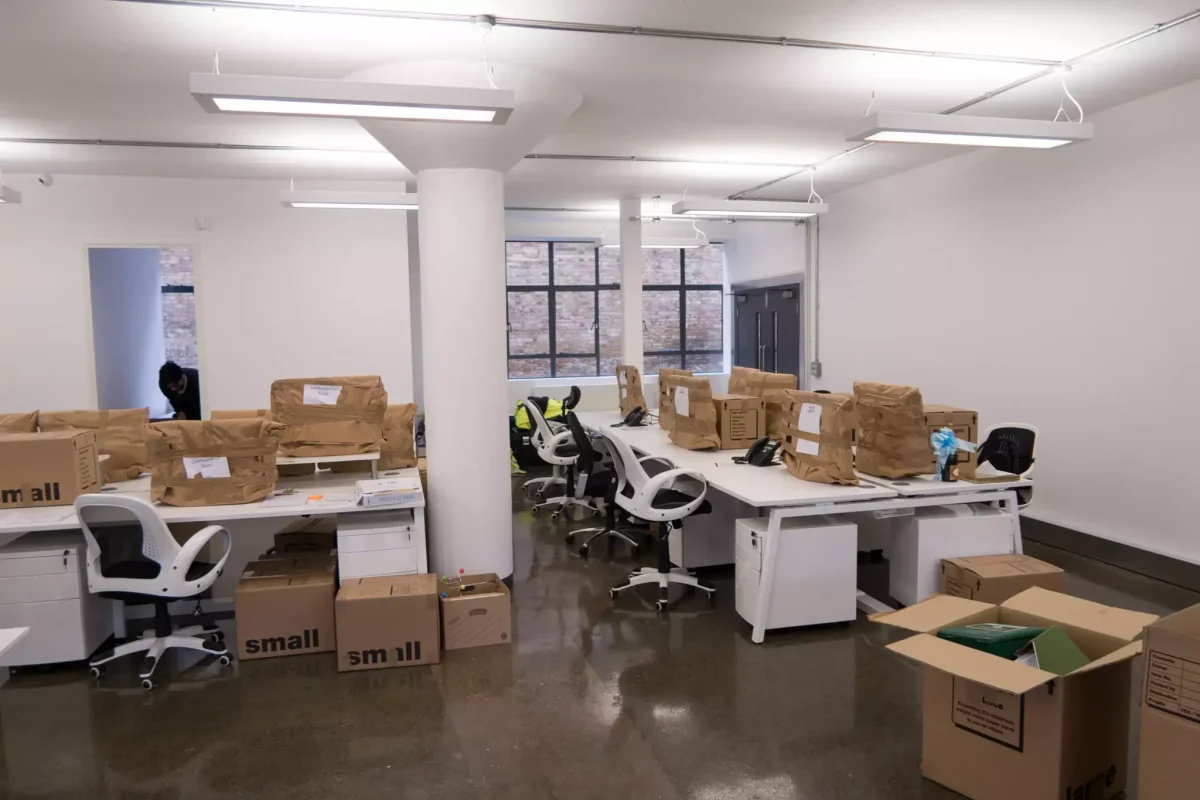
The survey covers the volume and types of items to be moved, the access conditions at the origin and destination, lifts, loading bays, parking restrictions, floor protection requirements, and whether packing materials or a packing service is needed.
What happens on move day
On the day itself, the crew will arrive at the agreed time and work through the agreed scope. The desk, when needed, will be dismantled, and all furniture will be wrapped in Furniguard and stretch film before it leaves the premises. Monitors and other screen-based equipment are packed in double-walled boxes with appropriate padding. Filing cabinets and pedestals travel locked or secured. IT equipment is handled carefully, though reconnection at the other end is an IT matter rather than a removals one.
For office moves covering longer distances outside London, GPS tracking is active on the van, and you receive a view-only link before the crew departs. For local London moves, the journey between premises is short enough that a direct call to the team leader covers any coordination needed on the day.
For businesses moving between London addresses, parking is a practical consideration at both ends. We can apply for parking suspensions on your behalf or advise on what is required for the streets involved. This is one of the more commonly overlooked parts of office move logistics and, if left to the last minute, can cause significant delays.
Communicating with your team
One part of any office move that sits outside the removal company’s scope is internal communication. The people managing a team of 30 to 50 need to ensure everyone knows what is expected of them: when to pack up their own personal items, what the labelling system is for desks and equipment, and what the plan is for the first working day in the new space.
Clear desk policies, IT shutdown procedures, and a nominated internal contact for the day all reduce the chance of things being missed or misplaced. The removal team can only move what is where it should be.
Getting a quote
Office move costs are based on volume, distance, access, and time. A fixed-price quote covers the agreed scope and will not change on the day, provided the job matches what was surveyed. Man and van rates are available for smaller office jobs and are charged hourly, with a four-hour minimum booking.
Costs
If you are planning an office move in London and want a clear, fixed price based on what is actually involved, contact us or request a quote. We will arrange a survey at a time that suits you and come back with a written quote.