


A lot of London move quotes look similar at first glance. Same number of movers, same van size, same date, then one comes in noticeably cheaper, and it's tempting to book it before the slot goes.
One of the biggest hidden differences is often the goods in transit insurance. This isn't the policy section for the van itself. It's the part that relates to your belongings while they're being moved.
For anyone moving from a flat in E14, a terrace in W4, or an office in EC2, that detail matters more than most quote forms make clear. If cover is optional, and in the UK it is, then price alone doesn't tell the full story.
Understanding goods in transit insurance for your move
When a customer compares removal quotes, the assumption is usually that every professional mover is pricing the same thing. In practice, that's not always true. One quote may include proper insurance for the contents being carried, while another may leave that point vague or treat it very narrowly.
Goods in transit insurance covers loss, theft, or damage to goods while they are being transported. In the UK, it is not legally mandatory, but it's widely regarded as a critical safeguard because it protects goods from collection to delivery, rather than protecting premises or the vehicle itself.
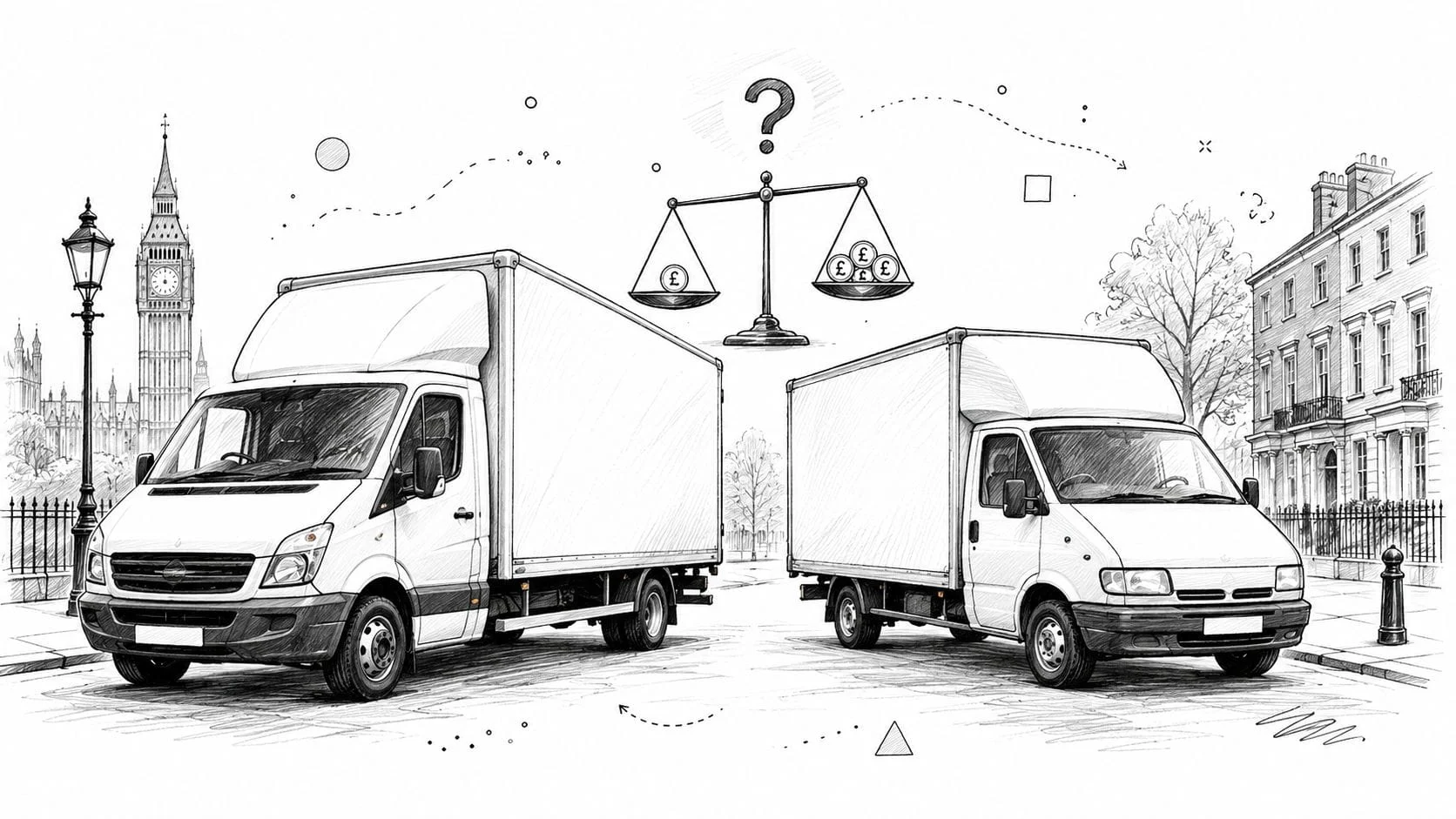
Why does this matter when quotes vary
Because the cover isn’t a legal requirement, not every mover carries the same level of protection. That’s especially relevant when comparing a full removals quote with a very low day rate from a smaller operator or self-employed man and van service. The lower price might still be genuine, but it can also mean less cover has been built into the job.
That doesn’t make a cheaper quote wrong. It does mean the customer needs to ask better questions before deciding it represents better value.
Practical rule: if a quote is much lower, ask what protection sits behind it, not just what vehicle is included.
For a London house move, the risks are ordinary rather than dramatic. Boxes shift. Furniture gets handled through narrow corridors. Items are carried down communal stairs, through lifts, into loading bays, then across busy roads. A proper removal plan assumes things can go wrong and puts cover in place during transit.
Please note: if a quote is much lower, ask what protection sits behind it, not just what vehicle is included.
For a London house move, the risks are ordinary rather than dramatic. Boxes shift. Furniture gets handled through narrow halls. Items are carried down communal stairs, through lifts, into loading bays, then across busy roads. A proper removal plan assumes things can go wrong and puts cover in place for the transit stage.
What a customer should ask straight away
Before booking, it helps to ask the removal company:
- Do you offer goods in transit insurance? Ask for a direct yes or no.
- What is the cover limit? The limit matters as much as the policy’s existence.
- Does the policy apply to my type of move? A studio flat, a family home, an office move, and a part-load job can present different values and risks.
- Is storage involved? If it is, ask separately how items are covered before and after transport.
If storage is part of the move, that should be checked early rather than assumed. A company offering removals and storage should explain where transit cover ends and storage arrangements begin, particularly where a job moves in stages, such as collection one day and redelivery later.
What is and is not covered by transit insurance
Customers often hear the words "fully insured" and assume that means every possible issue is covered from the moment packing starts until the last item is placed in the new home. Insurance rarely works that broadly.
For removals, one of the most important distinctions is that the goods in transit cover is separate from the vehicle policy. The van policy insures the vehicle. Goods in transit insurance relates to the contents being carried, and cover typically applies only while those contents are in transit.
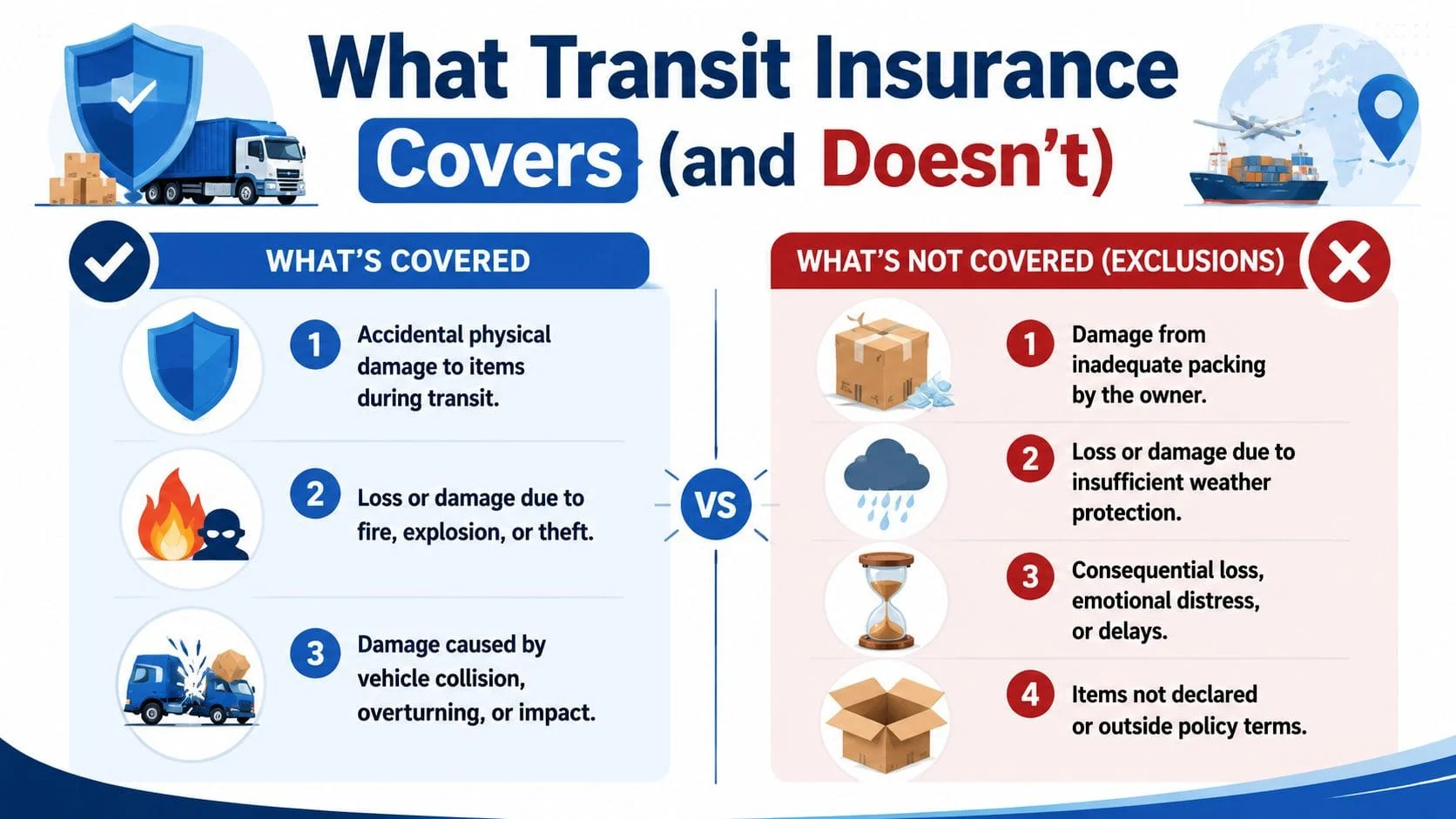
What is usually covered
At a practical level, customers are normally looking at three core areas during the transport stage:
- Damage while being carried in the vehicle. If an item is damaged during the actual journey, that fails within the kind of event goods in transit cover is designed to address.
- Loss during the move. If goods go missing while being transported, that may fall within cover, depending on the policy wording and the circumstances.
- Theft during transit. Theft is one of the standard reasons people expect this policy to exist in the first place.
A simple way to think about it: if the item is on the vehicle and actively being moved between addresses, that is the core insurance window.
What often falls outside it
This is where misunderstandings arise.
- Damage before loading. If something is damaged inside the property before it has entered the transit stage, that may not be a goods in transit matter.
- Damage after unloading. Once the goods are no longer being carried, they can sit outside the policy unless the wording extends further.
- Storage periods. If belongings spend time in storage, that usually needs a separate cover rather than being assumed under transit insurance.
- Packing defects. Packaging defects are commonly excluded. If a fragile item was packed badly and then breaks, the insurer may focus on the packing failure rather than the journey itself.
A box dropped in the hallway before it reaches the van can be treated differently from a box damaged during the road leg of the move.
Why does self-packing need a direct conversation
Many customers pack at least part of the move themselves. That's completely normal, but it creates a real insurance question. If the contents were not packed securely, the removal company's goods in transit policy may not respond in the way the customer expects.
This is especially important for glassware, monitors, artwork, lamps, and anything awkwardly shaped. For smaller jobs booked on a flexible basis, such as a single-room move or a handful of larger items, the right question isn't just "are you insured?" It's "What exactly is covered if I've packed the boxes myself?"
Goods in transit is not public liability
Customers also mix up transit insurance with public liability insurance. They are not the same.
Public liability is about third-party injury or damage. For example, if a mover damages a communal wall or someone is injured during loading, that sits in a different area from the cover for the customer's goods in the van. When something goes wrong on moving day, the answer depends on exactly when it happened, what caused it, and which policy is meant to respond.
How to check a removal company's insurance
The easiest time to check insurance is before paying a deposit. Once the booking is in place, customers are far less likely to push for clarity, especially if the move date is close and access arrangements in places like Westminster, Islington, or Camden already feel complicated.
A professional answer should be calm, specific, and easy to verify. If a company has cover, it should be able to explain the type of insurance held, the limit, and how a customer can see confirmation.
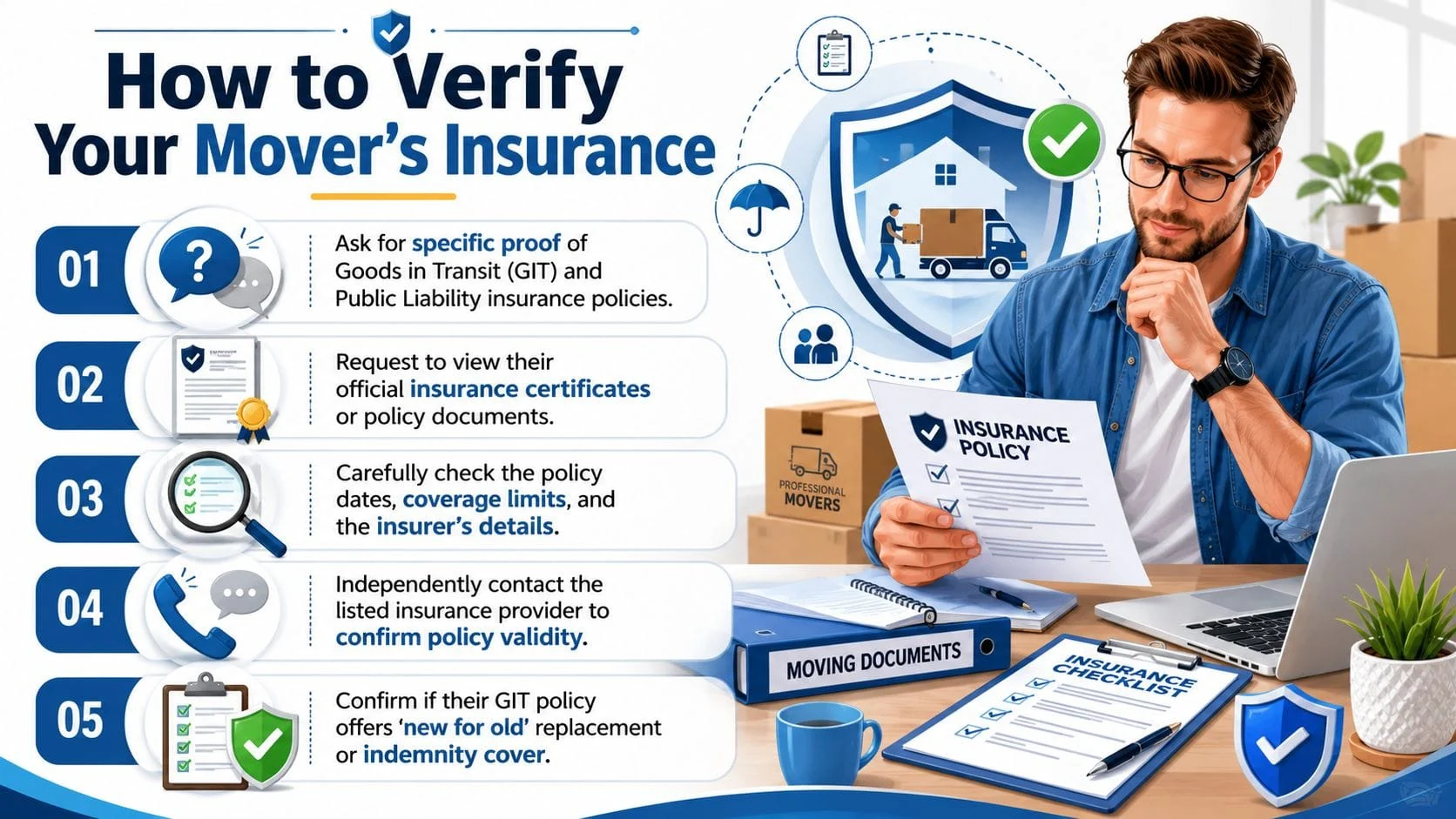
Questions worth asking every mover
- Do you carry goods in transit insurance for customer belongings? The answer should be direct. If the reply circles around “the van is insured”, that doesn’t answer the question.
- What is the cover limit per vehicle load? A policy can exist and still be too low for the contents of a family house or office move.
- Can the company provide proof of cover? Customers should feel comfortable asking to see the insurance certificate or policy confirmation.
- What counts as transit under the policy? This helps identify whether loading, unloading, temporary holding points, or handover stages are included or excluded.
- Are owner-packed boxes treated differently? That answer can affect the entire claim position for fragile items.
- If storage is involved, what policy covers the storage period? This is essential for moves split over several days.
What a good answer sounds like
A solid response usually has three features. It names the policy type clearly, it states the cover limit without hesitation, and it doesn't mind providing documentation.A weaker response is often vague. Phrases like "everything's covered" or "don't worry, we've never had a problem" are not substitutes for policy details.
Ask for documents, not reassurance. A careful mover won't be offended by that.
Small signs that deserve attention
- Evasive language. If the company avoids the exact term “goods in transit insurance”, keep asking until the answer is specific.
- No paperwork available. A legitimate operator should be able to show evidence of cover.
- Unclear limits. “Plenty” or “standard” isn’t enough if the load includes the contents of a larger home.
- No distinction between transit and storage. That can create problems on jobs involving delayed access, key waits, or overnight holding.
Cover limits and protecting high-value items

Why rough estimates can cause problems
Customers often describe a move as "just a two-bed flat" or "only a small office". That helps with vehicle planning, but it doesn't say much about value. A compact flat in Kensington, Fulham, or Hampstead can contain jewellery, designer furniture, artwork, music equipment, and multiple high-end screens. A small office in Soho can hold laptops, monitors, specialist kit, and archived files that would be expensive to replace.
If those items are not declared properly, the policy limit may not match the actual exposure. That's where underinsurance becomes a practical problem rather than an insurance term.
Items that should always be flagged in advance
Some belongings deserve a direct mention when the quote is being prepared:
- Pianos and musical instruments. These are heavy, awkward, and often high in value.
- Antiques and artworks. Their replacement position may not be straightforward.
- Office IT and specialist equipment. Even a modest office move can carry significant value in a single load.
- Collectables and one-off pieces. If an item can’t be easily replaced, it shouldn’t be left buried in a general box list.
High-value items should never appear as an afterthought on moving day. They need to be declared before the vehicle is loaded.
What protects the customer best
The strongest position is usually created before the move starts. A survey, a written inventory, and a realistic conversation about high-value items all help align the move with the actual risk. That matters particularly for unusual or delicate loads, including upright and grand pianos.
Customers don't need a perfect household valuation. They do need a sensible one. If there is any doubt that the standard cover limit reflects the contents being moved, the right step is to raise it before booking, not after a problem appears.
London moves and making a claim
Claims are easiest to handle when the customer knows what to do on the day. The key is speed and clarity. If something is damaged, lost, or appears to have been affected during the journey, the customer should report it promptly to the removal company and keep the evidence simple and organised.
London adds its own complications. A move in Barnet can involve tight residential streets and awkward reversing space. A move in Westminster may depend on a booked bay suspension and a narrow time window. In Canary Wharf, the whole job may depend on goods-lift slots, concierge rules, and loading bay access. Those details don't mean a claim is likely, but they do explain why organised operators build insurance and process into the job.
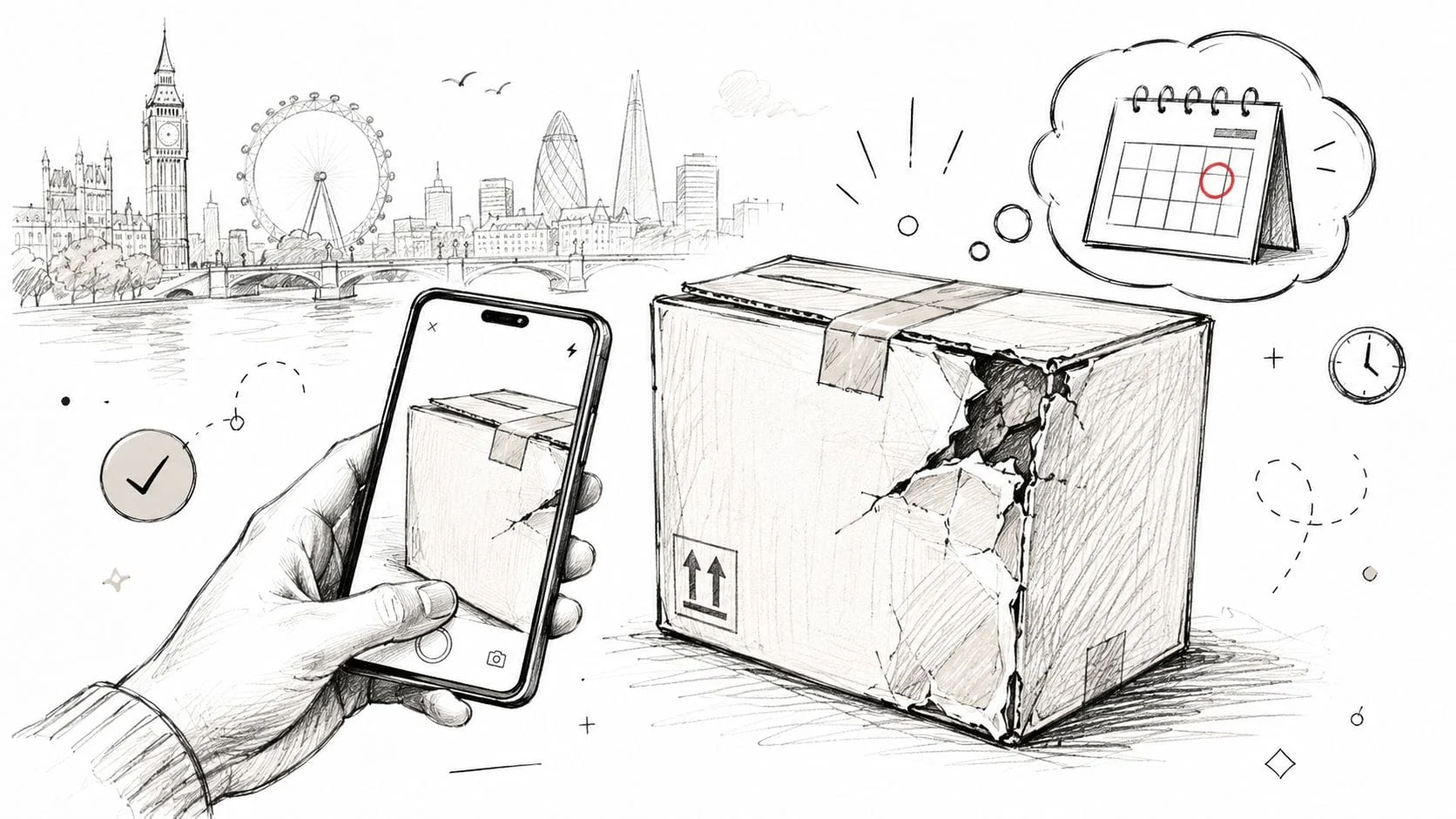
What to do if something goes wrong
- Notify the removal company quickly. Don’t wait several days and assume it can be sorted later.
- Take clear photographs. Photograph the item, the packaging, and the location where the issue was noticed.
- Keep the inventory and move paperwork. Written surveys, item lists, and booking emails help establish what was moved and how the job was arranged.
- Avoid throwing away packaging too soon. Where packing is relevant to the claim, the condition of the materials may matter.
- Ask which policy is responding. The answer may differ depending on whether the issue happened in transit, during handling, or at handover.
Why quote prices can reflect insurance reality
Customers sometimes assume insurance is a minor detail that wouldn’t affect the quote much. In reality, cover is a real operating cost. Uswitch’s guide to goods in transit cover notes that for a small UK business, basic annual goods in transit cover often starts in the low hundreds of pounds, with policy limits commonly set at £5,000 to £10,000, while firms carrying the contents of whole homes or offices need higher limits and higher premiums.
That matters because a professional removals quote has to account for more than labour and diesel. It also has to account for the responsibility of carrying someone else’s property through London traffic, restricted access streets, communal entrances, and multi-stop logistics. Our price guide sets out how these factors are reflected in a written quote.
A cheap quote isn’t automatically poor value. It just needs checking with the same care as the move date, access times, and parking arrangements.
What helps a claim run more smoothly
Claims usually become difficult for one of three reasons. The first is delay. The second is missing paperwork. The third is confusion about whether the issue happened inside or outside the transit window.
Customers can improve their position by keeping the quote, inventory, and any declared high-value item notes together in one place. That makes it much easier to answer questions quickly if an insurer or removal company needs supporting information.
Your final insurance checklist before booking
Before accepting any quote, it helps to pause and check the protection behind the price. Most customers spend more time comparing van sizes than comparing cover, even though the cover is what matters if something goes wrong.
A useful final checklist:
- Confirm that goods in transit insurance is in place. Don’t assume it is included just because the company sounds established.
- Ask for the cover limit per vehicle load. The existence of a policy and the adequacy of the policy are two different things.
- Check what “in transit” means under that policy. This is especially important if the job involves lifts, waiting time, or split delivery arrangements.
- Ask how owner-packed boxes are treated. Fragile contents and packing defects can affect claims.
- Separate transit cover from storage cover. If belongings are going into storage, ask what protects them during that period.
- Declare high-value items before booking. Pianos, antiques, art, and office IT should never be left off the paperwork.
- Request proof in writing. A certificate or policy confirmation is far more useful than a verbal assurance.
For transparency, customers booking with us are covered by goods in transit insurance up to £50,000 per vehicle load.
If a London move is being planned and a clear written quote is needed, Best London Removals Ltd provides itemised surveys, removals, man and van support, packing, and storage coordination, with insurance details explained before booking.
This guide is intended as general information about goods in transit insurance and how to check cover when booking a removal company. It is not insurance or legal advice. For confirmation of cover relevant to a specific move, ask the removal company directly and request written documentation.