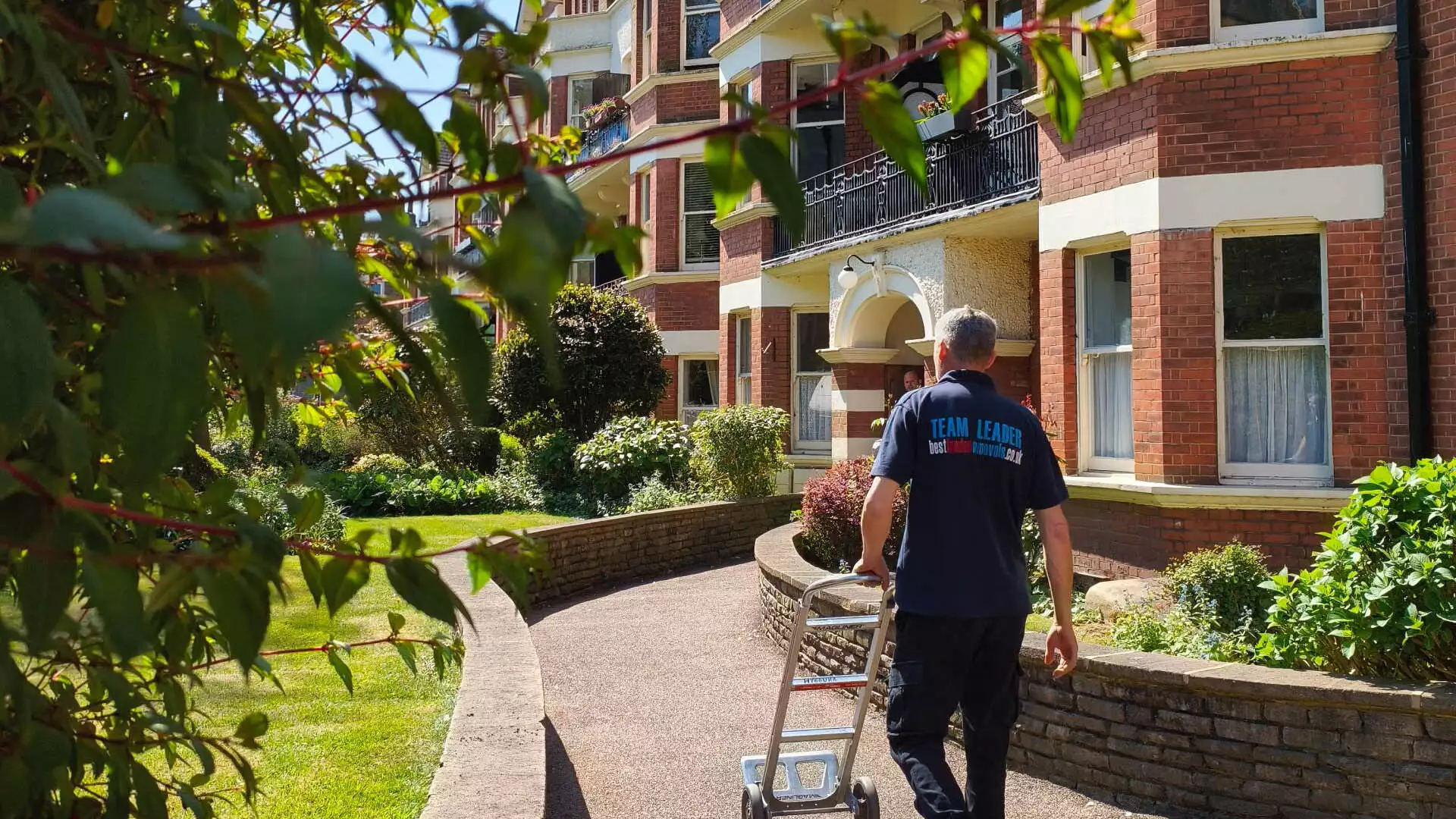


Moving day in Ealing often looks straightforward until the parking signs come into focus. A flat near Northfields, a family house in Hanwell, or a move just off Ealing Broadway can all bring the same last-minute problem: a removal van needs to stop close to the door, but the street sits inside a controlled parking zone.
That's usually the point when people start searching for answers about CPZ Ealing and realise the council wording doesn't always match what has to happen on the day. A resident permit is one thing. Getting a removal vehicle legally positioned outside the property, for long enough to load or unload safely, is another.
The practical issue isn't just avoiding a ticket. If the van can't park properly, the crew may have to carry furniture further, work around traffic, or lose time waiting for space to open up. In a London move, that can affect keys, lift bookings, building access, and completion timing.
This guide focuses on what matters for removals. It explains how Ealing's controlled parking zones work, when a temporary permit may be enough, and when a proper suspension is the safer route. It also covers the awkward situations people don't usually think about until they happen, like a blocked bay, a changed move date, or a penalty issued during a booked move window.

Introduction
Ealing attracts every kind of move. Some involve a compact flat in W5 with one van load. Others involve a larger house in W7 or W13, where a full-size removal vehicle needs room for several hours. The street may look quiet, but a CPZ sign changes the whole plan.
A controlled parking zone is easy to underestimate because the restriction sits in the background until a commercial vehicle arrives. Residents may know the pattern of the road already. Someone moving in from another part of London often doesn't. That's when common assumptions cause trouble, especially the idea that a van can stop briefly and sort the details out later.
For removals, the key question is simple. Does the job need a dedicated suspended bay, or can it be handled with a temporary permit that fits the scale of the move? The answer depends on the street, the CPZ hours, the vehicle size, and how much loading time is needed.
That distinction matters more in Ealing than many people expect. Zone boundaries, permit categories, and active enforcement mean the safest approach is to decide the parking method before the move date is locked into everyone's diary.
Understanding Ealing's controlled parking zones
A removal crew can arrive on time, load efficiently, and still lose an hour at the kerb. In Ealing, that usually comes down to CPZ rules being checked too late.
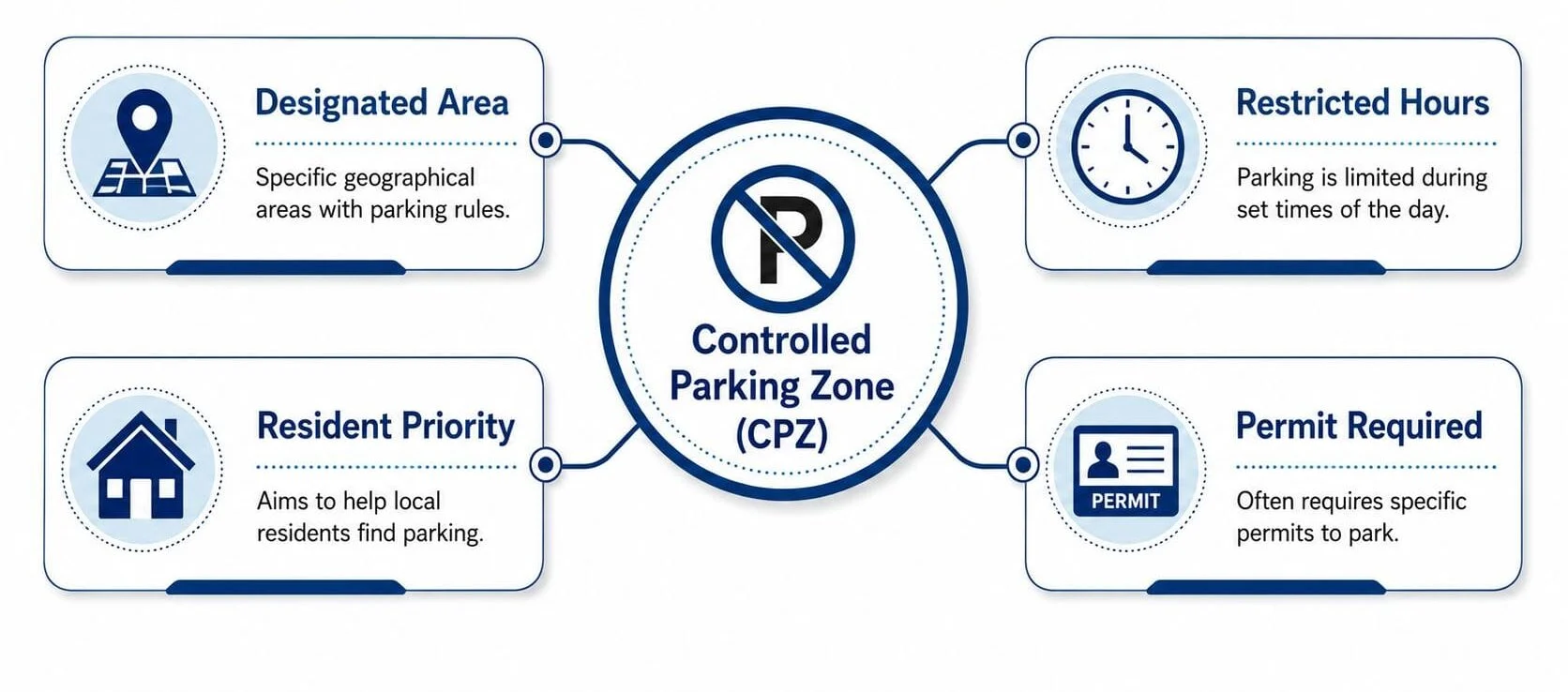
A controlled parking zone, or CPZ, is a set of streets where on-street parking is restricted during stated hours. The entry sign tells you when the zone is active. Bay signs and road markings then decide what can happen on the section of road outside the property. For removals, that distinction matters because an empty bay is not automatically a usable loading point for a van.
Zone W as a practical example
Road markings that catch people out
Permit types for residents, visitors and contractors
Before choosing a moving-day parking plan, it helps to understand the permit categories already used across Ealing. These aren't interchangeable, and each one is designed for a different kind of road use.

Resident permits
Resident permits are for people who live within the zone. They're the normal long-term solution for everyday parking near home, not a moving-day arrangement for a large commercial vehicle.
That distinction is important. A household may already hold a resident permit, but that doesn't automatically solve access for a removal van that needs space close to the property for loading heavy items.
Visitor permits
Visitor permits are for guests. They can be helpful in some moving situations, especially where the job is small and the vehicle is no larger than a standard van.
They work best when the move is short, the loading is light, and the road layout is simple. They're less reliable for bigger jobs because they don't create exclusive space. If every nearby bay is full, having permission to park doesn't mean a usable spot is waiting outside.
Business and contractor permits
Business or contractor permits are intended for people working in the area, such as trades and service providers. For moving purposes, this category matters because it's the closest fit for a van attending a property for a one-off operational task.
A contractor-style permit can be a practical middle ground between resident parking and a full suspension. It won't suit every move, but it can work well when the job doesn't justify reserving whole bays.
Which category usually helps a move
How to apply for a parking suspension for your removal
A removal crew turns up at 8am, the lift is booked, keys are ready, and the only legal bay is half a street away. That is usually the point at which people realise parking was not an admin detail. It was part of the move plan.
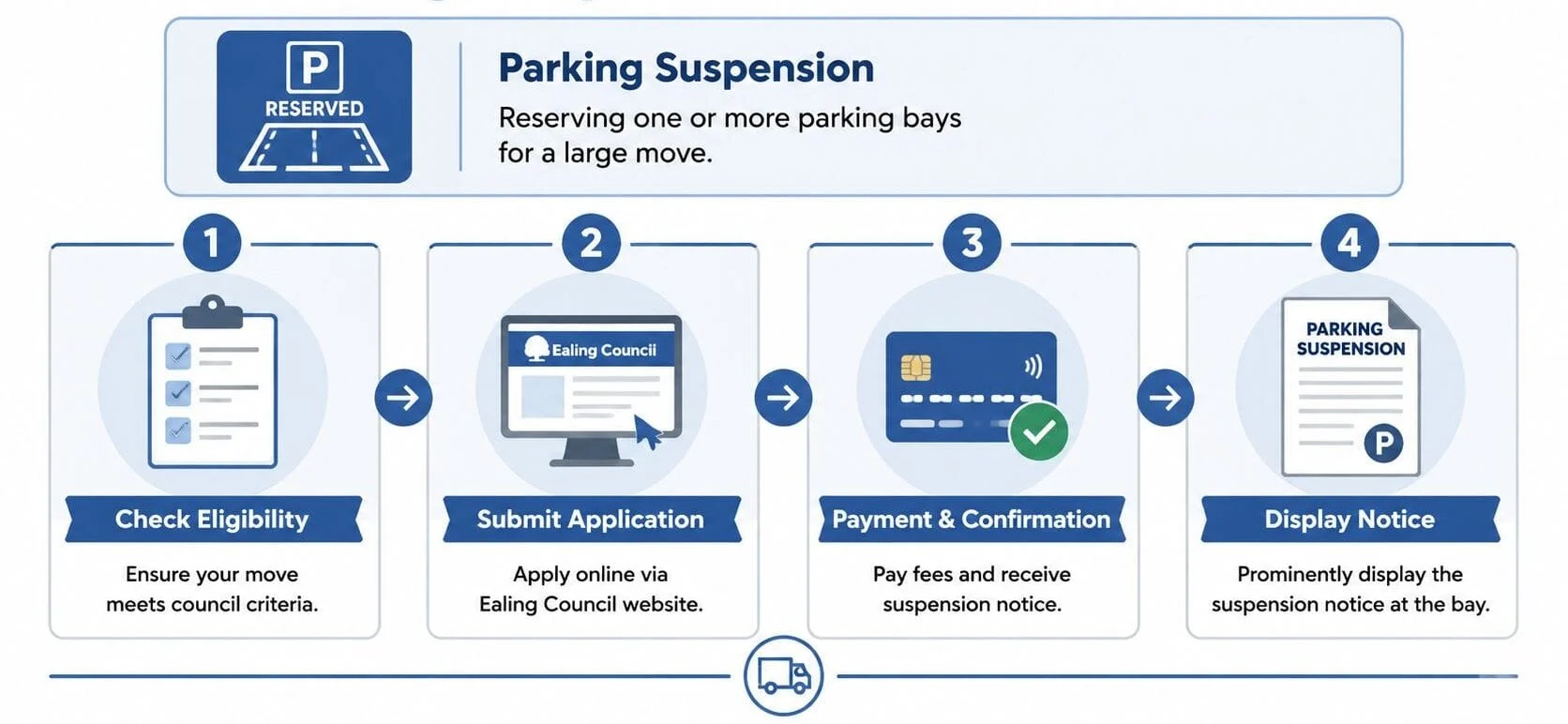
A parking suspension reserves road space for a set time and purpose. For a full or awkward move in Ealing, it is often the safest way to keep the van close enough for efficient loading and to avoid wasting paid crew time carrying furniture from the far end of the road.
Check the kerbside first
Start with the exact stretch of road, not the paperwork. The question is simple. Can a removal van stop there safely, legally, and close enough to the entrance to keep the job moving?
On Ealing roads, the answer can change within a few metres. A bay outside the building may look fine on paper but be poor in practice because of a junction, a narrow bend, a dropped kerb, a school entrance, or a tree that blocks rear-door access. Large lorries also need enough length to stand straight, open fully, and load without blocking traffic.
Get the position clear from the start. A full address helps, but for terraces, mansion blocks, and corner properties, the better approach is to identify the exact bay or the nearest marked section of kerb the crew will need.
Decide if a suspension matches the job
A suspension makes most sense where the move needs protected space, not just permission to park in the zone. In practice, that usually means full-house removals, heavier items, longer loading windows, or streets where bays fill early and stay full.
It also matters where timing is tight. If there is a booked lift, a porter slot, a key collection window, or a same-day completion, the move cannot absorb a long search for parking.
A smaller van job can sometimes work without a suspension. A larger move usually cannot afford that gamble.
Prepare the application properly
Apply early enough to leave room for corrections
Councils need notice to process a suspension and place the sign on the street. That means the request should go in as soon as the moving date is firm, especially if the road is busy or the move falls near school runs, weekend demand, or other local activity.
If the first location is unsuitable, extra time gives you room to correct it. If the sign goes up with the wrong bay reference or dates, there is still a chance to sort it out before removal day instead of arguing about it from the pavement.
Use permits only where they genuinely fit
For removals, the practical distinction is straightforward:
A permit can allow the van to use a legal bay. A suspension sets space aside for the van.
That is the trade-off. If the move is small and the crew can work with whatever bay is free, a permit may be enough. If the job depends on having clear kerb space outside the property, a suspension is the safer choice.
Check the signs before the van arrives
Using temporary permits for smaller Ealing moves
A full suspension isn't always necessary. For a smaller move, a temporary permit can be the more sensible option, especially when the job involves a studio flat, a part-load, student belongings, or a man and van style collection with a shorter stop.
What matters is whether the move needs exclusive space or lawful access to the zone.
Where temporary permits fall short
The weakness is simple. A temporary permit doesn't clear the kerbside for the van. It only allows lawful use of a suitable bay if one is available.
That can be perfectly acceptable on quieter roads or for very short jobs. It becomes less reliable when the move involves multiple trips up and down stairs, heavy furniture, or a road where parking is consistently full during CPZ hours.
A permit helps with legality. It doesn't guarantee convenience, and it doesn't create space where none exists.
Visitor permits and resident help
Some households can also use visitor permits through the resident at the property. That can be helpful for smaller jobs, particularly where the move is contained and the stop is brief.
The main trade-off is control. A visitor permit still relies on there being a usable bay nearby, and the resident has to be able to arrange it properly in time. For a move involving fixed building slots or larger items, that level of uncertainty often isn't ideal.
Choosing between the two options
Common moving day parking problems and how to avoid them
A suspended bay is blocked
This happens more often than clients expect. The suspension has been approved, the sign is in place, and another vehicle is still parked in the bay when the crew arrives.
The practical response is to stop improvising and start documenting. Check the sign, confirm the exact location matches the suspension paperwork, photograph the occupied bay, and contact the council parking enforcement team straight away. Keep the confirmation email or permit reference ready, because an officer may need to see it before taking action.
Crews should avoid making up a new loading spot unless it is plainly legal and workable. A rushed decision at this stage often creates a second problem, such as blocking a dropped kerb, stopping too close to a junction, or adding a long carry that slows the whole move.
The van is legal, but the job is still awkward
Completion times change at the last minute
Chains slip. Keys are released late. A morning move becomes an afternoon one.
When that happens, the parking paperwork needs to be checked immediately. Suspensions and temporary permits are tied to specific dates and time windows, so yesterday's approved arrangement does not automatically protect today's revised plan. The earlier the client or removals office picks this up, the better the chance of adjusting the booking before the crew is committed to a poor fallback option.
A penalty is issued during the move
This is one of the messiest problems on moving day because responsibility can blur very quickly. The resident may have arranged one type of permit, the removals team may have parked in a different place, and the paperwork may not match the bay or time used.
Start by checking four points. Which vehicle was authorised? What type of permit or suspension covered it? The exact location where it was parked. The time the notice was issued. Keep the confirmation emails, permit records, photos of the signs and bay, and any instructions sent to the crew in one place.
If a ticket looks wrong, gather the documents before arguing the point. Date, location, permit type, and vehicle position matter more than frustration on the kerb.
Conclusion
CPZ Ealing rules are manageable once the move is planned around the street, not just the property. The right choice depends on scale. A smaller move may work with a temporary permit, while a larger job usually needs the certainty of a proper suspension.
The main thing is to decide early, check the exact road markings, and keep the parking paperwork aligned with the move date and vehicle. When that's done properly, parking becomes one less moving-day problem to solve at the kerb