

Most people don't think about dismantling until moving day arrives and a bed frame won't clear the bedroom door. The good news is there's a simple rule that covers almost every case: if a piece of furniture won't pass through a doorway, down a staircase, or around a landing in one piece, it needs to come apart first. Below is a practical guide to the items that usually need it, the ones that usually don't, and what actually happens once the tools come out.
Beds
Nearly every bed frame gets dismantled for a move, regardless of size. Headboards, side rails, and the base are typically separate pieces once the bolts come out, and even a single bed frame is often too wide or too long to carry round a tight stair turn fully built. Divan bases, slatted frames, and ottoman beds with a hydraulic lifting mechanism all need to be taken apart correctly, since forcing an ottoman base through a doorway assembled risks damaging the lift mechanism.
Metal-framed beds can be more awkward than they look; the joints are often hidden behind decorative caps, and the wrong approach can bend a frame that would otherwise come apart cleanly. Bunk beds and cabin beds are always dismantled; there's no safe way to carry them whole, and the ladder or guard rail sections need to be kept together with the rest of the frame so nothing gets left behind.
Wardrobes
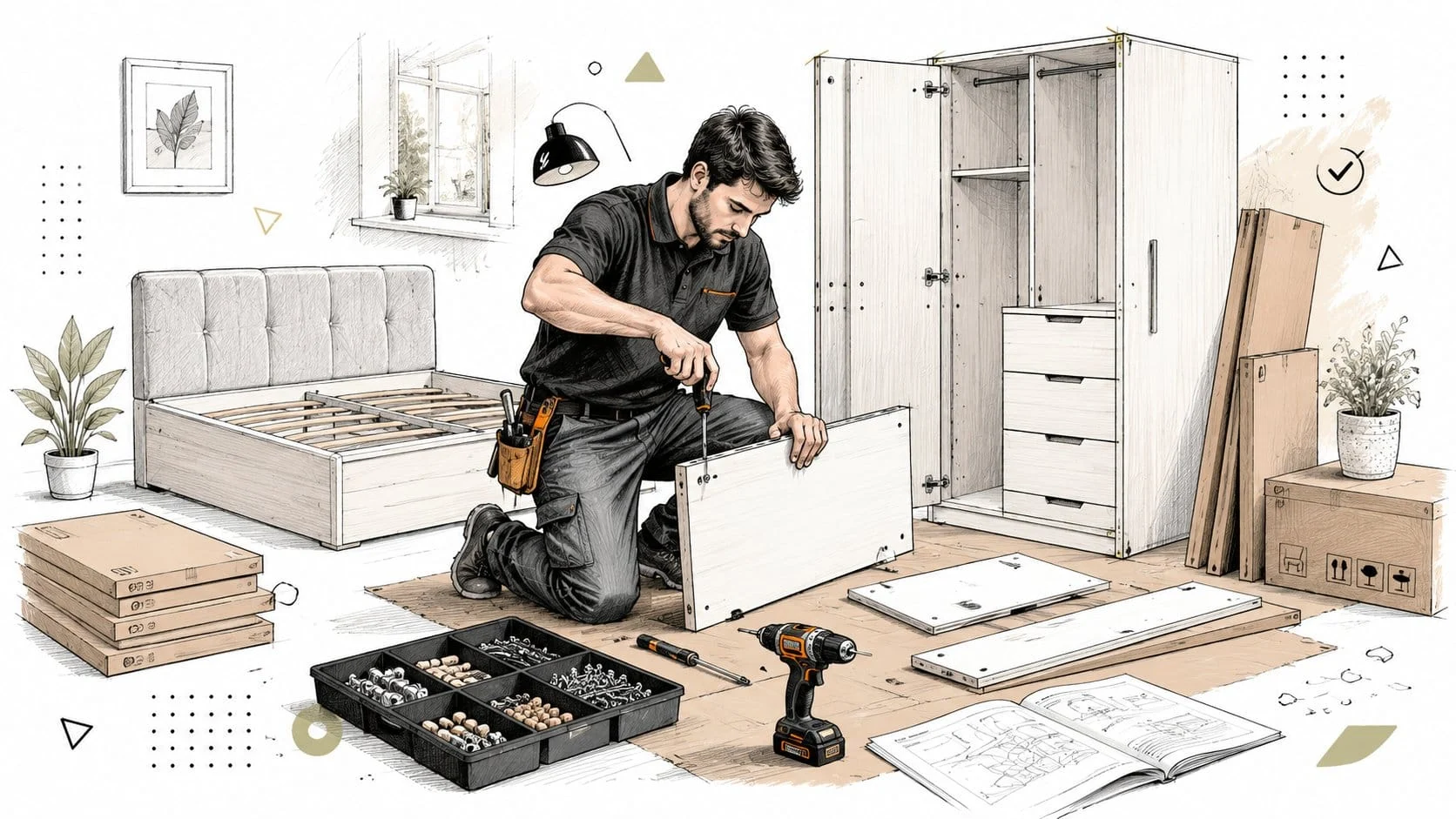
Full-height and double wardrobes are the classic case. Once assembled, they're usually too tall, too wide, or too heavy to lift through a standard door frame without scraping paintwork or getting wedged on a landing. Internal fittings, rails, and shelves are removed separately from the carcass, partly to reduce weight and partly because loose internal parts can shift and damage the wardrobe's frame in transit.
Sliding-door wardrobes need particular care; the doors usually lift out on a track system rather than unscrewing conventionally, and forcing them the wrong way can bend the runners. The one exception is fitted or built-in wardrobes: these are usually left in place, since they're part of the room rather than a free-standing item, and removing them isn't practical within a normal move.
Bookcases and shelving units
Tall, wide, freestanding bookcases are unstable to carry assembled, especially once loaded onto a van and driven across London. They're also often wider than the door frame allows once the shelves are in place. Modular shelving systems, the kind sold as separate cube or panel sections, need to be split back into their component parts to move safely; trying to carry a fully built unit usually means it won't survive the doorway, let alone the journey.
Adjustable shelving with cam locks or dowel joints is generally straightforward to take apart, but it's worth checking nothing is still holding books or ornaments before the first panel comes free.

Dining tables
Whether a table needs dismantling usually comes down to the legs. Most modern dining tables have removable or bolt-on legs, and taking them off reduces both the footprint in the van and the risk of catching a doorframe on the way out. Some older or heavier tables, particularly solid wood or marble-topped pieces, need more care when the legs come off, since the fixings can be harder to access and the weight distribution changes once the top is separated.
Extending tables with a leaf mechanism are usually best moved with the leaf removed and packed separately, rather than left in place, since the extension rails add unnecessary length and weight to an already awkward item.
Office desks
L-shaped desks and desks with return panels are almost always dismantled. The combined footprint of the main desk and the return is usually too wide to clear a door or corridor as one piece, and separating them also makes the desk far easier to carry and reposition at the new location.
Desks with built-in cable management or grommets are usually fine to take apart without extra prep, but it helps to note where cables were routed before disconnecting anything, so reassembly at the new desk goes back together the way it was set up.
Sofas
This one is less obvious. Many modern sofas, particularly modular or corner sofas, have detachable arms, bases, or sections that can be separated to get through a narrower doorway than the sofa's full width would otherwise need. Not every sofa requires this; it depends on the design, so it's worth checking whether yours has any removable sections before assuming it will go through in one piece. Sofa beds are a slightly different case again; the mechanism itself doesn't usually need dismantling, but the extra weight and awkward folding action mean they're often best carried by two people even when no parts come off.
A quick way to check
Measure the item at its largest dimension, height, width, or diagonal, whichever is biggest, and compare it to the narrowest point it needs to pass through, usually a doorway or a stairwell turn. If the item is close to or larger than that measurement, it will need to come apart. When in doubt, a quick video call or a few photos are usually enough for us to tell you either way.