
In London, a house removal is shaped less by the number of rooms than by the kerb outside the door, the route through the building, and the time available for loading. This guide follows those details through a move: how a survey becomes a fixed quote, who packs, how insurance applies, how parking and building access are arranged, and what changes when keys or completion dates slip.
For the eight-week timeline and checklists, see our house move London planning guide.
What moving house removals involve in London
A house removal is not just a vehicle travelling between two properties. It includes assessing the load, agreeing who packs, planning how furniture leaves the building, and ensuring there is somewhere suitable to unload at the other end.
Local moves make up a large share of household movement. The Office for National Statistics’ Census 2021 analysis found that 5.4% of people in England and Wales, about 3.2 million, had a different address within the same local authority a year before Census Day, down from 6.5% in 2011. Even a move within one borough can mean very different access at each end.
Show Image
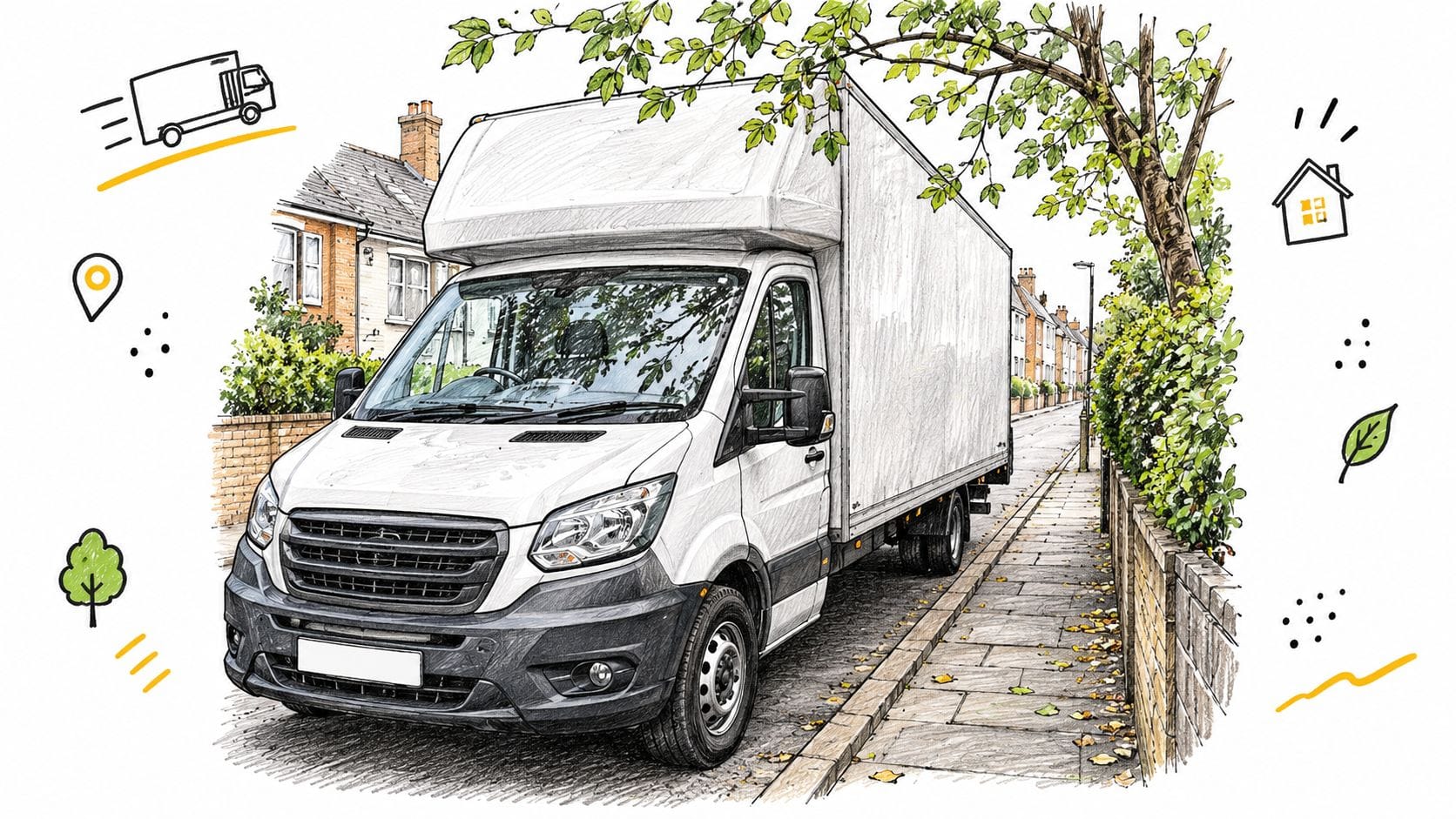
Plan the whole route: a short drive does not mean a short removal.
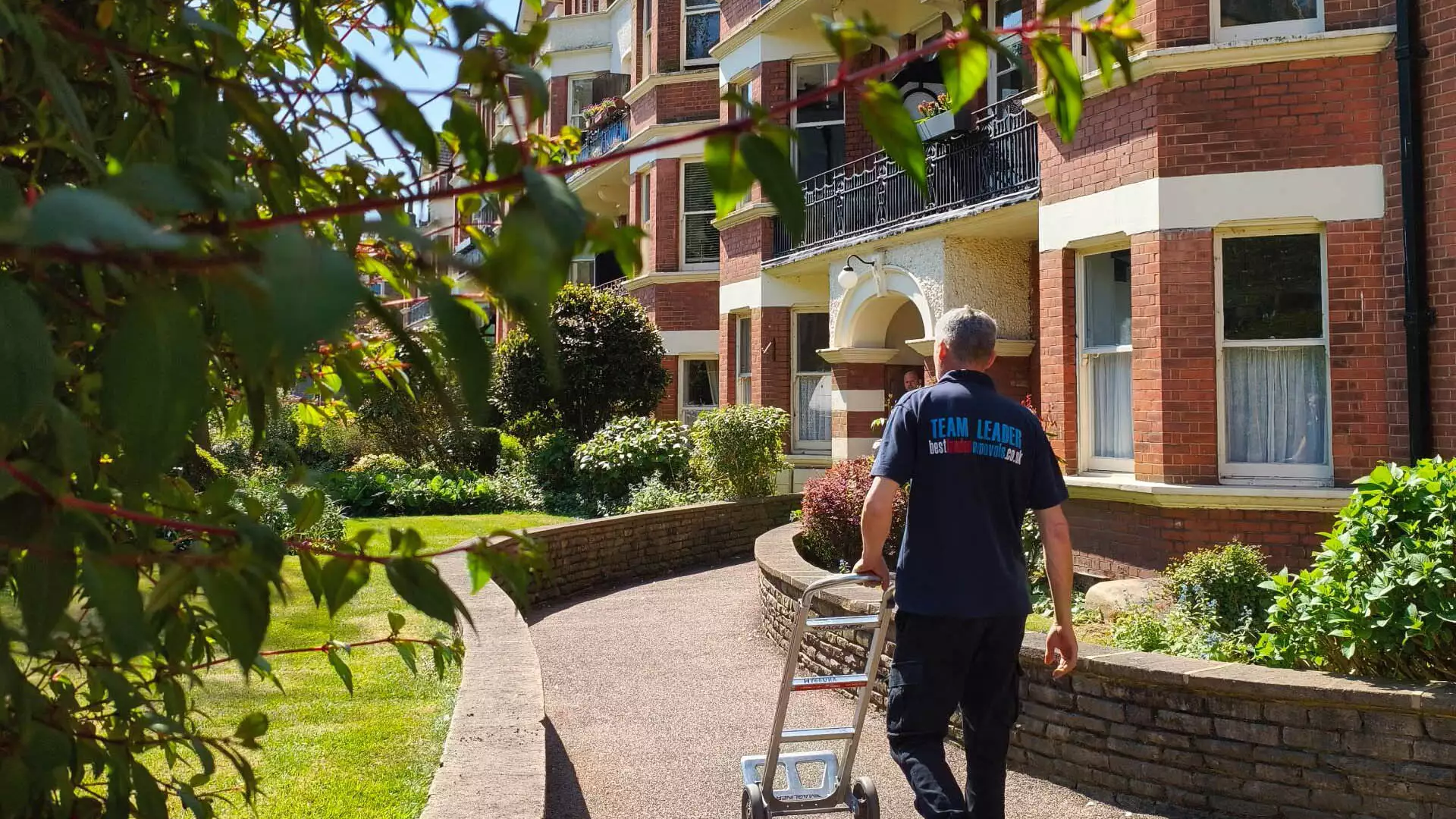
Before loading starts, walk the route with the crew leader and agree where large pieces will go at the new address. That stops furniture being placed where it blocks access for the rest of the load.
From survey to fixed quote
Hourly and fixed-price bookings are not interchangeable descriptions of the same job. They suit different levels of preparation, handling and access. A small load of sealed boxes with straightforward access is easier to define than a household that needs packing, furniture dismantling and repeated trips through communal stairs.
Man and van or fixed-price home removal
Man and van suits a small move where everything is packed before the crew arrives. It is charged by the hour, because the volume often cannot be seen in advance, so describe the load and the access clearly. Unfinished packing or awkward furniture doesn’t disappear during loading. It uses booked hours.
A larger move, or one that includes packing, dismantling and reassembly, is better as a fixed-price home removal. We give a fixed written quote once we have seen the property and contents, by video survey or home visit. Our quotes are itemised and valid for 30 days, and dismantling and reassembly are included when they are listed in the quote at the survey. Furniture added on the day takes extra time.
If a man and van enquiry turns out to be larger than it first sounded, ask us whether a surveyed fixed quote would suit it better before you book.
What the survey checks

The standard survey is a free phone video sent to us on WhatsApp. We can also arrange a home visit. It is free in our local areas in West and North London; elsewhere, it carries a charge that we refund and deduct from the final invoice if you book.
The survey follows the belongings room by room, then follows their route out. It checks volume, stairs, tight landings, heavy pieces, doorways and the carry between the entrance and the vehicle.
- Show hidden storage: include cupboards, wardrobes, loft contents intended for removal, sheds and items behind furniture.
- Explain awkward pieces: point out furniture that was assembled inside the room or brought in through a different entrance.
- Show both access routes: a convenient collection address does not cancel out difficult delivery access.
For the video, record everything that needs moving: every room, the stairs, and the kerb. Keep the camera steady, open cupboards and wardrobes, and pause at narrow turns so the route is visible.
The Health and Safety Executive’s manual handling guidance says it does not recommend weight limits for lifting, and that its guideline figures only show when a more detailed risk assessment is needed. Crew size should therefore reflect the whole handling task, including distance, stairs and awkward turns, rather than a room count.
For example, a wardrobe might fit through the bedroom door but not turn safely on the communal landing. The survey can show whether dismantling is appropriate before the crew, equipment and loading order are planned.
Reading the written scope
We are a member of the National Guild of Removers and Storers, and our own employed crews carry out our removals, with no subcontracted crews. The quote should show the scope, access and crew size established at the survey. Our guide to comparing removal quotes before you book explains which written details to compare.
Show Image
Packing choices for flats and houses
Packing changes what needs to happen before loading can begin. A room of sealed boxes is ready for a different booking from a room of loose kitchenware, full drawers and furniture that still needs taking apart. Choose the packing arrangement before you agree the scope, so everyone knows who is responsible for what.
- Self-pack with man and van: you box everything before the crew arrives, and the crew loads, transports and unloads. This suits a studio or a few rooms when boxes are closed, labelled, and easy to reach. Storage & Removal Boxes Ltd’s guide to what you need to pack up your house covers the materials.
- Professional packing: packing time is included in a surveyed fixed quote, so the survey needs to show cupboard contents as well as furniture. Our packing service uses proper materials, and we usually do full packs the day before the move.
- Mixed packing: you might keep clothes and books while we pack the kitchen, artwork and fragile items. The written scope should name that split rather than saying only “some packing”.
Beds, wardrobes and tables may need dismantling and reassembly, so identify them at the survey and keep fittings together in labelled bags. A piano is a planned item, not something to fit into a vague hourly slot, so tell us about it before booking.
For anything you pack yourself, keep an overnight box open until the last moment with medication, chargers, toiletries and bedding, as covered in our guide to the first night box. Empty drawers that will tilt, because loose contents shift when furniture is carried at an angle.
We can dispose of unwanted items for an additional cost. We quote per item after we have seen it, and you must agree before the day. We do not collect building or garden rubbish. Our guide to disposing of unwanted items when moving explains how it works.
Show Image
Insurance cover on the day
A wardrobe dropped on a communal stair raises a different question from a wardrobe scratched during loading. The first concerns damage to someone else’s property. The second concerns belongings in the mover’s care. Removal insurance follows the same split, because cover for goods being moved and cover for third parties are separate arrangements.
Goods in transit cover applies while belongings are being moved, and standard cover is included on every job. Public liability relates to injury or damage to other people or their property while the crew is working, which matters in a shared hallway or goods lift. We hold both, and our goods-in-transit insurance page explains how the policy applies.
Neither policy replaces the survey. Cover applies to what was declared and agreed, so the inventory and written scope must reflect everything being handled, including pieces that need special preparation.
Declare high-value items early: tell us about artwork, delicate furniture and other significant items before the quote is accepted, not for the first time on moving morning. Describe the item’s size, construction and vulnerable parts, and show where it stands and every restricted turn, stairwell or lift between it and the vehicle. Confirm any cover limits and exclusions with us before you accept the quote, while you still have time to adjust the handling plan.
Parking suspensions and building access

A fourth-floor flat on a red route is a different job from the same flat on a quiet residential street, even when the inventory is identical. In London, the kerb outside the door, the controlled parking zone, and the goods lift set the crew size, vehicle, and quote type far more than the number of rooms does.
Each borough runs its own suspension scheme with its own notice period and charges, so parking is planned per address. A cheaper hourly booking can still run long if the van cannot stop near the entrance, because every extra carry across the pavement adds time. A loading position two streets away can turn a straightforward job into a much longer one for the same number of boxes.
Many clients arrange their own parking suspension. We can apply on your behalf as an optional help. The council sets the fee, and we cannot negotiate it, so we add it to the quote and confirm it with you.
Complete the kerb and building checks
- Identify the kerb restriction: establish whether the loading position is a residents’ bay, pay-and-display space, yellow line, red route or private estate road.
- Confirm the right permission: ask the borough whether a suspension or a dispensation is appropriate. Permission for a parking bay does not cover red routes, yellow lines, loading restrictions or private access.
- Check notice and charges: apply within the council’s required period and budget the council’s charges separately from the removal price.
- Book building access separately: contact the managing agent or building team about the goods lift, loading slot, entrance height and any access conditions.
Booking a lift needs more than confirmation that one exists. Check its usable dimensions, the route from the entrance to its doors and whether the building restricts removal activity to a particular slot. A sofa that fits the staircase may still miss the lift by a few centimetres.
Show Image
How four London councils differ
These examples show how much the rules vary. Notice periods and fees change, so confirm current details with the council before you commit.
- Richmond upon Thames: asks for at least 10 working days’ notice. The charge is an administration fee plus a daily charge per bay, depending on the controlled parking zone, and it applies seven days a week, regardless of the zone’s controlled hours. That matters when a suspension spans a weekend.
- Waltham Forest: handles suspensions and dispensations on one page, and the right type depends on the bay and the location. Confirm which applies to your loading position, and the notice and charge, during the application.
- Harrow: says the application process can take up to ten working days and that holding a space with cones or other objects is an offence.
- Hounslow: asks for applications at least ten working days before you need the space, and handles yellow line waivers separately.
Our guides to parking suspensions when moving house in London, parking suspension and dispensation, and controlled parking zones in London explain what details each side will ask for.
A reserved bay and a reserved goods lift solve different problems. Both may be needed for the same address.
When dates and storage change the plan
Completion dates slip, and tenancy handovers rarely line up to the hour. A booking needs a confirmed collection point and a place ready to receive the load. When either changes, the answer is a revised plan, not assuming the vehicle can bridge the gap. Work out which part of the journey has moved: the collection, the delivery or the gap between them.
When completion or key collection slips
If the solicitor or agent gives a new key window, tell us as soon as you know. Three things are usually booked against the same day: the crew, the parking outside each address and, in blocks with a goods lift, the lift slot. A revised key time has to work against all three, not just the diary.
A loaded vehicle cannot always wait all afternoon while keys are released. We can discuss options with you, including charged waiting time or overnight storage of your goods, depending on the case. Name one contact with a working mobile who can confirm when the destination is accessible, not just when keys are expected.
When rental handovers do not align
Check-out, cleaning and key return at the old flat can fall hours or days before access to the new tenancy begins. Put each deadline on the same timetable before deciding that collection and delivery can happen in one visit.
- Confirm the old flat’s deadline: include cleaning and the final inspection, not just the tenancy end date.
- Confirm the new entrance time: check when keys and building access will be available.
- Keep daily items separate: set aside what you need during any gap so it stays out of the main load.
When belongings need storage
A removal van carries a load between two addresses. It does not hold one. The 2026 UK Self Storage Annual Report from Cushman & Wakefield and the Self Storage Association UK puts moving house at 22% of reasons for using storage, behind lack of room at home at 27%.
We do not operate our own storage. We coordinate storage through our partners, Shurgard and Big Yellow, and our guide to storage units in west London can help frame that discussion. Prepare a list of what needs storing, the expected duration and the access arrangements for collection and later delivery.
A storage stop also changes the loading order, since items bound for the unit go on last and come off first, so flag it early rather than on the morning. Any second address or storage stop should appear in the written scope before you book.
Confirm the scope before you book
A useful enquiry describes the belongings, route, and timing together, so the booking reflects the actual job, not an estimate based on the number of rooms. Gather these details first:
- Both full addresses: include the floor at each property, lift availability and any separate service entrance.
- Packing responsibilities: say whether everything will be boxed beforehand or which rooms need packing.
- Large or awkward items: include a piano, furniture needing dismantling, and anything that may not turn on the stairs.
- Kerb arrangements: describe the restriction and whether a suspension application has already been submitted.
- Timing and handovers: include key collection, checkout deadlines, building slots and any gap that needs storage.
Then film what needs moving, slowly, including the inside of cupboards and storage areas, and continue through the stairs and entrance to the kerb so the access route is not left to guesswork. For the destination, include the same access details even if the property is empty. An empty flat can still have the most restrictive doorway or landing in the move.
Best London Removals Ltd plans London home and flat removals around the belongings, packing requirements and access at both addresses. Request a quote, or send us a short video of what needs moving, and we will confirm the scope in writing before you book.
This guide is intended as general information. It is not insurance advice. For advice specific to your circumstances, contact a qualified professional.