


If you are waiting for exchange or completion and telling yourself the move cannot really start yet, that is often where the stress begins. The boxes stay unbought, the quotes stay ungathered, and the practical decisions pile up in the background until one date lands in the diary and suddenly everything feels urgent at once.
A stressful house move is rarely stressful because every task is difficult. It is stressful because too many decisions get pushed into the same short window. In London, that pressure builds faster because access, parking, building rules and key timing all have to line up on the same day.
Why moving house feels so stressful and how to fix it
Stress usually gathers around uncertainty
The people who cope best do not wait for perfect clarity. They break the move into stages and address the parts they can control first. That completely changes the job's feeling.
Treat the move as a project with phases, not as one dramatic day. That means researching removals early, understanding access at both addresses, deciding what level of packing help you need, and putting a basic timeline in place before the legal date is confirmed.
What actually fixes the pressure
The fix is usually less glamorous than people expect. It comes down to a few steady habits: deciding early by getting quotes and comparing service levels while there is still time to think clearly, reducing unknowns by checking stairs, lifts, parking rules and awkward furniture before booking day, packing in layers starting with low-use items and leaving daily essentials until last, and removing money anxiety with a written fixed-price quote rather than watching an hourly clock.
Once those pieces are in place, moving house still takes effort, but it stops feeling chaotic.
The early planning phase: your eight-week countdown
The most useful shift is this one. The move starts before the completion date is confirmed. The number of wardrobes, chairs, boxes of books and kitchen cupboards in your property today will be broadly the same in two or three months, so there is no value in waiting to begin.
That waiting period is the planning phase. It gives you time to make decisions without the pressure of an imminent move date.
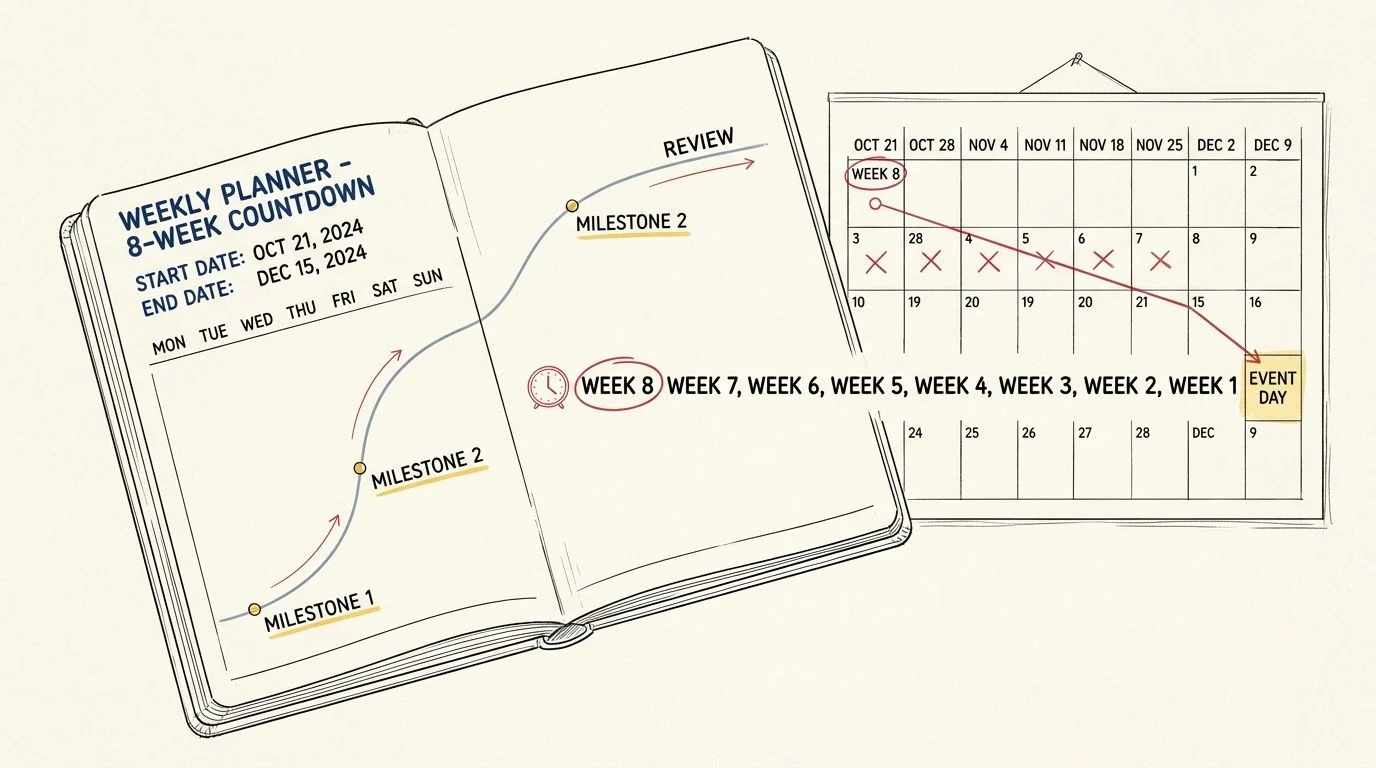
Eight weeks out
Six weeks out
By this point, decluttering should be underway. Not because decluttering is fashionable, but because every unwanted item removed now is one less item to wrap, carry, load and unpack later. Focus on lofts, cupboards, spare rooms and storage furniture first. Those are the places where volume hides.
Then check both addresses for practical restrictions:
Four weeks out
This is the stage for decisions that often get left too late. If either address is in a London CPZ area, arrange the parking suspension early. The practical minimum is five working days lead time. In some boroughs, leaving it later can narrow your options and create an avoidable problem on the day.
Packing materials should also be in place by now. Even if you plan to self-pack, boxes, tape, paper, mattress covers and labels should already be in the property. Last-minute packing nearly always creates two problems at once, unfinished boxes and poorly packed fragile items.
Two weeks to go
Once the date is confirmed, the work changes from planning to booking and sequencing. Confirm the removal date and arrival window. Recheck access and update the removals team if there are roadworks, lift bookings or access code changes. Pack non-essentials fully and leave only daily-use items, bedding and key kitchen basics. Keep passports, contracts, keys, medicines and chargers with you, not in the van.
The calmest moves usually look uneventful from the outside. That is because the decisions were made weeks earlier.
Choosing the right removal service for London
People often compare removals by headline price alone, then discover too late that they were not comparing the same job. One quote includes packing materials and dismantling. Another assumes you will do all the prep. A third is based on hours, which sounds simple until key delays, parking trouble or underestimated volume push the cost upwards.
For London moves, the safer comparison is service clarity.

Fixed-price written quotes beat hourly uncertainty
An hourly estimate creates tension on the day, especially if completion is delayed or access proves slower than expected. You watch the clock. The crew feels watched. Decisions get rushed for the wrong reason.
A fixed-price written quote removes that dynamic entirely. You know the agreed scope and cost before the day begins, and the crew can focus on the work rather than the running meter. That single change reduces stress for both sides of the move.
What to check before booking
A useful quote should tell you what is and is not included. It should also reflect the actual property, not a rough guess based on room count alone.
When reviewing providers, look for a clear survey method, with video surveys being particularly useful as they let the estimator see access, furniture size and hidden storage. Check that the written scope states whether packing, dismantling, reassembly and materials are included. Confirm insurance and accreditation, which matter more when handling stairs, lifts, antiques, pianos or tight access. And check for genuine London knowledge, because borough-specific parking rules, estate access and loading restrictions are not side issues; they are part of the job.
The local detail that changes the day
A removals team can be excellent in general and still struggle in London if they have not planned for urban access. A flat in Bloomsbury with a booked lift, a terraced house in Chiswick with no easy stopping point, and a family home in Harrow with school-run traffic all need different handling.
Best London Removals Ltd, based in Ruislip and operating since 2011, works on fixed-price written quotations and video surveys rather than open-ended hourly charging. That approach tends to reduce tension for both you and the crew, because everyone knows the scope before the date arrives.
A practical guide to packing and decluttering
Packing goes wrong when people treat every room as equally urgent. They are not. The kitchen over the last two days is not the same job as the loft six weeks before. A better approach is to work in layers: reduce volume first, then pack by frequency of use. That makes the process feel more controlled, because each session has a clear finish point.
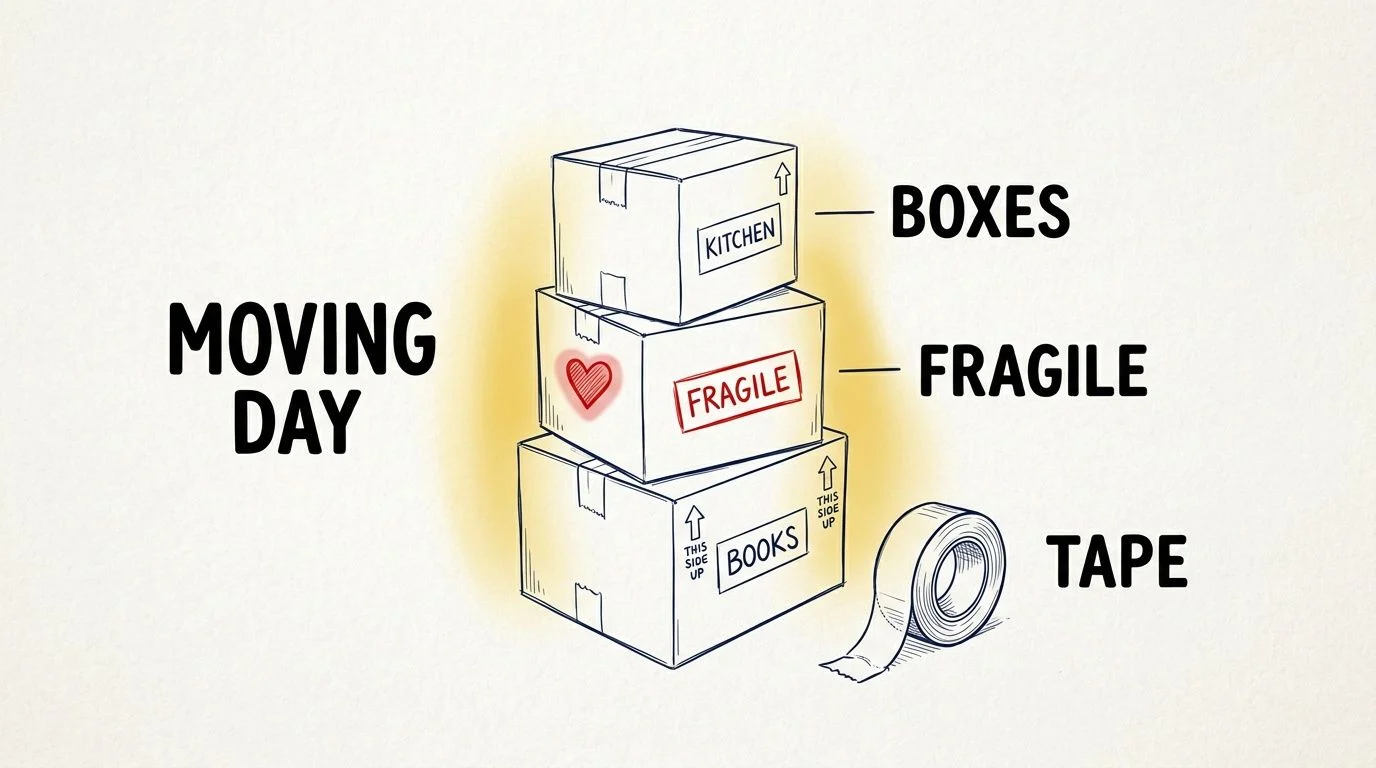
Declutter before a single box is sealed
Pack by room, then label for the new address
The essentials box matters more than most people think
The first evening in a new property is when poor packing usually catches up with you. Keys are in hand, boxes are everywhere, and nobody can find chargers, mugs, children's pyjamas or the kettle lead.
Pack one essentials box and one personal bag as if the rest of the load might arrive later than expected. That box should stay easy to reach and cover the first night, not the whole week. Useful contents usually include toiletries, medicines, chargers, basic cleaning supplies, toilet roll, kettle items, pet food (if needed), children's comfort items, bedding, and a change of clothes.
Navigating specific moving scenarios and emotional wellbeing
Not every move carries the same kind of pressure. A family with young children worries about routine. A student in a small flat worries about doing everything alone and getting across an unfamiliar borough. Someone leaving a long-term home may be more concerned about the emotional weight of the change than about the boxes. Those differences matter because the right support is not always more manpower. Sometimes it is a better plan.
Families, students and pets all need a different approach
The emotional side needs practical handling
The disruption of packing, noise and changed routine can be genuinely draining, particularly if you thrive on order and routine. The answer is not to push through without a plan. It is to reduce unnecessary pressure where possible.
A few measures make a real difference: keep one calm room until last to give yourself somewhere settled to step back from the boxes; avoid combining utility admin, packing, school paperwork and furniture dismantling into the same evening; use written lists rather than relying on memory, as stress makes people forget obvious things; and build short pauses into the day before fatigue sets in rather than after it.
Completion day delays need a calm script
The sharpest stress point in London moves is often the key release. Everything is packed, the crew is ready, and the legal chain is still moving at its own pace. That part cannot be controlled by packing harder.
What you can control is the response. Keep your phone charged, keep documents with you, and ask the removals team early what the waiting procedure is if keys are delayed. If you have to vacate the old property before access is granted at the new one, discuss that possibility before moving day, not during it. Waiting for keys can be frustrating, but it doesn't have to cause panic if you already know who is holding the documents, where your essentials are, and what the holding plan is.
Your moving day action plan
Moving day runs better when you know what happens first, what can wait, and what to keep with you. The aim is not to make the day feel effortless. The aim is to stop it from feeling disorderly.
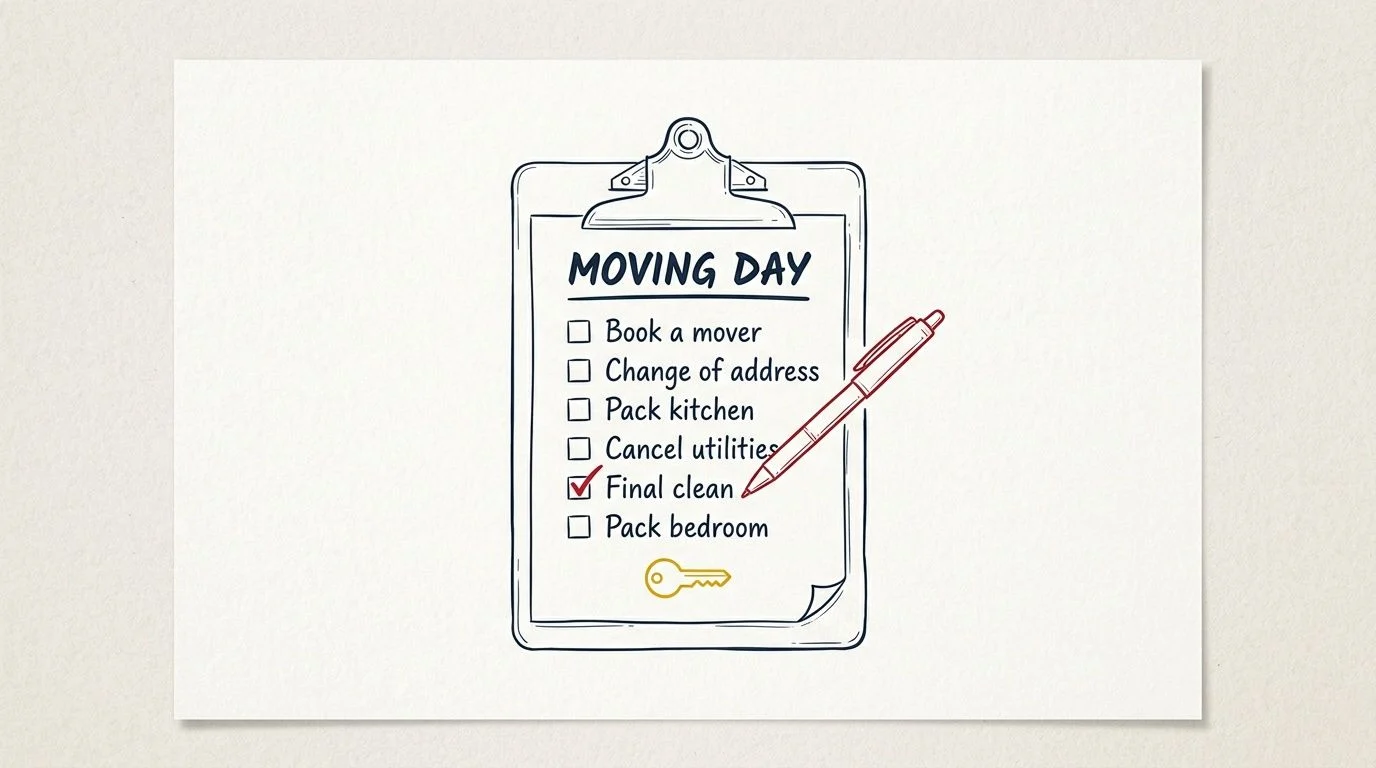
Before the crew arrives
The night before, finish only the final essentials. Do not start fresh packing at 10 pm unless something has been overlooked. Kettle items, chargers, documents, medicines, keys and the essentials box should be set aside where they cannot be loaded by mistake.
On the morning itself, dress for a long day, keep your mobile charged, and make sure the pathways inside the property are clear. Pets and small children should be safely managed before loading starts, not once the front door is open and people are moving in and out.
During loading and the key wait
When the crew arrives, a short walk-through helps. Point out fragile items, items not being moved, and any furniture that must go to a particular room. If there are access quirks, such as a rear entrance, a narrow stairwell, or a resident-controlled gate, mention them immediately.
If keys are delayed, keep the middle of the day structured. Stay reachable with your solicitor, estate agent, and removals contact details easily accessible. Keep your documents, chargers and medication with you rather than letting them disappear into the load. Avoid scattered errands, as this is how people miss critical calls. Use the waiting time to confirm furniture placement plans and room priorities for arrival.
At the new property
Once access is granted, place the room early. It is far easier to place furniture correctly on the first entry than to move heavy items around later. Focus on beds, sofas, white goods and your essentials boxes first.
Before unpacking everything, check that the kettle works, the bedding is reachable, and the bathroom basics are in the right place. If those three things are sorted, the first evening usually feels manageable, even if the rest of the boxes are left for tomorrow.