

Council tax is one of those tasks that sit quietly on the moving list until they cause a problem. Miss the deadline, notify the wrong council or get the dates wrong, and the bill arrives higher than expected, or a refund takes months to appear. In London, where moves often cross borough boundaries and completion dates can shift at the last moment, getting this right from the start saves a lot of chasing later.
This guide covers who to tell, when to tell them, what happens to your bill and what to check at the new address before the first demand arrives. It is intended as general guidance. For advice specific to your circumstances, contact your local council directly.
Why council tax matters when you move in London

Who do you need to tell when you move
Deadlines, fines and why timing is important
Most councils require you to notify them of a change of address within 21 days so they can keep your council tax bill accurate. Some explicitly state that failure to do so without a reasonable excuse can result in a £70 penalty notice added to your bill, which is set out in their local guidance and based on council tax regulations.
Beyond the potential fine, late notification creates practical problems. The old account stays open longer than it should, which can produce a closing bill that needs correcting, while the new account starts late, meaning the first bill arrives after you may already need it as proof of address for a resident parking permit or other borough paperwork.
Many councils allow you to notify them up to about one month before your moving date. As soon as the date is confirmed, updating both councils is worth doing straight away. It usually takes only a few minutes online and removes a task from an already full list.
Moving within the same London borough
If both addresses are in the same borough, you are dealing with one council throughout. The process is straightforward but still requires action on your side.
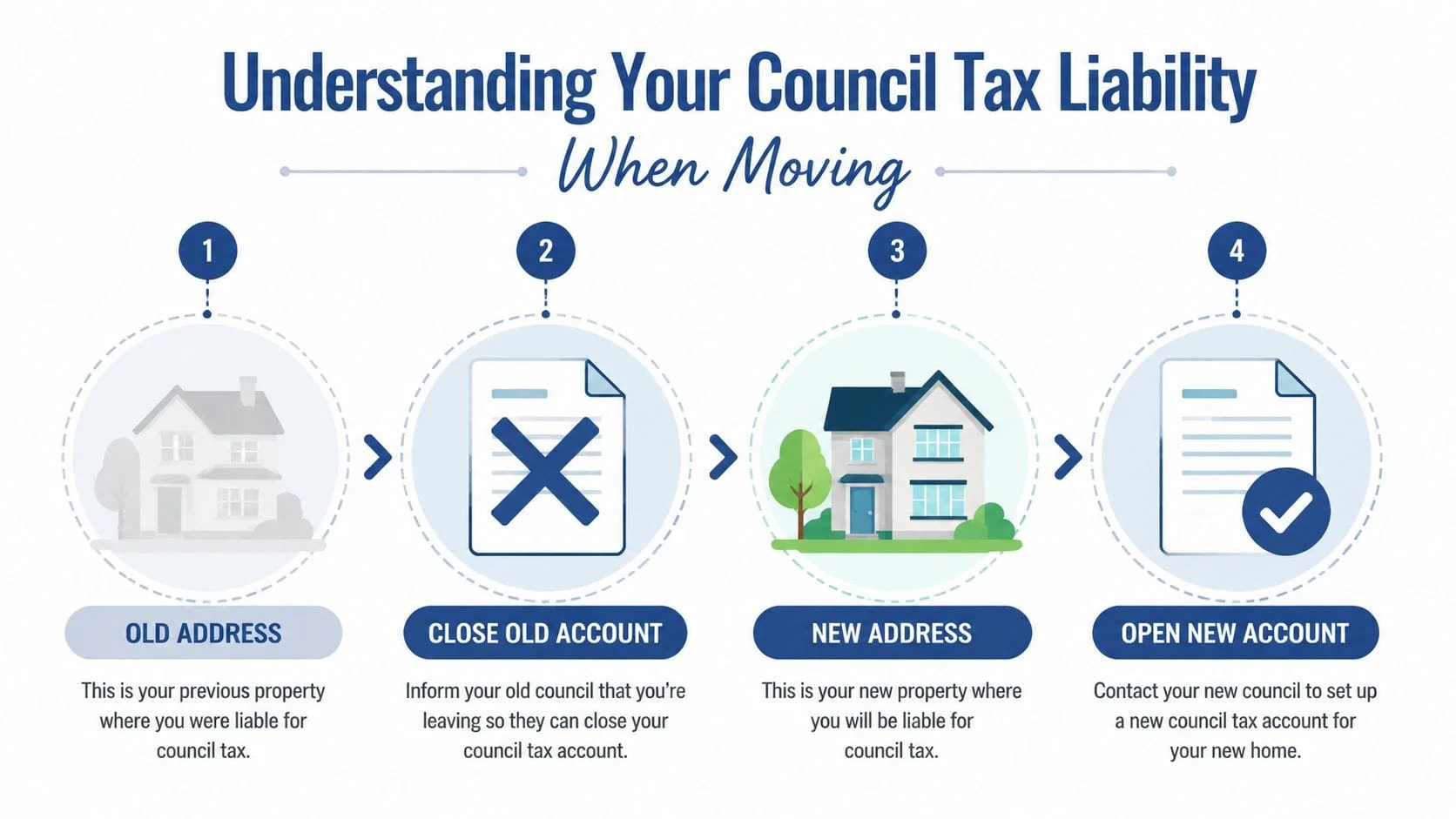
Contact your council and tell them you are moving from one address to another within the borough, providing the exact dates you are leaving the old property and moving into the new one. The council will close the account at the old address, issue a final bill or credit for that property and open a new account at the new address.
Harrow Council, for example, handles this through its online change of address form, where residents can update their council tax details, notify a move within the borough, or register at a new address. Most London borough portals follow a similar pattern.
Keep a screenshot or reference number from each submission. If anything goes wrong with the account later, dated proof of when you notified the council is often the quickest way to resolve it.
Moving to a different London borough
This involves two separate processes with two separate councils, and it helps to treat them as distinct tasks.
Notify the old council as soon as your leaving date is confirmed, giving the exact date you are vacating the property. They will close the account and issue a final bill calculated through your last day of liability.
Register with the new council as soon as you move in, or as soon as your tenancy or completion date is confirmed, depending on how they ask you to do it. Provide your move-in date, the address and any supporting documents they request, typically a tenancy agreement or completion statement.
Do not assume the new council will automatically find you. In London, a new occupier at an address does not always generate a council tax account in the correct name without formal registration, and it is your responsibility to ensure the account is set up.
Tenants and homeowners
The liability date works slightly differently depending on whether you are renting or buying.
For tenants, liability at the new address normally starts on the first day of the tenancy agreement if that is when you become entitled to occupy the property, even if you move your belongings in later, and liability at the old address normally ends on the last day of that tenancy. If there is an overlap, where the new tenancy starts before the old one ends, you can be liable at both addresses for that short period, particularly if both are effectively available to you.
For homeowners, liability at the new address usually starts on the completion date, when you legally take ownership, and liability at the old address usually runs until the sale is completed, even if you physically move out slightly earlier. Councils will often ask for the key dates and, in some cases, solicitor details so they can apply the rules correctly.
In both cases, the council needs the exact dates, not approximate ones. A vague answer is likely to result in a bill that needs correcting later, which means more correspondence and more time spent fixing something that could have been right from the start.
Discounts, exemptions and changes in your household
A move is also the right moment to check whether the bill at the new address reflects the correct household make-up. Several discounts and exemptions are available but do not apply automatically, and some require a separate application.
Common situations worth checking include: Single occupancy: if only one adult is liable at the new address, a 25 per cent single-person discount may apply, regardless of income.
Student households: a property occupied entirely by full-time students may be exempt from council tax, and some mixed households with students may qualify for a discount.
Severe mental impairment: an adult who is severely mentally impaired can be disregarded for council tax purposes, which can reduce the bill, and in some cases, the household may become exempt.Care leavers and other local schemes: some councils apply additional local discounts or reductions for specific groups, such as care leavers or certain low-income households, as set out in their own policies.
Changes in household make-up also need to be reported. If someone moves in or out, a child turns 18, a student graduates, or a flatshare changes shape, the council needs to know because it can affect the discount calculation or any council tax reduction in place.
Council tax reduction, sometimes called council tax support, is a separate means-tested scheme run by each borough that helps people on lower incomes with their council tax bills. If income has changed as a result of the move, or your circumstances are different at the new address, it is worth checking eligibility with the new council directly.
Direct debits, closing bills and refunds

The final bill from the old council is one of the most commonly mishandled parts of a move. The most frequent mistake is cancelling the direct debit before the account is fully closed, which can generate arrears notices even when the underlying amount is small.
The reliable sequence is to let the old council issue the closing statement first, check the balance, then deal with the payment instruction. If the account is in credit, the council will arrange a refund, usually to the bank account on file or by cheque to the forwarding address, and if there is a balance to pay, it remains due even though you have already left the property.
For moves within the same borough, some councils will transfer a credit balance to the new address account rather than issue a separate refund, which can reduce the first payment due at the new property.
What usually works in practice:
Keep the old direct debit active until the closing statement confirms the account is settled.
Make sure the forwarding address is correct on the closing account so correspondence reaches you.
Read the first bill from the new borough carefully, as an opening bill sometimes covers only a partial period or shows instalments in a slightly unusual pattern.
File the final statement with your tenancy or completion documents so you can refer back to it if anything is queried later.
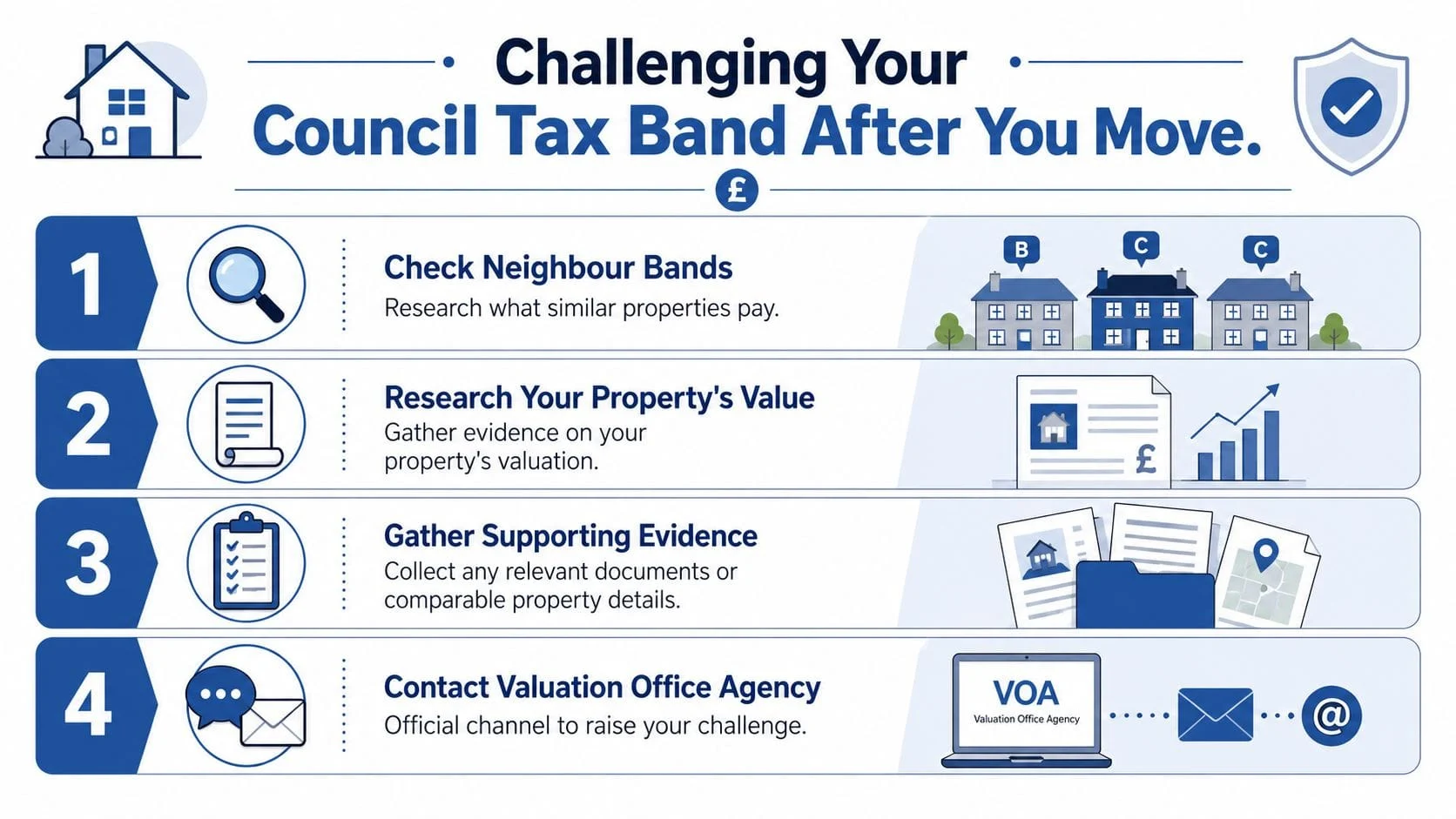
Checking the council tax band at your new address