

Moving day usually starts with good intentions. Boxes are labelled, keys are ready, and someone has already said, "Just mind that frame, it was only painted last week."
Then the awkward bits begin. A sofa needs turning on a landing in W3, a washing machine has to clear a narrow kitchen door in E8, or a chest of drawers catches the inside edge of a flat entrance in SE1. Most damage doesn't come from reckless handling. It comes from tight angles, rushed access, shared corridors, and the false assumption that a doorway can absorb repeated contact without consequence.
For London renters, that matters because a marked or split frame can become part of a deposit argument. For owners, it means touching up paint, repairing timber, adjusting ironmongery, or explaining damage to a managing agent. In blocks with communal doors and fire doors, the issue goes further than appearance.
Why door frame protection matters more than you think

London properties create very specific risks
How professional removal crews actually protect door frames
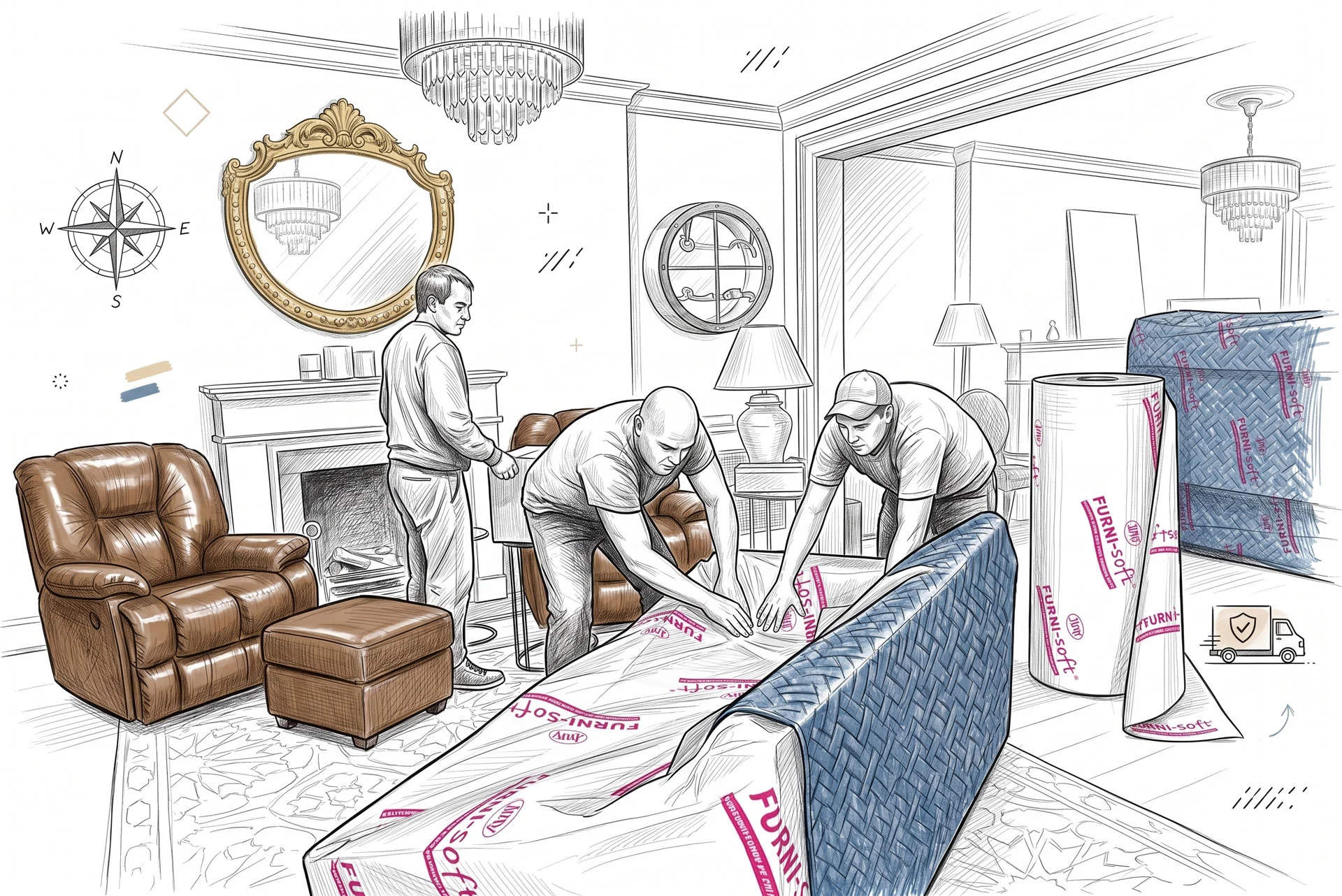
There's a common assumption that protecting door frames means wrapping the frames themselves. In practice, experienced removal crews usually do the opposite. The furniture and appliances are wrapped, not the doorway.
The logic is straightforward. A sofa wrapped in transit blankets or stretch film takes the contact point with it. Whatever it brushes against, a frame edge, a staircase wall, a corridor corner, the wrapped item absorbs the impact rather than transferring it. On a typical London move, this approach protects not just door frames but everything along the route: hallway walls, stair stringers, ceiling corners at awkward landings, and the door frames themselves.
This matters particularly on routes where frame protection would be impractical anyway. A narrow staircase leading to a loft room, for example, can't be padded on all sides. The walls are too close together and the geometry changes at every turn. A well-wrapped item moving through that space does the work that no fixed protector could.The same principle applies to appliances. A wrapped washing machine clears a tight kitchen doorway in E8 differently from an unwrapped one. The wrapping rounds the hard corners and distributes contact across a larger, softer surface area.
This is why wrapping is the standard method on everyday moves, and why the quality of wrapping, transit blankets, stretch film, corner protectors on furniture, matters more to the outcome than what's taped to the door frame.
When door frames are protected directly
Wrapping the furniture handles the vast majority of contact risk on a standard move. There are situations, though, where the door frame itself warrants direct protection, and experienced crews recognise them.
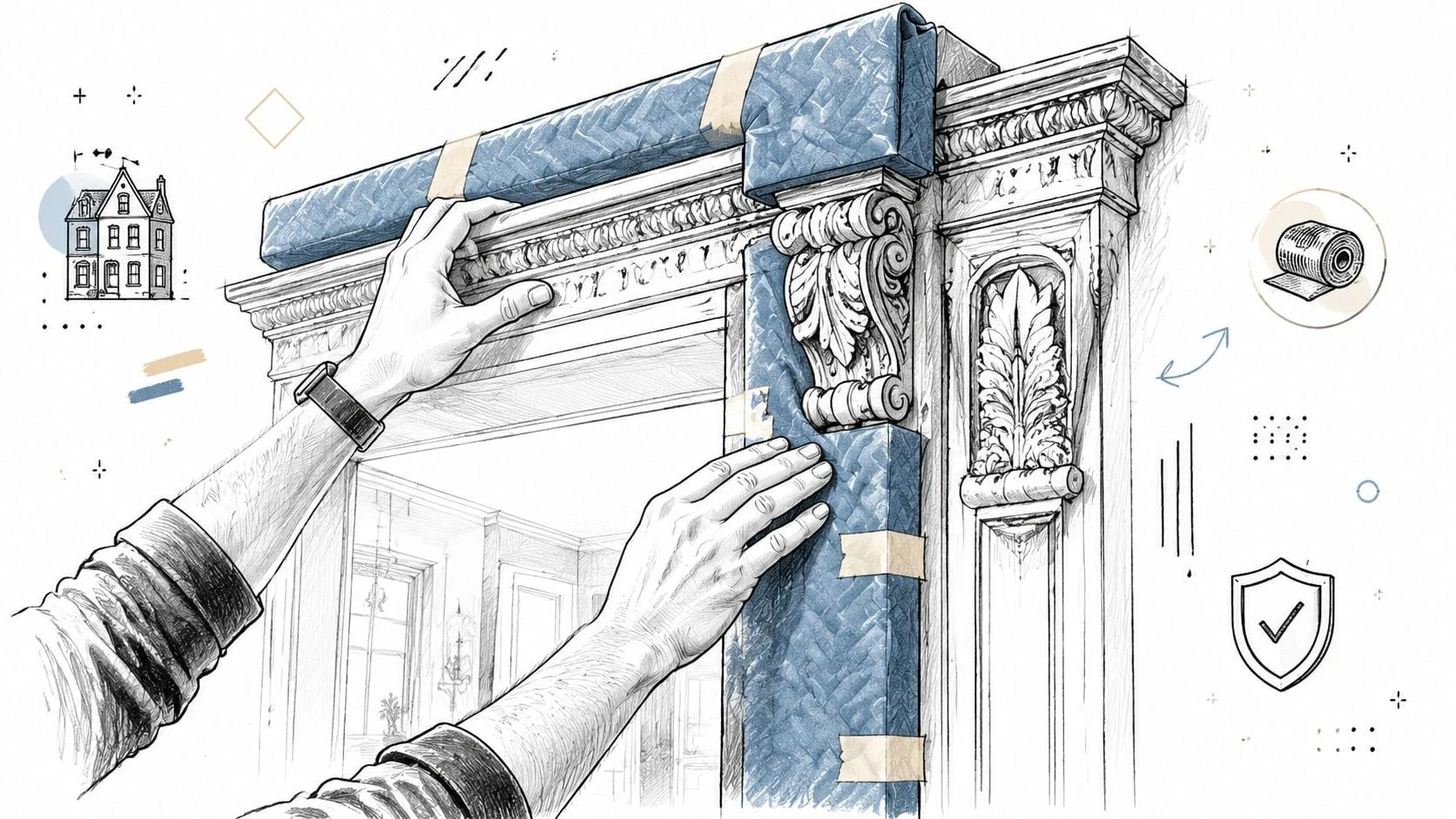
The clearest case is a high-value or irreplaceable finish. A bespoke mahogany door surround in a penthouse, a decorative hardwood architrave in a listed property, or a freshly lacquered frame in a newly refurbished flat all represent finishes where even a glancing contact from a padded item could leave a mark. In those settings, protecting the frame as well as the furniture is the right call.
Communal managed buildings can also require it. Some managing agents specify that entrance doors, corridor reveals and lift frames must be padded during a move, regardless of how items are wrapped. This is a building management requirement rather than a structural one, and it's worth checking before moving day rather than on it.
There's also a practical case for frame protection when multiple trades attend over several days. If decorators, flooring contractors and a removal team all use the same doorway across a week, direct frame protection on the high-contact points becomes more justified because the cumulative risk is higher than a single-day move creates.For those jobs, the materials and method are covered in the section below.
Choosing protection materials when direct frame coverage is needed
The best material depends on the finish on the frame, the type of contact likely, and how long the protection needs to stay in place.
Cardboard works for light duty
Cardboard is the usual first choice because it's easy to find and easy to cut. For a short move on dry surfaces, it can protect against casual scuffs from boxes and soft items.
Its weakness is obvious once heavier items appear. Cardboard compresses, shifts, and tears at corners. It also absorbs moisture, so near an entrance on a wet day, it loses shape quickly. It's better than nothing, but it isn't suitable for wardrobes, appliances, metal bed frames or repeated trolley traffic.
Foam padding gives better impact absorption
Closed-cell foam sheets, pipe lagging split down one side, and purpose-cut corner foam all perform better where contact is likely. They cushion impact in a way that cardboard cannot.
Foam is especially useful on freshly decorated frames, where it reduces abrasion before paint has fully hardened; on period timber details, where it moulds more gently around uneven profiles; and on narrow internal doors, where it provides some forgiveness when angles are tight.
The drawback is bulk. On already narrow openings, thick foam can reduce clearance. If a fridge or sofa is only just getting through, over-padding the reveal can create the obstruction it was meant to prevent.
Adhesive plastic film protects finish, not structure
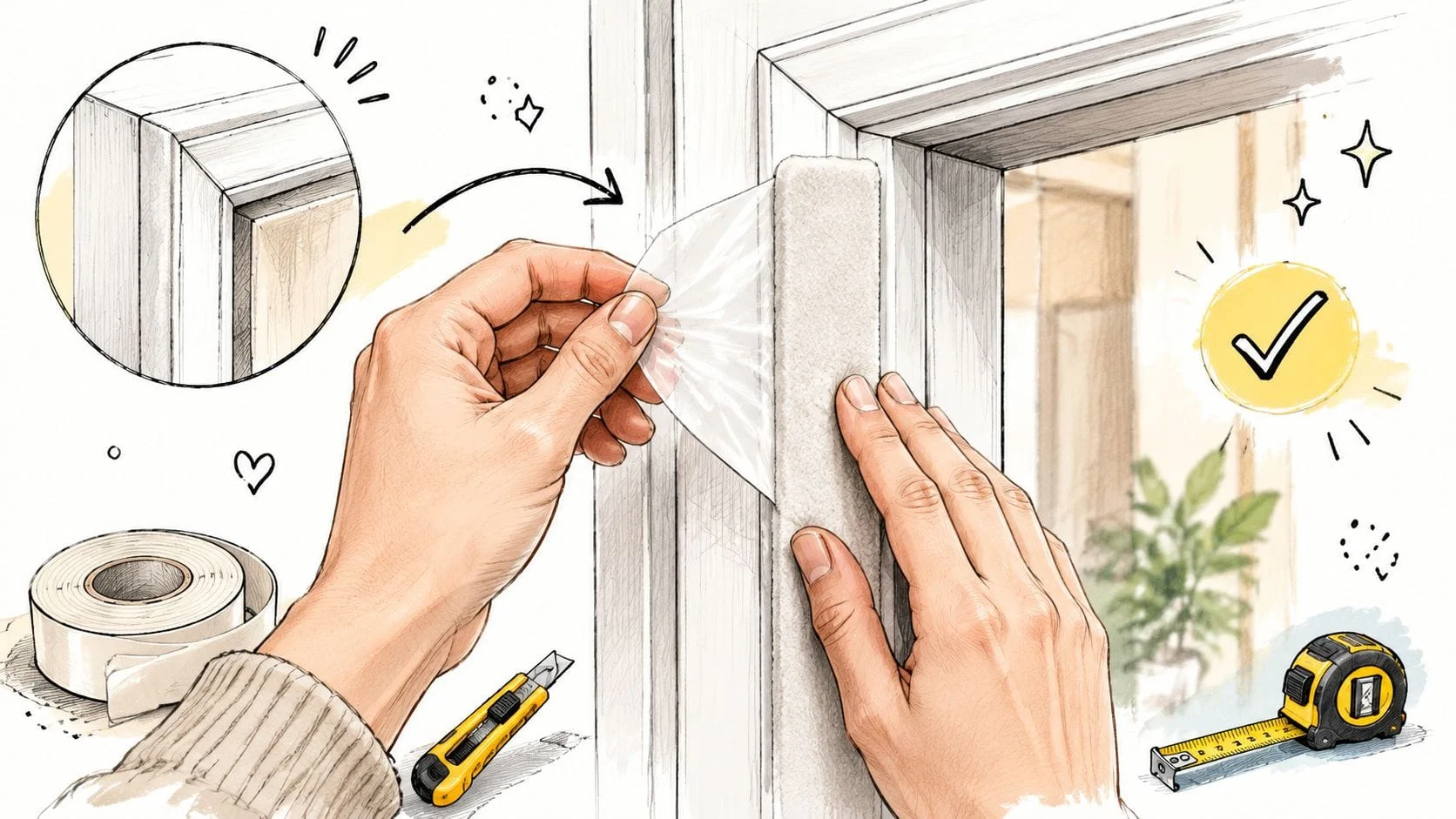
Plastic film is good for surface-level protection against finger marks, dust, and light rubbing from soft items. It doesn't offer much against a hard corner from a chest freezer.
It also needs care. Cheap adhesive films can leave residue, pull at weak paint, or trap grit underneath if the frame wasn't cleaned first. For rented properties, that's a poor trade if the protection creates its own cosmetic damage.
Thin film is useful on smooth, stable paintwork. It isn't a substitute for padding on a high-risk doorway.
Reusable fabric covers suit repeated use
Landlords, letting agents, property managers and frequent movers often prefer reusable padded covers. They tend to be neater, more durable and easier to reposition through the day. For repeated tenancy changeovers or office churn, they're usually the most sensible long-term option.T
hey are more expensive to buy upfront and only worth it if they'll be used again. For a one-off domestic move, improvised foam and well-cut board may be the more practical route.
Readers sorting out packing materials at the same time may find this guide to packaging materials for a smooth house move useful. Frame protection works best when planned alongside wrapping materials and handling equipment rather than added as an afterthought.
Applying protection correctly
A protector only works if it stays in place and doesn't create a new problem. Poorly fitted padding slips into the opening, catches on furniture, and sometimes causes the scrape it was supposed to prevent.
Before anything goes on, the frame needs a quick inspection. Dust, grit and loose paint all matter, as do projecting screws, split beads, and old filler at the corners. A protector fixed over a dirty frame will shift more easily, and trapped grit can rub the finish all day. Use a soft cloth first; if the frame is greasy, a mild cleaner on a damp cloth is enough. The surface should be dry before any tape or film touches it.
Then check the route. If the danger point is the latch side at shoulder height, wrapping the whole frame while ignoring the exact strike zone achieves little. Protection works best when it matches the path the item will take.
Doorways aren't used evenly. The hinge side may stay untouched while the outer leading edge takes every hit. Focus on outer jamb edges, which catch furniture corners first; head corners, which tall items clip when tilted; threshold transitions, where sack trucks and appliance wheels can bounce; and the latch area, which is the busiest contact point on many internal moves.
For tape, low-tack painter's tape is the safer option in most domestic settings. Standard parcel tape is too aggressive for painted timber, and strong duct tape can mark finishes and pull fragile paint. Tape protector to protector where possible, rather than taping directly across visible paintwork. On recently painted surfaces, tension, folds and wraparound fixing is often safer than relying on adhesive.
Test the door after fitting protection. If the covering interferes with closing, latching or the door closer, it needs adjusting before the move starts.
Protection shouldn't be ripped off at the end of a long day. Peel tape back slowly on itself, not outward. If any adhesive resists, pause and loosen it gently rather than lifting paint.
Anyone coordinating these stages alongside booking, packing and access arrangements can use this moving house checklist to keep the practical details in order.
Handling tricky door frames and high-risk areas
Some doorways are simple. Many in London aren't. Tight turns in Islington maisonettes, split-level conversions in Hackney, mansion block entrances in Maida Vale, and listed details in Kensington all create different risks.
Period frames often have decorative edges, brittle filler repairs, and paint layers that don't bond well. Heavy tape across detailed mouldings can pull flakes away even if nobody knocks the frame during the move. Soft foam with minimal adhesive contact is usually safer than tightly stretched film on those openings. Padding should sit on the vulnerable outer arris and any projecting detail, with securing points placed on more stable, flatter areas wherever possible.
In blocks of flats, damage often happens before the team reaches the front door. Entrance doors, lift reveals, corridor corners and service doors can all sit along the risk route. Managing agents may object if materials are taped carelessly onto painted communal surfaces, so removable padded guards are preferable where direct frame protection is required. Not every doorway needs wrapping. The main danger points are narrow turns, recently decorated shared hallways and lift exits where large items are rotated.
Fire doors are a separate category
Landlord rules and your deposit
When to leave it to the professionals