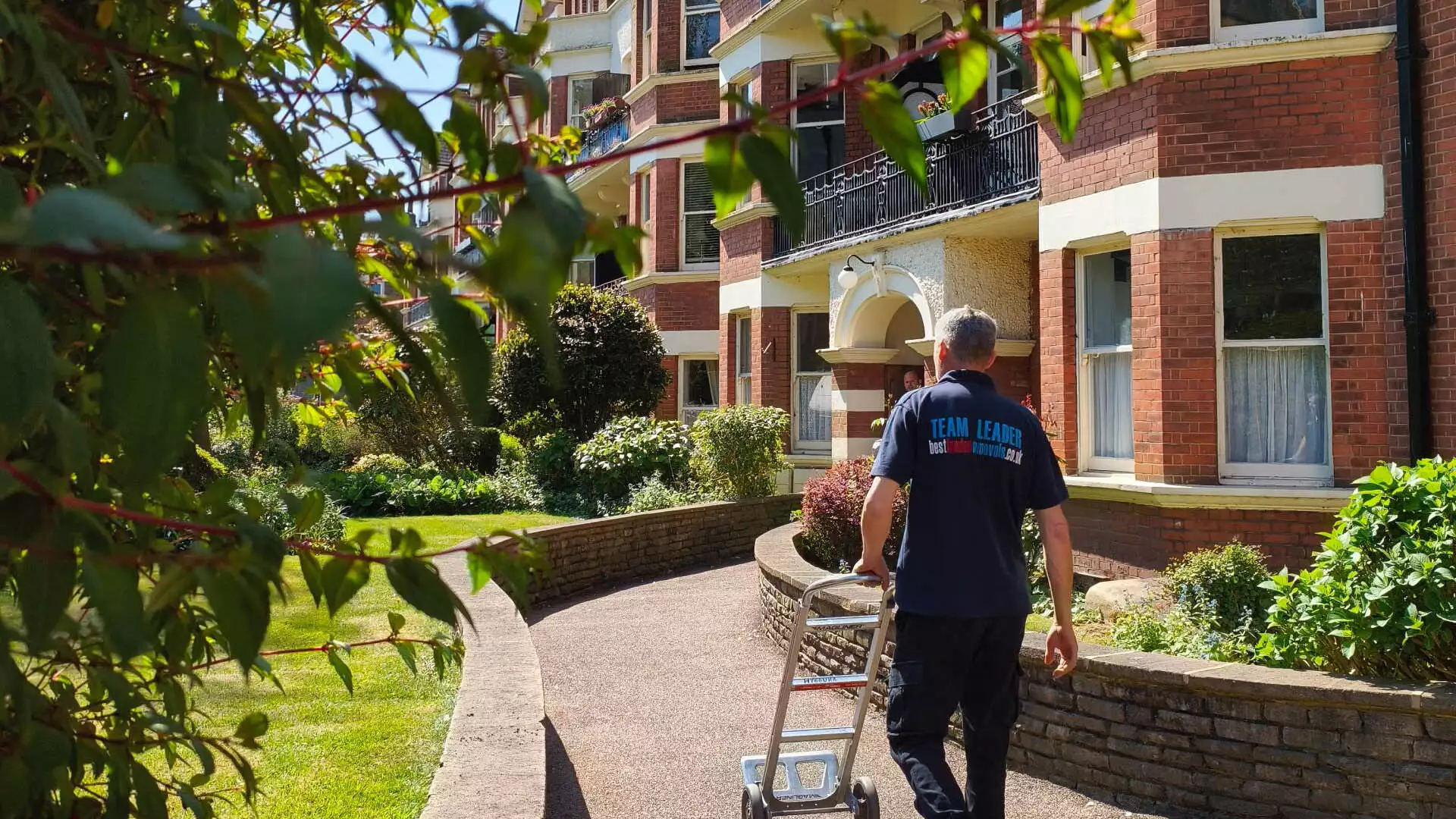


The van arrives on time, but the move stalls anyway. The lift is too small for the sofa, the concierge has no record of the booking, and the only legal place to stop is three doors down behind a controlled parking sign. In a London flat move, the distance between the van and your front door often matters more than the distance between the two postcodes.
That is why flat removals need more planning than a house move of a similar size. How much planning depends on the flat. A studio or small flat where everything is already packed can often be moved by the hour with a man and van. A larger flat, or a move that includes packing, dismantling and reassembly, needs a survey first. This guide explains which route suits your move, what affects a flat move in London, and what you can do beforehand to keep moving day on schedule.
Why flat moves in London need more planning
A two-bedroom terraced house and a two-bedroom fourth-floor flat can look identical on a booking form. Both have the same number of rooms and may be travelling the same distance. On the day, the work involved can be completely different.
The house may have a front door a few steps from the kerb and direct access to every room. The flat may have a narrow staircase with tight turns, a passenger lift designed for people rather than furniture, a shared hallway full of bicycles and a red route outside the entrance. The van journey is the same, but the time the crew spends carrying is not.
The carrying route decides the job
What shapes a flat move is the route from the van to the building entrance, then from the entrance to the flat. That route can include:
- Long carries from the van. If the nearest legal stopping point is some distance away, every item has to travel further, sometimes through a courtyard or around the side of a block.
- Stairs and landings. Tight turns, narrow treads and low ceilings decide whether large furniture can go through whole or has to be taken apart.
- Lifts. A passenger lift may carry people safely but lack the height, depth or floor protection needed for a wardrobe or sofa.
- Shared areas. Concierge desks, communal entrances, bin stores and fire routes all limit where items can be placed while the crew works.
- Timing. Your tenancy may end before the new building allows access, leaving a gap that has to be planned for.
Plan the move around the building’s access, not just the number of rooms.
What a survey should check
For larger flats, and for any move that includes packing, dismantling or reassembly, we carry out a survey before quoting. A survey turns an estimate into a defined job. It records what needs to move, how it will leave the old flat, how it will get into the new one, and anything that could add time or labour.
The inventory needs more detail than “bedroom furniture” or “some boxes”. A useful survey identifies wardrobes, beds, sofas, appliances, fragile pieces, anything on a balcony and anything stored in cupboards, lofts or under the stairs. It also notes whether boxes are already packed or still to be packed.
A flat survey should cover:
- Furniture sizes against the route. Large items are compared with lift doors, stair widths, landing turns and entrance doors at both addresses.
- Where the van can stop. The survey notes the vehicle size, parking restrictions and the distance from the van to the entrance.
- Building rules. Lift bookings, concierge hours, floor protection requirements, key fob access and restrictions on moving times all belong in the job notes.
- Crew size. Packing, dismantling, reassembly, long carries and awkward stairs all affect how many people the job needs.
- Specialist items. Pianos, safes, antiques and very fragile items need their own plan rather than being dealt with on the day.
Depending on the flat, we either visit in person or ask you for a video survey. A video works well for a flat with clear rooms and ordinary access. An on-site visit is the safer choice for period conversions, walk-up flats on upper floors, buildings with service lifts and properties with strict concierge or key handover arrangements.
When the quote arrives, check what it includes: the crew, the vehicle, packing materials, dismantling and reassembly, and any allowance for difficult access. If the lift turns out to be out of service on the day, you should know in advance whether a stair carry is covered or would change the price. Our guide to comparing removal quotes before you book explains what to look for line by line.
Stairs, lifts and shared areas
Access planning starts with the building, not the van. A block may have a goods lift, but the key may be held by the managing agent. A passenger lift may be available but unsuitable for large furniture. A concierge may only allow moves during a booked window.
The survey should record the floor, the stair layout, landing widths and turns, lift dimensions and door heights. It should also note whether the building requires floor protection, padded bannisters, notice to other residents or anything else specific to that block.
The lift booking is part of the schedule
A lift booking needs to cover the whole loading period, not just the crew’s arrival time. If the building allows moves only within a set morning window, a late start eats into the time available before the first item reaches the van.
A service lift also needs a clear handover. Someone has to collect the key or code, tell the crew where to report and return the lift in the condition the building expects. Agree in advance which lift is approved, where protective covers go and what happens if the lift is unavailable.
Stairs need the same attention. A sofa that clears a wide mansion block staircase may not get round the tight turn in a modern conversion. Narrow treads and small landings can make partial dismantling necessary even when an item looks small enough in the room.
Shared routes need a plan
Communal entrances, bin stores, cycle stores and fire routes cannot be used as storage space during the move. The crew needs to know where items can be placed without blocking other residents or breaking building rules.
Building security matters too. Many managed blocks control who can enter and when, so make sure the crew has a named contact on arrival, working fobs or keys, and a backup if that person is not available. Solomons Facilities Management’s guide to access control explains why buildings manage entry so closely.
Parking, CPZs and suspensions
Where the van can stop often sets the pace of a flat move. A van right outside the entrance keeps furniture moving steadily. A van parked several doors away adds time to every trip and leaves the vehicle more exposed to enforcement.
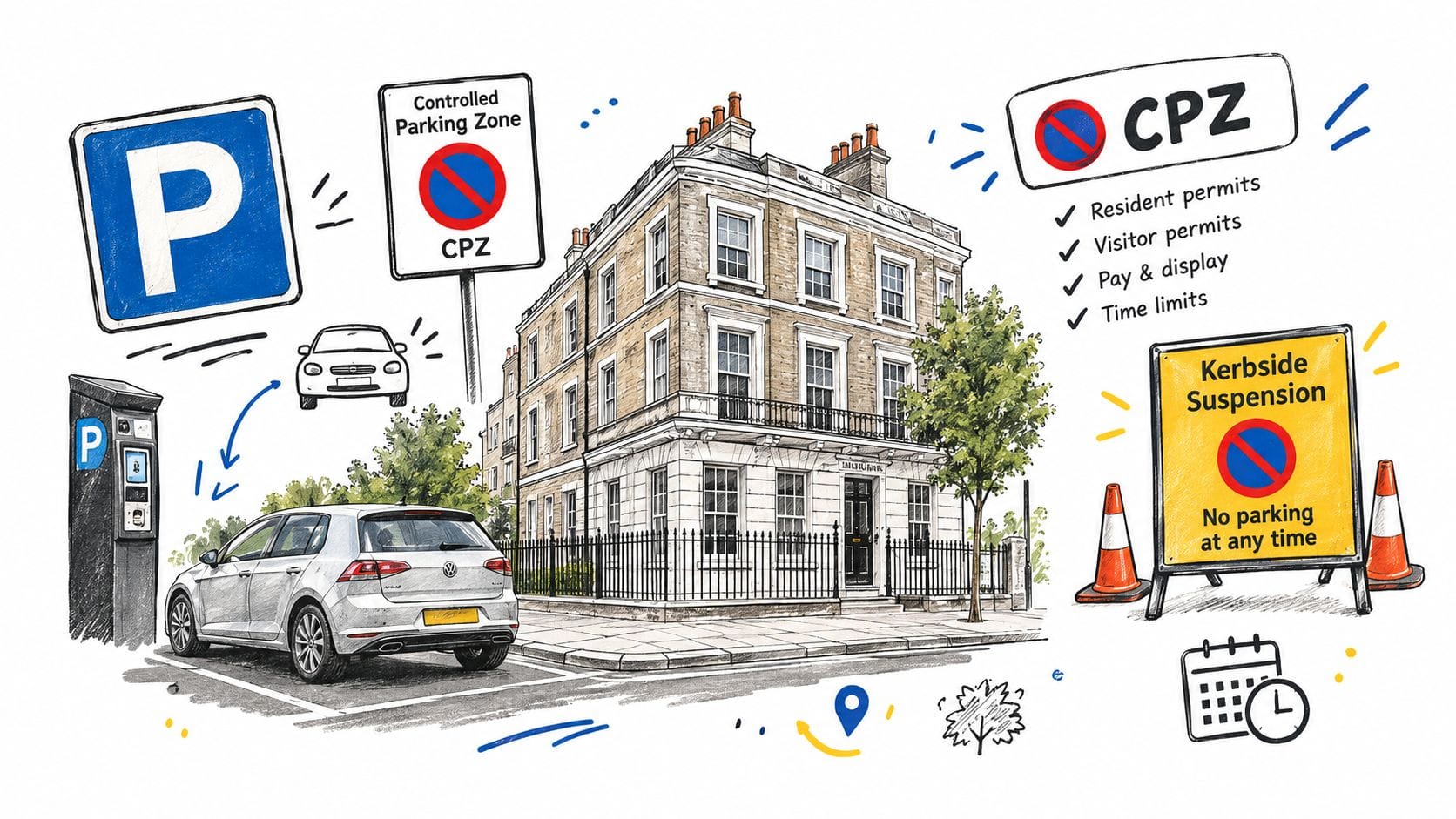
Controlled parking zones (CPZs) differ between boroughs and sometimes between neighbouring streets. Resident, visitor and business bays follow different rules, and red routes can prohibit stopping altogether even when the side streets look easier. In the City of London, for example, controlled hours run on weekdays and Saturday mornings, while other boroughs set quite different times. Our guide to controlled parking zones in London explains how to read the signs and bay types.
Why a suspension matters
A parking suspension reserves a set stretch of kerb for the dates and times of your move. Without one, the space outside your building may be taken when the van arrives. Council guidance, such as Haringey’s page on parking bay suspensions, explains that the suspension has to cover the right hours and be applied for with enough notice.
Notice periods, fees and application rules are set by each council and change from time to time. Waltham Forest, for example, publishes its own charges and conditions for removal suspensions. Always check the current details on the council’s website before applying.
On our moves, one 3.5 tonne van needs two standard bays, around 10 metres of kerb, to park and use the loading ramp safely. We typically start the suspension process about three weeks before the moving date, and we arrange it as part of the booking through our parking suspension and dispensation service.
Put the suspension in the right place
Request the suspension where furniture actually leaves the building, not at a convenient bay round the corner. Photograph the kerb, check for red route markings, and line up the suspension times with the lift or concierge booking. The building’s access window often decides how productive the day is.
Kensington and Chelsea, Westminster and Islington are the boroughs where we find parking needs the most planning. Long controlled hours, heavy demand for kerb space and buildings with restricted access mean a suspension is rarely optional there.
Packing and handling furniture in a small flat
Packing a small flat is about keeping a route clear as much as it is about boxes and tape. The crew needs a clear path through the flat as rooms empty, rather than a hallway blocked with boxes and the largest furniture left until last.
A narrow galley kitchen may have only one usable route. A balcony may only be reachable through the living room, so outdoor furniture has to leave before the room fills with packed boxes.
Load order follows the tight spots
A sofa on a half landing needs wrapping in protective blankets, turning carefully at each corner and keeping clear of the bannister, which should be covered too. Forcing it against a wall or railing risks damage to both the furniture and the building.
A washing machine needs disconnecting and draining before moving day, and the drum secured if the manufacturer recommends it. A wardrobe may need partly dismantling if its height or doors make it too awkward for a stair turn. Fragile or awkward items may need mattress bags or extra wrapping, and the survey should identify them early so the time and materials are in the quote.
Full packing or packing yourself
With a full packing service, the crew brings boxes, paper, tape and wardrobe cartons, labels each room and packs in an order that keeps the flat usable. Packing yourself can cost less if you have the time, but loosely sealed, unlabelled or overfilled boxes slow the move down. Our packing service can cover the whole flat or just the fragile items, and our packing tips for a small flat move help if you are doing it yourself.
Include everything in the inventory, not just the visible furniture. Items in cupboards, lofts and under the stairs can change how many people the job needs.
Man and van by the hour, or a surveyed move?
Most flat moves fall into one of two types.
Man and van, charged by the hour. This suits studios, one-bedroom flats and smaller two-bedroom flats where you have packed all your boxes and bags before the van arrives. You need people and a van to move the contents, not packing or preparation. No survey is needed, and you pay for the time the job takes. Our man and van service is designed for exactly this kind of move, and our man and van cost calculator gives an hourly estimate before you book.
A surveyed removal. This suits larger flats and any move where you want the preparation done for you: packing boxes, dismantling and reassembling furniture, and protecting fragile items. We survey the flat on site or by video, then quote for the agreed inventory, team size, access and scope. Because the quote is based on what was surveyed, adding items or finding very different access on the day can change it.
How the two compare
Surveyed removal
- The inventory is recorded during the survey, and the quote covers the agreed scope.
- Stairs, lifts and long carries are planned and priced in advance.
- A parking suspension and loading position can be arranged beforehand.
- Packing materials and labour can be included.
- Dismantling and reassembly are identified at the survey.
- Best for larger flats, full packing and difficult access.
Man and van by the hour
- The job is based on your description of what needs moving.
- Extra carrying and waiting time is charged as it happens.
- Delays at the kerb extend the booking.
- Usually limited to boxes and bags you have packed yourself.
- Any dismantling on the day adds to the hours.
- Best for studios and small flats, packed in advance.
The risk with hourly pricing comes when a small flat has difficult access, or the packing is not finished. A one-bedroom flat on a top floor with no lift can take far longer than its size suggests, and on an hourly rate every delay adds to the cost.
If everything is packed and access is simple, man and van by the hour is usually the better value. If you need packing, dismantling or a lift and parking plan, a surveyed removal is usually the safer choice.
To get an idea of the cost before you book, use the man and van cost calculator for an hourly job, or the home removals cost calculator for a larger move, where you can enter your inventory and team size for an estimate you can plan around.
What a well-run moving day looks like
On the day, the crew follows the plan agreed at the survey. Before they arrive, keep keys, fobs, parking paperwork, lift instructions and important documents separate from everything being packed.
The team leader starts with a walkthrough of the old flat to confirm the inventory, check for anything that has changed and make sure the agreed route is still clear. The crew then protects floors, door frames and bannisters before anything moves.
Loading in a set order
Boxes are loaded by room and weight. Heavy items go in securely, while fragile pieces and anything you will need first at the new flat stay accessible. Dismantled furniture is wrapped and labelled, with its fixings kept together.
Before leaving, the team leader checks the load against the inventory. This matters in a shared block, where items may be placed briefly in a hallway or service area that residents and other contractors also use.
At the new flat, the process runs in reverse. The crew protects the route, places large furniture first, reassembles anything agreed and puts boxes in the right rooms. Tell the team leader before unloading starts if anything needs to go somewhere specific.
Handover points
Lift keys need returning, concierge sign-offs need completing, and the parking suspension needs to cover the time until the van leaves. A late departure can cause a second parking problem even when loading went well.
Before the crew leaves, walk through the new flat with the team leader to check furniture positions, room allocation and any reassembly. If there is a gap between leaving one flat and getting the keys to the next, we can coordinate storage in London through our storage partners, Shurgard and Big Yellow, so nothing has to stay on the van.
A real example from a London flat
One of our recent jobs involved a 320kg upright piano in a fourth-floor flat in Kensington. We surveyed the piano and every turn of the staircase before quoting, arranged the parking suspension in advance, and a five-person crew carried it down the stairs before delivering it to Shurgard in South Ruislip. The Kensington to Ruislip case study shows how much of a flat move is decided before the van arrives.
Your flat move plan
- Decide which type of move you need. If you are packing everything yourself and the flat is small, book a man and van by the hour. If you want packing, dismantling and reassembly, or the flat is larger, arrange a survey on site or by video.
- Confirm access at both flats. Note floor levels, lift sizes, stair turns, entrance doors, corridor restrictions, key fob arrangements and who to contact in each building.
- Sort out parking. Find out where the van can legally stop and arrange a suspension if ordinary parking will not give you a reliable space.
- Decide what you will pack. Agree which boxes you will pack, which items need professional protection and whether dismantling and reassembly are included.
- Get a written quote. For a surveyed move, it should set out the inventory, team size, vehicle, materials and access assumptions.
- Prepare for the day. Keep keys, lift permissions, parking paperwork and the inventory to hand, and have the flat ready for the agreed arrival time.
- Do a final walkthrough. Check furniture positions and rooms before the crew leaves.
Our moving house checklist covers the wider timeline, from giving notice to updating your address.

Best London Removals Ltd has been moving flats and homes across Greater London since 2011. From hourly man and van jobs for small, packed flats to fully surveyed home removals with packing, dismantling, reassembly, parking suspensions and access planning, we can match the service to your flat. Every move is covered by goods in transit insurance of up to £50,000 per vehicle load.
For an estimate before you book, try our man and van cost calculator or home removals cost calculator, or contact Best London Removals Ltd for a quote.